

Academic Sharing丨Silk Road Archaeology and Heritage Lecture 2: “Neolithic in the Central Plateau of Iran to the Establishment of the Achaemenid Empire”
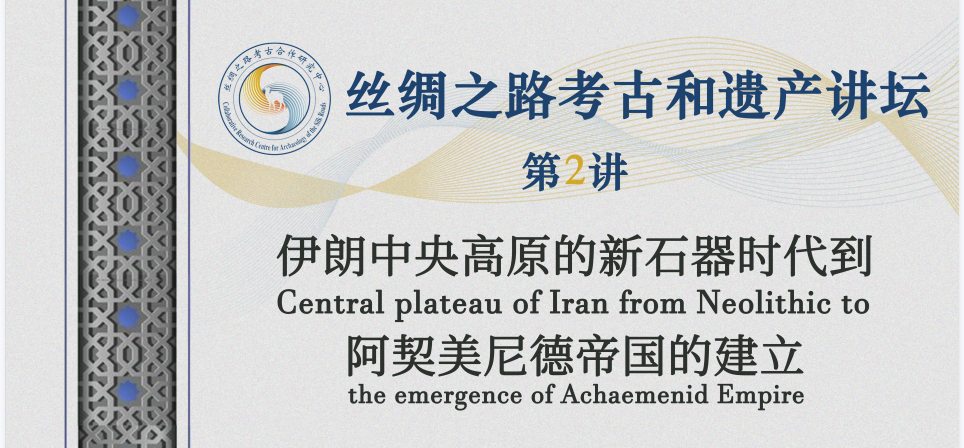
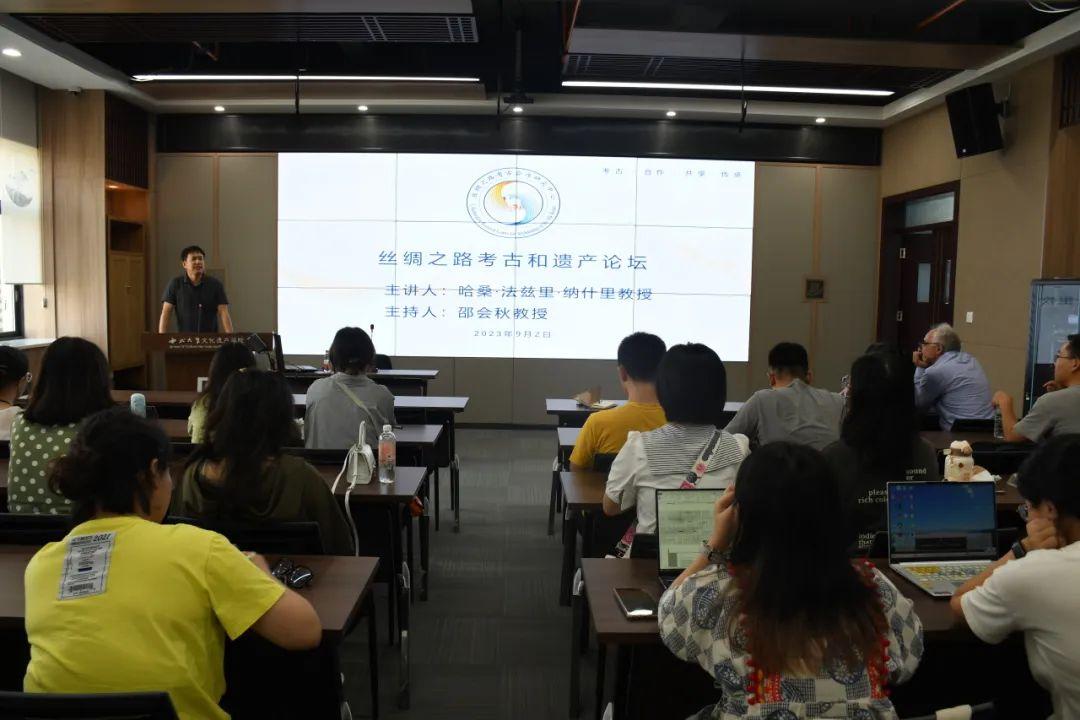
On the afternoon of September 2, 2023, the second lecture of “Silk Road Archaeology and Heritage Lecture Theatre” of Silk Road Archaeology Cooperative Research Center was successfully held in Conference Room 910 of the School of Cultural Heritage of Northwestern University, which was titled as “Neolithic Age to the Establishment of Achaemenid Empire in the Central Plateau of Iran”, and was given by Prof. Hassan Fazli Nashiri, the famous Iranian archaeologist, and Prof. Shao Huiqiu of Tehran University. The lecture, titled “Neolithic Period to the Establishment of Achaemenid Empire in Iran's Central Plateau”, was given by Prof. Hassan Fazli Nashri of Tehran University, a famous Iranian archaeologist, and presided over by Prof. Shao Huichiu of Silk Road Archaeological Cooperation Research Center.
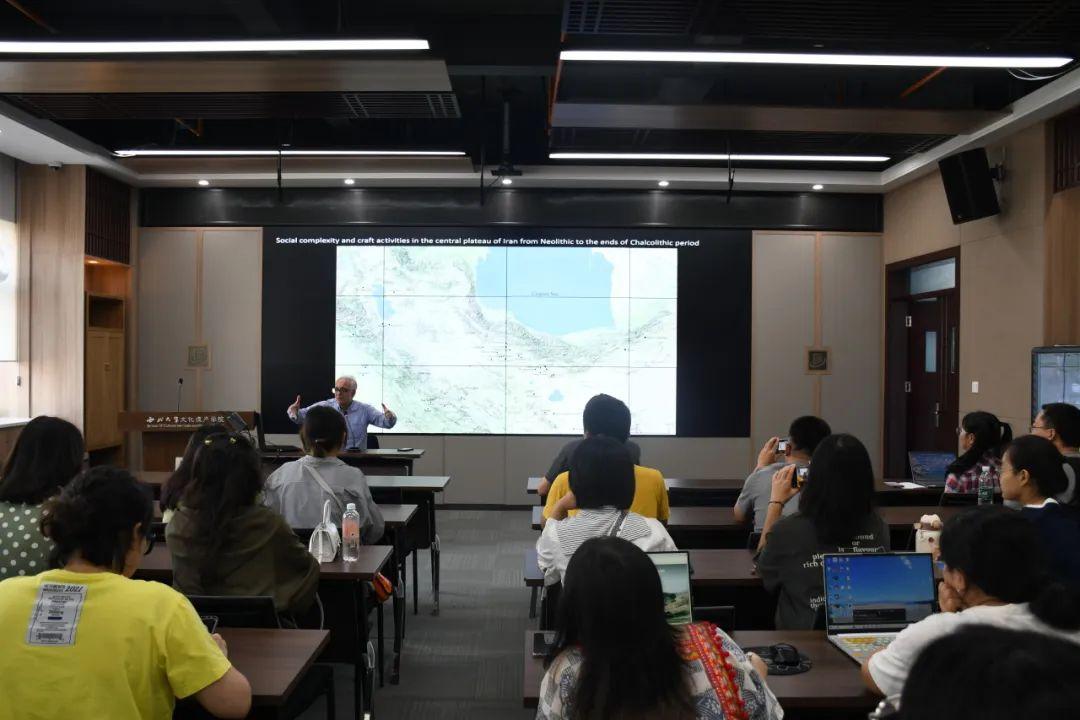
In this lecture, Prof. Fazli first focused on the social complexity and handicraft production in the Central Highlands of Iran from the Neolithic to the end of the Copper and Stone Age.
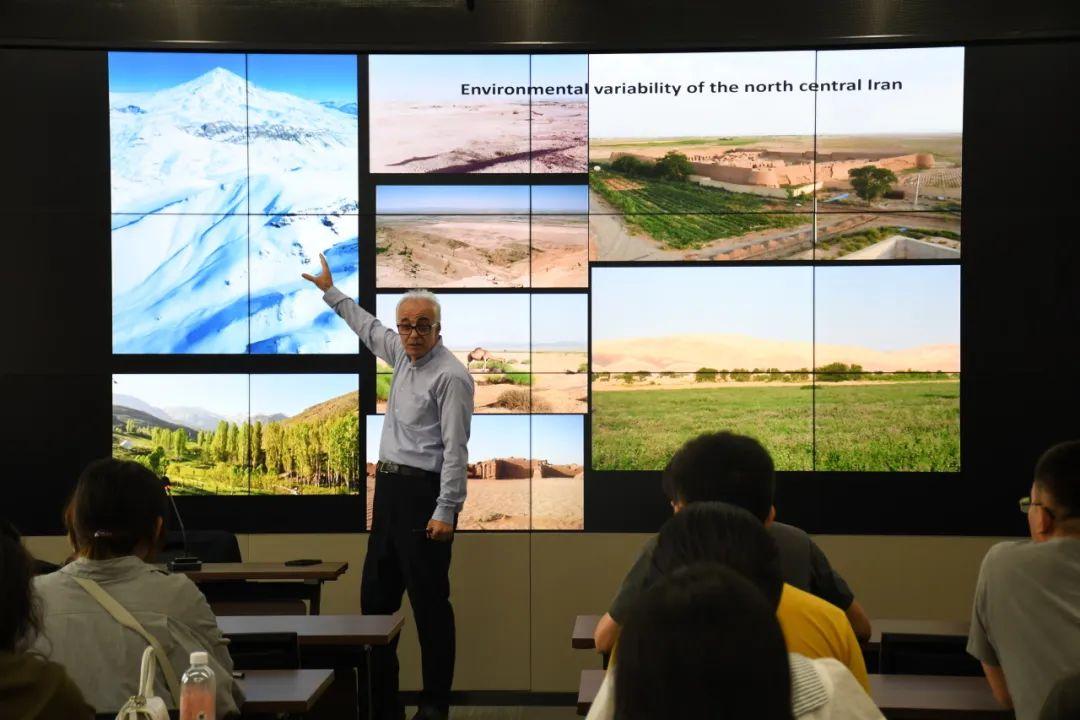
Prof. Fazli made an introduction on the environmental changes in the north-central region of Iran: the central plateau region of Iran has been an important area for early human activities since the Neolithic period. This was followed by an introduction to the process of Neolithization in Iran, unfolding issues such as the earliest agricultural populations as the beginning of the Neolithic period, the lifestyles of early agricultural populations outside of the Zagros Mountains (in the coastal region of the Caspian Sea), climatic events and the migration of early agricultural populations, the management of herds in the Late Neolithic period in Iran, and the domestication of cattle in the Near East and in the Iranian region.
The Iranian region reached a transition from a subsistence economy to a political economy and entered the era of craft specialization in 7200-5200 years before the present. This period can be roughly divided into two phases, namely, the transitional period of the Copper and Stone Age, 5200-4300 BCE, and the Copper and Stone Age, 4300-3400 BCE.
I. Transitional period of the Copper and Stone Age (5200-4300 B.C.)
The development of artisanal production in the northern part of the central Iranian plateau during this period was mainly reflected in pottery, which underwent a series of technological changes, such as the choice of clay, the emergence of simple wheeling techniques, and changes in ornamentation. In addition, the increase in the firing temperature of pottery implies the use of pottery kilns, and the manufacture and use of large-scale storage pottery due to the increase in surplus food indicates that there was an overcapacity in agricultural production during this period. At the same time, the settlement area expanded and the handicraft area was separated from the settlement area, showing the trend of urbanization. Another prominent manifestation of handicraft production in this period is the large number of spinning wheels in the sites, which indicates the rapid development of wool spinning production at that time. At the same time, the budding of early metallurgical technology was also found in many sites.
II. Copper and Stone Age (4th millennium BC)
Compared with the transitional period of the Copper and Stone Age, the handicraft production and social development in this period were characterized by the following four main features: (1) the specialized production of copper and pottery; (2) the emergence of large-scale copper alloy production sites, such as Tepe Ghabristan and Arisman; and (3) social and economic interactions with Mesopotamia and southwestern Iran, especially the Sousa II site, and the development of the copper alloy industry. economic interaction with Mesopotamia and southwestern Iran, especially the Susa II period, the emergence of the Uruk phenomenon; ④ the germination of the primitive Elamite writing system.
III. The Earliest State of Iran (3200-2800 BCE)
Prof. Fazli says that the fourth millennium BC is a very important and fascinating period in world history, and it was at this time that many early cities appeared in the Mesopotamian plains, and early writing systems developed from pottery chips appeared in southern Mesopotamia and the Iranian Plateau. From roughly the second half of the fourth millennium B.C. to the beginning of the third millennium B.C., the “Uruk Expansion” of this geographic area, characterized by bevelled rim bowls (BRBs) and carvings, has been considered an early globalization of material culture in prehistory. In addition, the “Primitive Elam Cultural Phenomenon” is introduced, with its distinctive anthropomorphic animal figures and scenes, the style of carving, and the unique style of ceramics.
IV. Iran Beyond Borders: Bronze Age Networks in Eastern Iran (3000-1200 B.C.)
As a result of the massive influx of people, a fusion of populations took place in the Khorasan region and the Gorgan Plain, which led to the emergence of the urban crisis in the 18th century BCE. At the same time, the large-scale increase in the number of sites in western Iran into the 18th century BC suggests that there was also a population growth in this region.
V. The Iranian Empire: Villages, Cities, States, and Empires in the Iron Age, 1250-330 BCE
For thousands of years prior to the Iron Age, people throughout Iran lived in villages and domesticated crops and livestock, and even in the first millennium B.C.E. the majority of the Iranian population continued to live in this way, and the emergence of large, high-status buildings suggests increasing inequality and social stratification in the first millennium B.C.E. The first half of the first millennium B.C.E. is the period of the Iron Age, and the second half of the first millennium B.C.E. is the period of the Iron Age. The expansion of the Midi tribal society in the first half of the first millennium BCE and the influence of Assyrian art and ideology in this area are mainly reflected in the changes in pottery in the Iron Age Sialk B cemetery in the Kashan Plain.
At the end of the lecture, scholars from the Silk Road Archaeology Cooperative Research Center interacted with Prof. Fazli on issues such as the early material and cultural exchanges between China and Iraq, and the atmosphere was warm. The moderator, Prof. Shao Huiqiu, summarized the content of the lecture and expressed his sincere thanks to Prof. Fazli.