

Academic Sharing丨Silk Road Archaeology and Heritage Lecture No. 7: The Mesolithic to Neolithic Archaeological Cultures of Central Asia

On the afternoon of December 5, 2023, the 7th lecture of Silk Road Archaeology and Heritage Lecture of the Silk Road Archaeology Cooperative Research Center was successfully held in Room 910 of the School of Cultural Heritage of Northwestern University, which was titled “Archaeological Culture of Central Asia from the Mesolithic to the Neolithic Period”, and was hosted by Prof. Svetlana Shnaider of the Institute of Archaeology, Siberian Branch of the Academy of Sciences of the Russian Federation. The lecture, entitled “Archaeological Culture of Central Asia from Mesolithic to Neolithic Period”, was given by researcher Svetlana Shnaider of the Institute of Archaeology, Siberian Branch of the Academy of Sciences of the Russian Federation, and moderated by Prof. Shao Huiqiu of the Silk Road Center for Cooperative Archaeological Research.
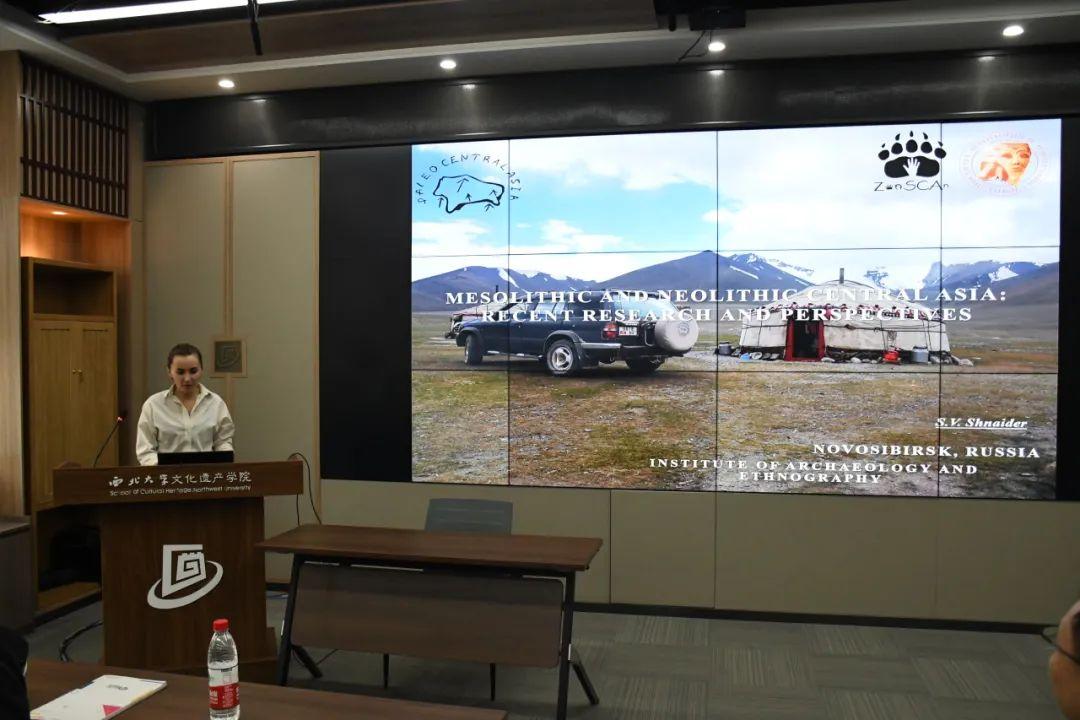
Lecture by Fellow Schneider
At the beginning of the lecture, Fellow Schneider gave a presentation on the active research on the late Pleistocene to early Holocene in Central Asia. The development of related research began in the middle of the last century, and as of today, more than one hundred sites have been discovered and studied, and cultural and chronological interpretations have been proposed. In the past, A.P. Okladnikov hypothesized that the criterion of dividing these cultural complexes according to the presence or absence of geometric fine stone tools in the lithic tool assemblage was well established. That is, cultural complexes with geometric fine-stone tools were categorized as Mesolithic, while those without them were categorized as Epipaleolithic. Later, this view was supported by V.A. Ranov, G.F. Korobkova and T.G. Filimonova. During the last decade, research on archaeological sites of the above-mentioned period has been resumed, with archaeologists carrying out on-site work and re-examining existing collections.
Prof. Shao Huichiu, Silk Road Archaeology Cooperative Research Center, chaired the meeting
Based on the comprehensive data obtained from the techno-typological analysis of archaeological collections, absolute dating, and analysis of paleozoological materials, Researcher Schneider and his team propose to classify the lithic industry of the above-mentioned period in the mountainous zone of Central Asia into three cultures: the Tutkaulian culture, the Alayan culture, and the Obishirian culture. Obishirian culture), which differed in terms of area of distribution, chronology, and specific techno-typological features of stone tool assemblages. Fellow Schneider provides a systematic introduction to each culture in the following sections.
I. The Tutkaul culture includes surface-collected material from the Tutkaul site (Tutkaul, culture layers 3 and 2a), Obi-Kiik and Zadian, and Nichka. Characteristics of this culture include primary flaking based on small stone leaves, the presence of a large number of geometrically shaped fine-stone tools, and the characteristic chronological change from trapezoidal-rectangular to semilunar fine-stone forms. Based on the technical attributes and stratified cluster analysis, the chronological framework of the Tutkower culture is defined as 20,000 to 9,000 years ago.
Second, the Alai culture includes material from Obbishir-5 (culture layers 4 and 5), Istykskaya Cave (lower layer), and Alai sites, which share similar characteristics: (i) the use of a soft-hammer-driven flaking technique for small stone leaves; (ii) a lower proportion of horizontal flaking techniques to obtain leaves and flakes; and (iii) a tool assemblage to facet back small The tool assemblage is characterized by small faceted leaves, end-scrapers, flake tools, and faceted pointed tools. The chronological framework of this cultural complex can be traced back to 15,000 to 11,000 years ago.
III. The Obishir culture includes material from sites such as Obishir-5 (Culture Layers 2 and 3), Obishir-1 (Culture Layer 4), Ak-Tangi (Gissar Layer), the Central Ferghana Basin Culture Complex, the Istikskaya Caves (Culture Layers 1 and 2), Oshhona, Kurteke, etc., and they have similar characteristics: (i) the technique of pressing fine stone leaf flakes; (ii) the tool assemblage is dominated by ventral repairs of fine stone leaves, end-scrapers, fine stone leaf perforators, unilaterally faceted dorsal small stone leaves, and trapezoidal fine stone tools. The chronological framework of the culture ranges from 9,500 to 6,500 years ago.
In addition, Researcher Schneider mentioned that at the Obisheer-5 site, the discovery of early domesticated sheep and goats was confirmed and dated to 8,500 years ago. The team led by Researcher Schneider recently demonstrated, through cutting-edge methods of ancient genetics and multidisciplinary analyses, that the sheep and goat bones extracted from the Obishehr-5 site belong to the domestication spectrum. Although these findings call for a complete reassessment of Eurasia's prehistory, it remains to be demonstrated whether the Obishehr phenomenon is a product of the development of early agro-pastoral systems at Western Central Asian sites such as the Jeitun culture. Thus, a pre-tau Neolithic phase, represented by the Obishir cultural complex, has been identified in Central Asia.
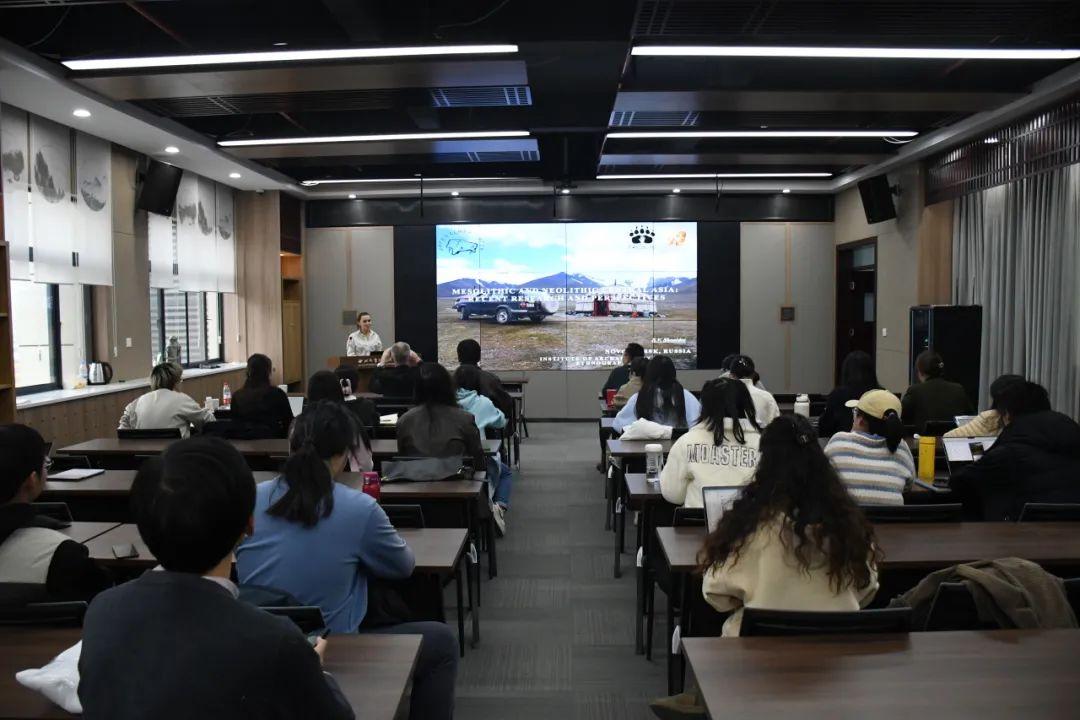
Lecture Scene
During the question-and-answer session at the end of the lecture, students and faculty members interacted with Prof. Schneider in a lively atmosphere. The moderator, Prof. Shao Huiqiu, summarized the content of the lecture and expressed his sincere thanks to Ferris Schneider.
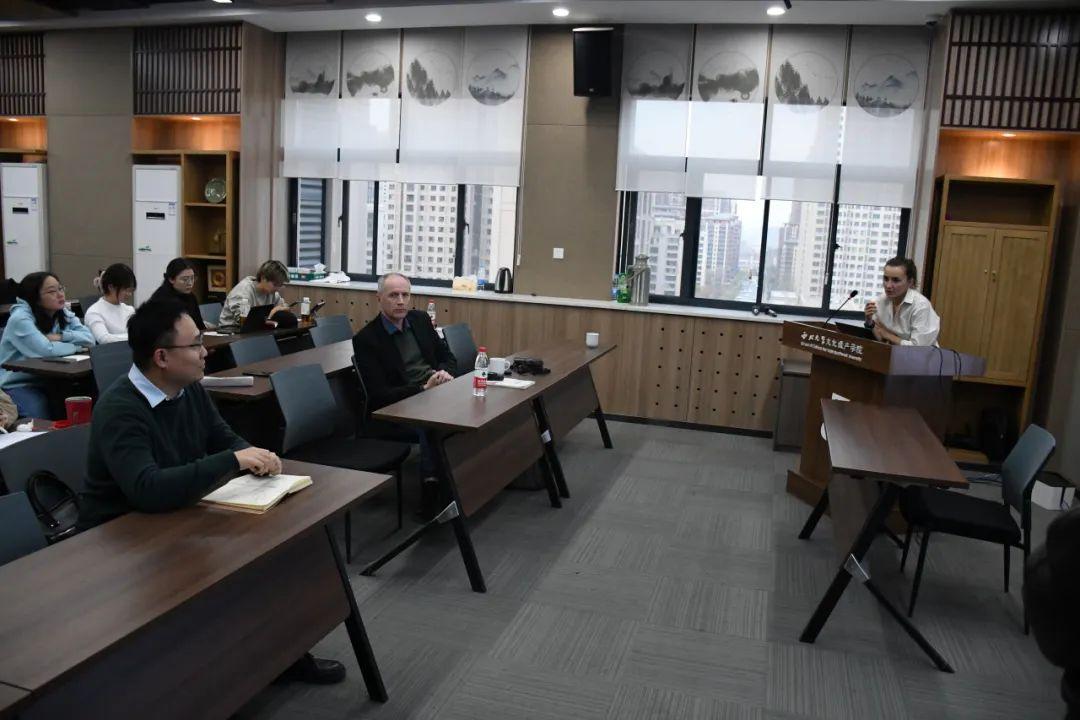
Exchange session