

Tomb of Khitan woman discovered in Mongolia
Recently, archaeological excavations in Mongolia's Eastern Province uncovered a nobleman's tomb in an abandoned fortress dating back to the 12th and 13th centuries, at the end of the Khitan and pre-Mongolian empires. The discovery provides a unique insight into the social structure, trade networks and burial practices of the time.
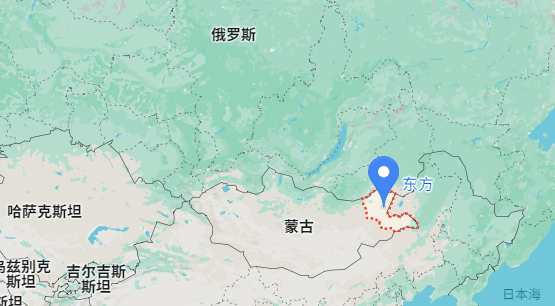
Location of Eastern Province of Mongolia
The Khitan (907-1125) once ruled over a large area in the east-central part of present-day Mongolia before being destroyed by the Jin Dynasty in 1125. After the fall of the Liao Dynasty, the Liao royal family, Yelu Dashi, moved westward to Central Asia to establish Western Liao, which was destroyed by the Mongols in 1218.
The place where this tomb was found is located in “Cluster 27” of the Haranaoer ancient castle complex. Located close to the northeastern border of Mongolia, this cluster of ancient fortresses was a strategic location that served as an important stronghold for the Khitan Empire and was known for its impressive walls and fortifications. Interestingly, the tomb appears to have been built after the fortress was abandoned, suggesting that the area was reused during the regime change.
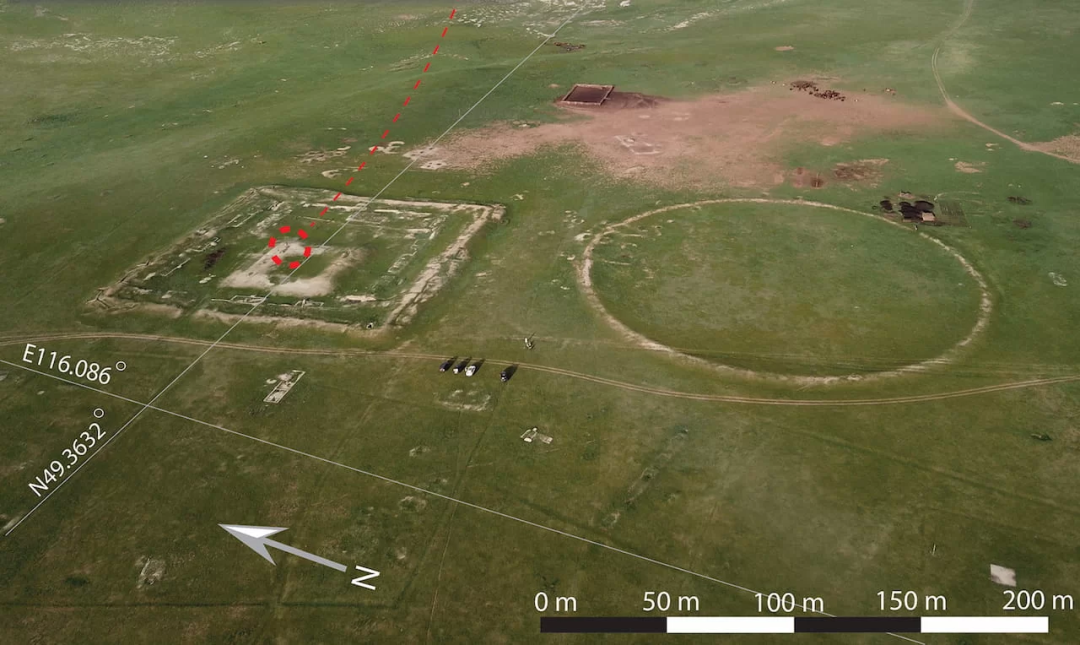
Archaeological site
The site is located about 1.4 kilometers west of Lake Haranur, where there is a large circular building with a smaller rectangular enclosure inside. Archaeologists have discovered a well-preserved tomb within the outer wall of this enclosure, dating between 1158 and 1214 AD.
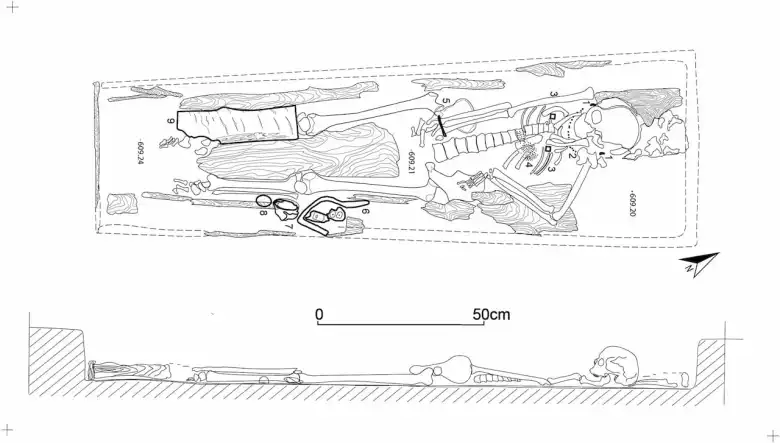
Plan of burial 27 in Karnol
The remains of an adult female between the ages of approximately 40 and 60, wearing a yellow silk cloak and adorned with precious objects, were found in a wooden coffin inside the tomb.
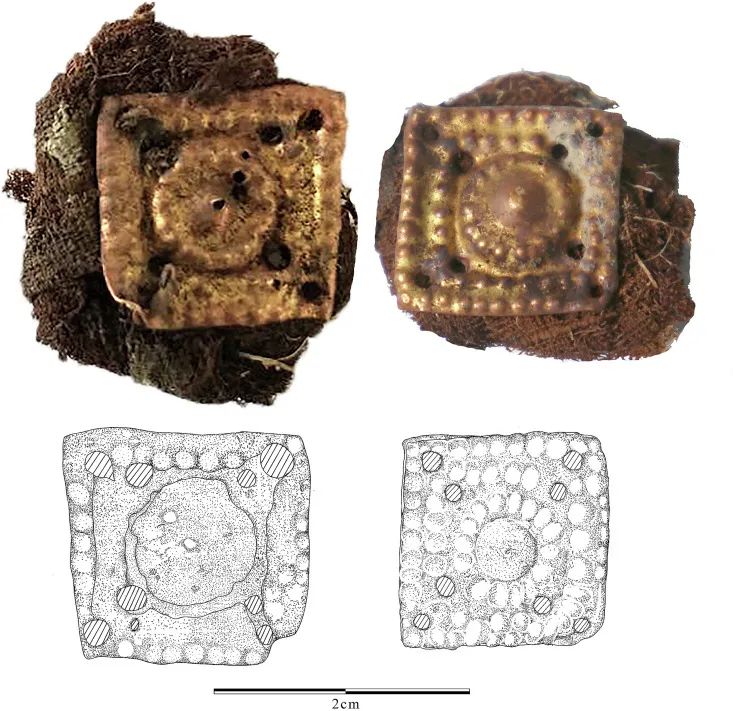
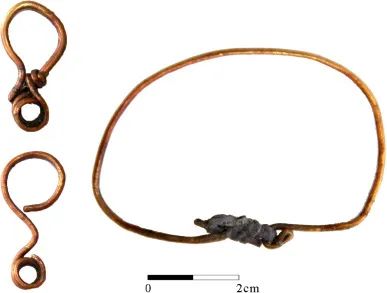
Left: two gold ornaments, one of which retains its textile backing
Right: one gold bracelet and two gold earrings
Judging by the burial objects found in the tomb, such as gold earrings, silver cups, bronze vessels, gold bracelets, and coral and glass beads, this woman would have been an aristocrat.
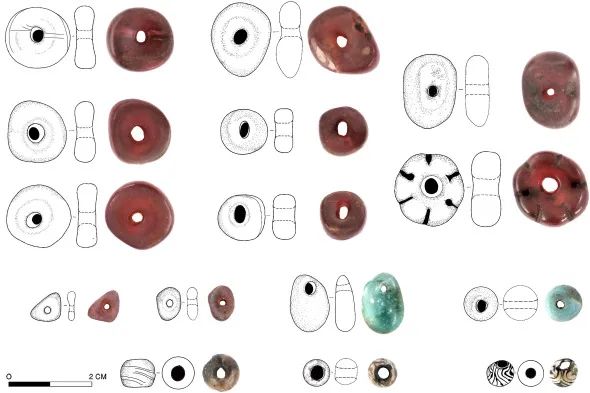
Glass beads unearthed from the tomb
These burial items were supposed to help her live a happier life on the other side. At that time, the Mongols generally believed in Tengri, the Eternal Sky. The Mongols took “Cangtian” (the firmament) as the eternal god, so they called it “Everlasting Heaven”. However, it is not clear in what way and with what ceremony the buried artifacts are connected.
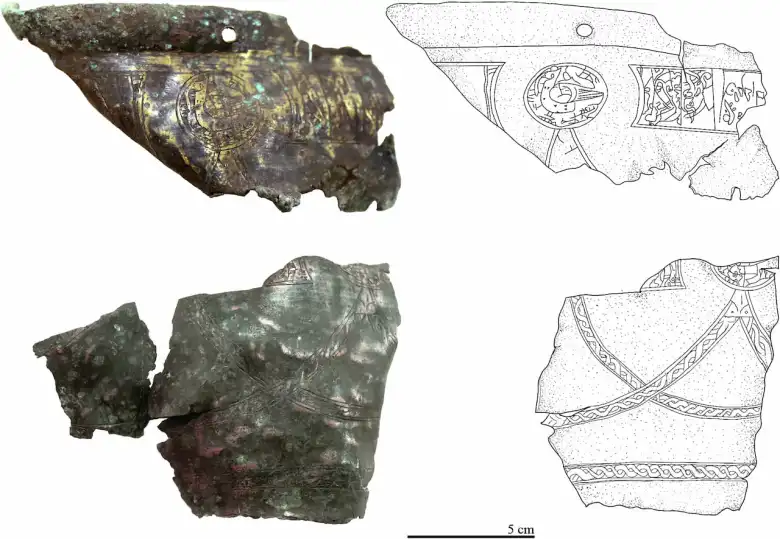
Remains of a decorated bronze vessel
The most striking artifact from this find is a small bronze cup with geometric designs and fine lines. It is significantly different from other medieval artifacts found in Mongolia, or is associated with some unknown craft tradition. A fragment of a wooden object wrapped in leather and framed in bronze was also found. Its purpose is unclear, but it may be an arrow pouch or bow case, which were often buried with male nobles during the Mongol Empire.
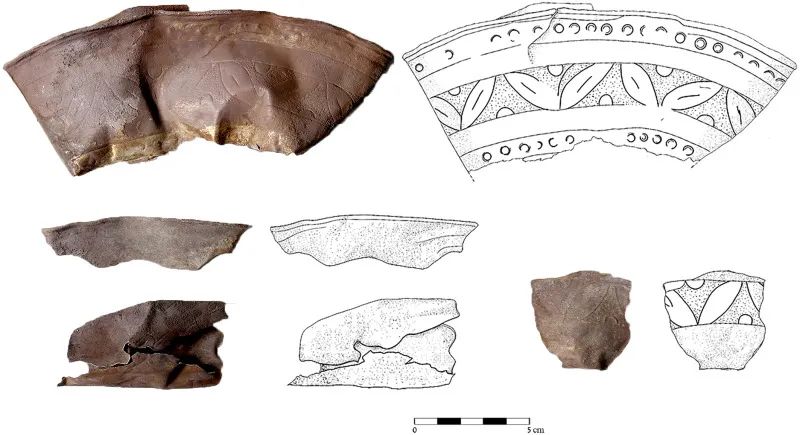
Fragments of a silver cup
Another noteworthy object is a silver cup, originally about 17 centimeters in diameter, now broken into 26 pieces. The cup is richly patterned with gilded stripes, and similar objects have been found in medieval Mongolian period tombs.
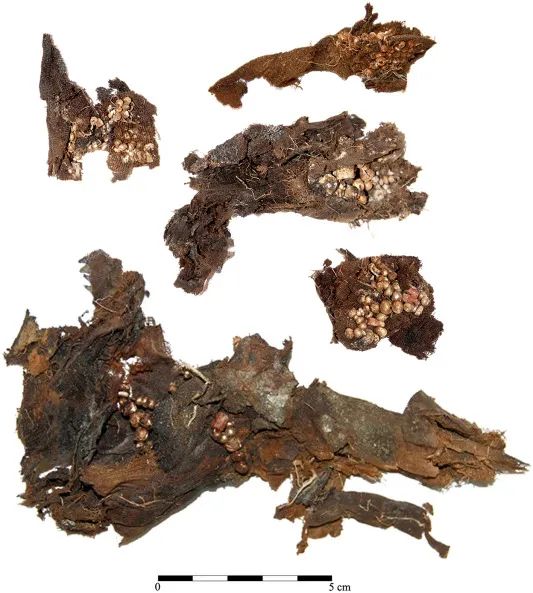
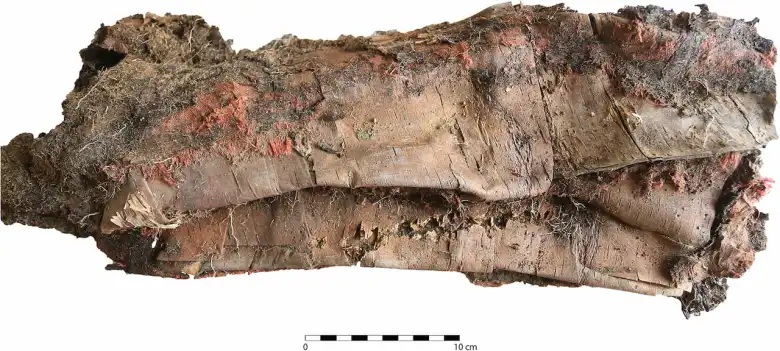
Many of the artifacts are not of local Mongolian origin. Silk, for example, may have come from southern China, while wood may have been taken from birch, mulberry, or larch trees, which are about 150 to 300 kilometers away. These discoveries are further evidence of the extensive trade networks and cultural exchanges that existed at the time.
.
Location of Eastern Province of Mongolia