

Early Gold Technology and the Eurasian Steppe: A Comprehensive Study of Gold and Silver Artefacts Unearthed from Tomb No. 2 in Xigoubian, Ordos Region, Inner Mongolia
Liu Yan1, Li Rui2, Yang Junchang1, Liu Ruiliang3, Zhao Guoxing2, Tan Panpan4
1.Research Center of Material Science and Archaeology, Institute of Cultural Heritage, Northwestern Polytechnical University, Xi'an 710072, China
2.Ordos Museum, Ordos 017000, China
3. Oriental Department, British Museum, London WC1B 3DG
4.Nano Energy Materials Research Center, School of Materials, Northwestern Polytechnical University, Xi'an 710072
ONE,
INTRODUCTION
Gold products, due to their high value and easy portability, were favored by nomadic communities living on migratory water and grass, and circulated and spread extremely widely in Eurasia, carrying rich historical and cultural information, which is the best case to study the early material and cultural exchanges and technological diffusion. In recent years, a large number of superbly crafted gold artifacts have been unearthed from Pre-Qin period tombs in northwestern China, such as the East Tallard Cemetery in the Altay region of the Xinjiang Uygur Autonomous Region, the Dongheigou and Xigou ruins in the Eastern Tianshan region, and the Majia Plateau Cemetery in Zhangjiachuan, Gansu Province, reflecting a complex style that blends local characteristics with foreign influences in both craftsmanship and decoration. Many of the gold crafts seen today, such as molding, beadwork and filigree, originated in West Asia and were introduced to China via the Central Asian steppes [2]. As a foreign material culture, gold products provide a unique window into ancient China's interactions with the rest of the world.
The use and production of gold in the Eurasian steppe has a long history, but in the Shang and Zhou societies, it was not treasured by the elites in the Central Plains [3], [4]. Since the 4th century BC, some exotic techniques and images have been incorporated into indigenous gold production, and they have become the material embodiment of individual or group identity in new social contexts. The influence of steppe culture on gold production in the northwestern borderlands of China has been a hot topic of discussion in both Chinese and Western academic circles. It is generally believed that the entry of early gold technology is closely related to the frequent exchanges between the Chinese borderlands and the Eurasian steppe during the Warring States period [5], [6], [7]. However, against the backdrop of more frequent cultural exchanges in early Eurasia, some key questions, such as: how did some new styles and techniques in early gold production emerge? How did local societies respond to the introduction of foreign material culture? Whether there were technological innovations under the influence of foreign cultures, etc., has not yet received sufficient attention.
The archaeological remains of gold and silver artifacts in northern and northwestern China provide rich physical data for understanding the development of early gold technology in early antiquity.Between 1979 and 1989, a total of twelve vertical cave tombs were discovered in the Xigoubian Cemetery in the northern part of Jungarqi, Ordos Region, Inner Mongolia (Fig. 1). Among them, Tomb No. 2 (M2) was better preserved and the richest gold and silver objects were unearthed. The tomb owner is an adult male, a total of 38 pieces of gold and 12 pieces of silverware were found, with a gold collar on the neck, a pair of gold earrings on both sides of the skull, a copper mirror and a round deer pattern gold ornamental piece, an iron sword under the right hand bone, with a wooden scabbard wrapped in gold flakes outside, and round gold bubbles in the combination of gold flakes, a gold medal ornament on the waist, a copper round flake ornament and a gold finger cuff on each of the two leg bones, and a number of silver flower flakes on both sides of the waist. [8] This tomb is thought to belong to the Huns recorded in the history books (209 BC ~ 159 AD), however, the artifacts unearthed in Tomb 2 and other tombs date earlier than the 2nd century BC.
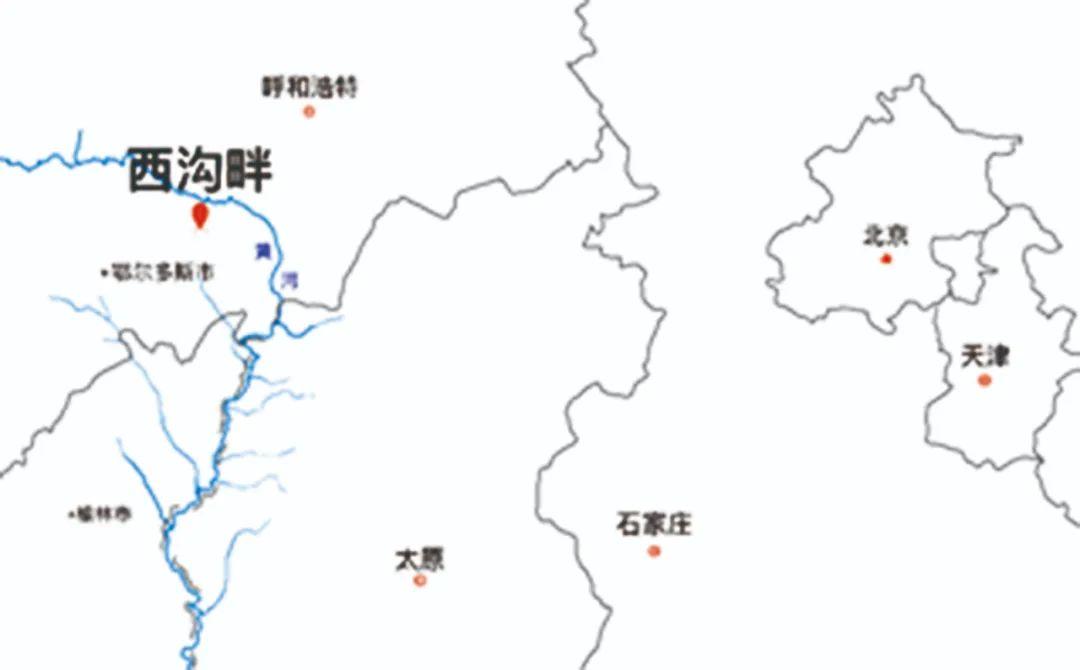
Figure 1 Schematic Location of Xigoubian Cemetery (Painted by Tuoba Zhuoyan)
The discovery of a considerable number and rich variety of gold and silver ornaments in Xigoubian Cemetery and other sites in the Ordos area has attracted extensive attention from the academic community. Many scholars have started to explore the production, use and circulation of precious metal products in the border areas of northern China. It is generally believed that some of the cast gold and silver objects found in Tomb No. 2 in Xigoubian are considered to be the artifacts made by the craftsmen of the Central Plains to satisfy the market demand in the borderlands [9], [10], [11], [12], and like other gold and silver objects found in other northwestern regions of China, they are the products of the interaction between the early China and Eurasian steppe cultures [13], [14]. Unfortunately, there are few scientific analyses of Ordos gold and silver artifacts. Wang Zhihao and Odagi Jitaro et al. have used portable XRF to conduct a preliminary analysis of the metal composition of some of the gold and silver objects excavated from Xigoubian, Mianfangqu and Limegou, and found that the metal content composition has a high degree of consistency, and therefore deduced that gold and silver products excavated from these three places were made using the same metal raw materials [15]. Due to the limitation of data acquired by portable XRF and the insufficiency of process research, a series of issues about the source and origin of Ordos gold and silver wares, especially the process connotation, style and origin of Ordos animal print gold and silver jewelry still need to be explored in depth.
In this paper, from the perspective of interdisciplinary research, we introduce the material analysis under the microcosm into the macroscopic study of early cultural exchanges, combining scientific analysis with art historical and archaeological studies to carry out comparative studies in terms of technology, style and image. We have used super depth-of-field microscope and scanning electron microscope with energy spectrometer to analyze the gold and silver wares in Xigoubian Tomb No. 2 in a non-destructive way, to clarify their production techniques, technical features, material properties and metal compositions, to carry out a comprehensive study in terms of decorative styles, technical features, metal compositions and technological traditions, and to investigate whether some of the new styles and techniques that appeared in the gold and silver wares of the early Chinese period were local innovations under the foreign influence and the cultural motives behind them. We will also discuss whether some of the new styles and techniques that appeared in early Chinese gold and silverware were local innovations under foreign influence, and the cultural motives behind them.
II,
Scientific Analysis
1. Analytical Methods
This study adopts non-destructive analysis methods, and the instruments used include a three-dimensional digital microscope system and a scanning electron microscope with an X-ray energy spectrum analyzer. The models of analytical instruments used are as follows: optical microscope, HIROX Digital Microscope KH-7700 from Japan; scanning electron microscope, VEGA TS5136XM; energy spectrum analyzer, INCA-300.
First of all, the use of three-dimensional digital microscope system to observe the surface of each piece of cultural relics, focusing on the observation of processing traces and defects, such as ornamental lines, holes, edges of ornaments, cracks and so on, which is the basis for the study of ornamental processing technology. Secondly, on the basis of microscopic observation, and then in the scanning electron microscope for more detailed observation of some special phases, and the use of energy spectrometer on the body of cultural relics and typical parts of the elemental collection, in order to obtain the relevant analysis of the elemental information of the detection location (each piece of ornamentation on the front and back are done to test, each side of at least three areas or points to take the test, and seek its average value). Finally, on the basis of observation and testing and analysis, a comprehensive study to clarify the material and processing technology of the cultural relics body.
2, analyzing samples
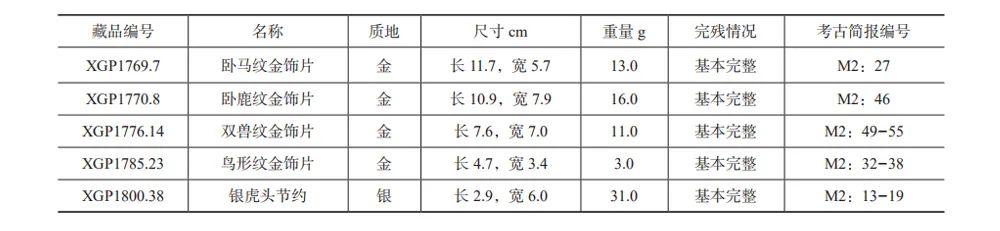
This study selected four pieces of gold ornaments and one piece of silver savings for non-destructive analysis, as follows:
Reclining horse pattern gold ornaments (XGP 1769.7), ornaments for rectangular, four sides to the back folded, the surface has a shallow relief pattern. On the front of the piece, there is a raised sun line around the perimeter of the piece as a frame, and in the center, there is a raised line that divides the motifs of the piece into two groups, each group consisting of two horses reclining in the same direction, and the two groups of motifs forming a “mirror image” along the raised line. The decoration on the front of the piece is carved in shallow relief. The four horses in the decoration are similar in size and shape, but the fine lines of the decoration vary considerably. There are two perforations on the surface of the ornament for fixing and lacing (fig. II, 1).
Reclining Deer Gold Piece (XGP1770.8), the ornament is rectangular in shape, with raised positive lines around the front of the ornament as a frame, and raised positive lines in the middle dividing the rectangular frame into two, which also divides the ornament into two groups of decorative motifs, each of which has a bending limb of a reclining deer, with its branched antlers reaching to the tail, and the overall motif of two deer reclining in the reverse direction relative to each other. The overall pattern is two deer lying in opposite directions. The front of the ornaments has a convex pattern, while the back has a concave pattern. The two deer are similar in size and shape, and the fine lines of the decorative motifs vary considerably. There are 18 holes on the surface of the ornament, which are used to fix the ornament. The body of the ornament is also broken in several places (fig. II, 2).
Double-beast Gold Piece (XGP1776.14), square in shape, with raised sunburst lines around the front as a frame, within which is a design of two reclining beasts, with flexed limbs stretched out in front of them and their tails curled upwards. The design on the front of the ornament is raised and carved in shallow relief, with perforations in all four corners. Seven similarly shaped ornaments of similar size were excavated from this tomb (Fig. II, 3).
The gold piece with bird-shaped motifs (XGP1785.23) has an overall design resembling a standing bird in the shape of a vulture with its wings and tail spread out. The front of the piece has raised lines of decoration and four perforations. Seven similar ornaments were recovered from this grave (fig. 2, 4).
Silver Tiger's Head Save (XGP1800.38). The ornament has a tiger's head on the front, a bird's beak motif on the lower jaw, smaller limbs, a double bird's beak motif in a scrolling cloud on the lower part, and a cross-shaped perforation on the back (fig. III, 1). A total of seven similar ornaments were excavated from this burial.
Table I Non-destructive analysis of gold and silverware sample information
3、Analysis results
(1) Production process and technical characteristics
Microscopic observation shows that the silver tiger head saving (XGP1800.38) adopts the casting process, and the contour lines of the eyes are engraved. Figure 3b is the left eye of the tiger head and the surrounding parts of the scanning electron microscope photographs, you can see the raised eye was a continuous change in the arc, the eye socket is a concave “carving” performance, the edge of the eye socket line is relatively smooth and rounded, but also can be seen around the area of the distribution of holes of varying sizes, in the SEM is more clear (Figure 3, 3), should be casting shrinkage or shrinkage holes, the silver tiger head savings (XGP1800.38). Should be casting shrinkage or shrinkage holes, these morphological features indicate that the silver tiger's head savings should be casting molding.
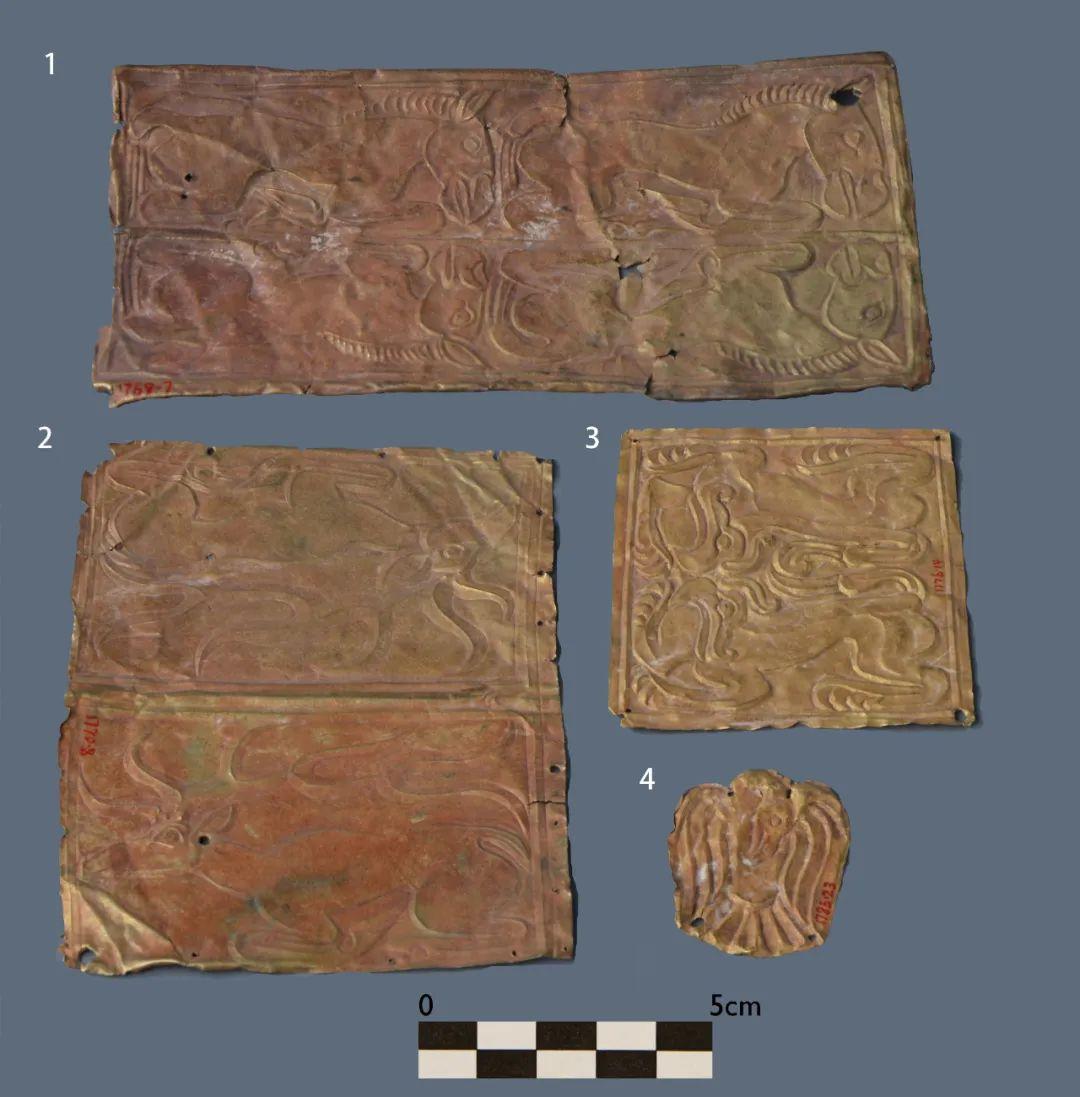
Figure 2 Gold ornaments unearthed from Tomb No. 2 in Xigouxian (non-destructive analysis of samples)
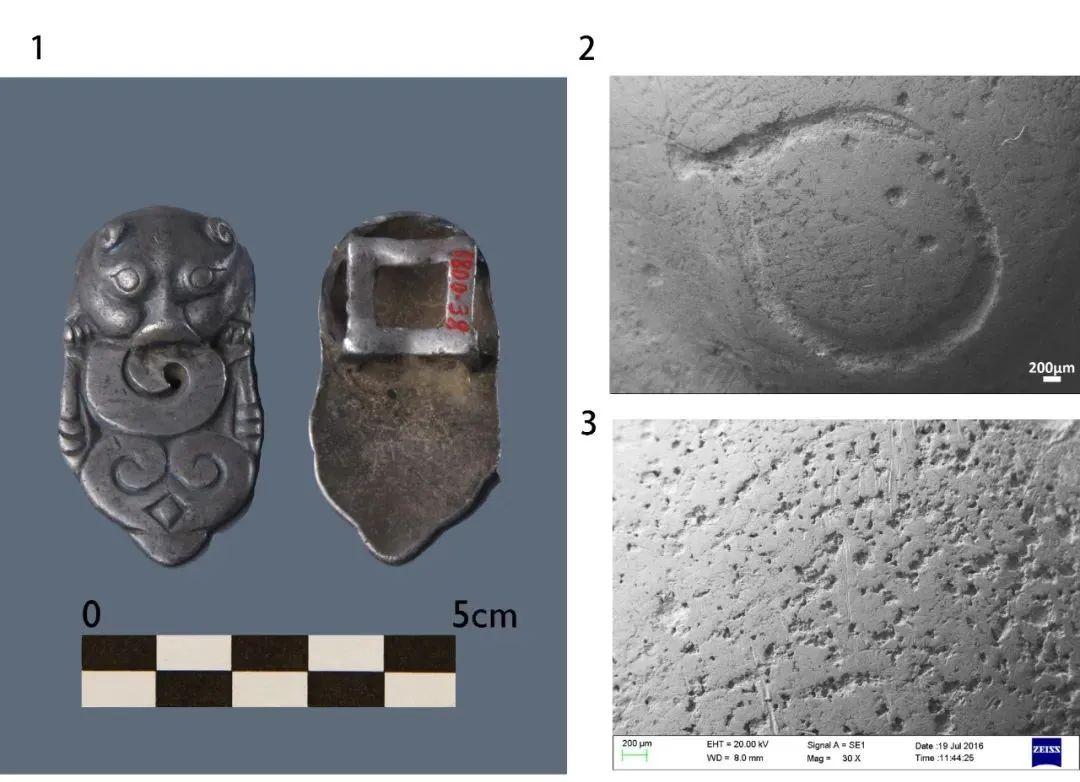
Figure 3 Silver Tiger Head Saving from Tomb No. 2 in Xigouxian (XGP1800.38)
1. obverse and reverse 2. engraving marks on the eye of the tiger head 3. cast shrinkage or shrinkage marks on the tiger head
Microscopic observation reveals that the lines of decoration on all four gold ornamental pieces are formed by the double-sided engraving process. In order to achieve the three-dimensional effect of shallow relief, each line is engraved three times or two times with different strengths, one of the stronger engraving is carried out from the back of the gold ornamental piece, and the other two or one weaker engraving is carried out on the front, the purpose of engraving a strong engraving is to make the decorative lines raised.
In Figure 4, a group of motifs in a gold piece with a reclining horse motif (XGP1769.7), the motifs on the front side are raised in shallow relief (Figure 4, 1), and on the reverse side, the images are recessed. Due to the good ductility of gold, when engraved from the reverse side with force, a narrow band of convexity is formed on the surface of the gold sheet. Under a microscope, the features of the ornament's border frame lines, the horse's ears and the lines of the horse's mane part of the decoration can be clearly seen. The raised A line of the border of the gold ornament is formed by the back side of the hard engraving, B1 and B2 lines are engraved on the front side (Fig. 4, 2), and the outlines of the ears of the reclining horse are also engraved on the front and back sides to form the effect of shallow relief (Fig. 4, 3). In the area of the horse's mane, lines D1-D5 can be seen to be incised from the back, while lines E1 and E2 are incised from the front (Fig. 4, 4). This double-sided engraving feature is clearer in the scanning electron microscope, and there are no traces of pounding on the surface, so it is clear that the decoration of the Reclining Horse Pattern Gold Piece was obviously made using a double-sided engraving process. In order to make the lines clear and three-dimensional, sometimes moderate force and repeated strokes are necessary.
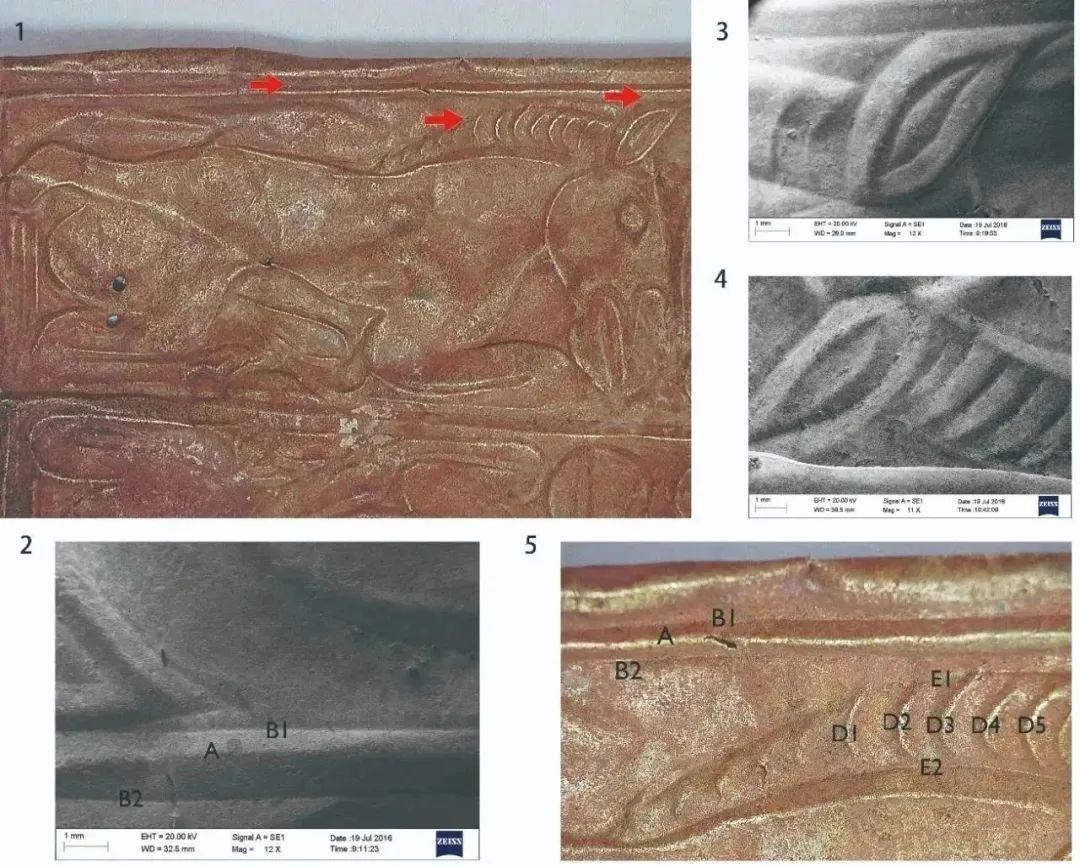
Figure 4 Reclining Horse Gold Piece (XGP1769.7)
1. front face 2. rim lines 3. partial detail of the ear 4. back of the ear 5. incised lines in the horsehair area
The use of double-sided engraving process is more obvious in the Reclining Deer Gold Piece (XGP1770.8), as shown in Fig. 5, the deer head, antlers, and ears, the engraved lines on both sides are very clear: the lines in the middle are engraved from the back with great force, and the lines on the two sides are engraved from the front, but with a slightly weaker force. Under the microscope, you can clearly see the characteristics of the antlers' decorative lines. Line A is the line formed from the back of the gold piece, while lines B1 and B2 are the lines formed from the front side of the engraving (Figure V, 1). The antler part of the decorative line is formed with three engraved lines, but the line of the deer jaw part and the contour of the body is formed with two lines (Fig. 5, 2, 3), the A line on the jaw of the deer is formed by engraving from the back side of the gold ornamental piece with great force, while the B line is engraved on the front side, and the A line on the contour of the deer's body is formed by engraving from the back side of the gold ornamental piece with great force, while the B line is formed by engraving on the front side. This technical feature of double-sided engraving is more obvious when viewed in a scanning electron microscope. Antler parts of the engraving, but also can be seen some technical defects, there are engraved when the phenomenon of walking knife and repeated traces of engraving (Figure V, 4, 5).
Figure 6 shows that the lines of the double-beast pattern gold piece (XGP1776.14) are also engraved, with line A being formed by the tool from the back of the gold sheet, while line B is engraved on the front side, showing a three-dimensional effect in shallow relief. The bird-shaped gold piece (XGP1785.23) has the same technical characteristics. Figures VI, 1 and 2 show that line A is the main line, which is formed by a tool by forcefully carving from the back of the gold piece, while line B is formed by carving on the front side to emphasize the three-dimensional effect of the shallow relief, and the traces of the carving can be clearly seen in the scanning electron microscope (Fig. VI, 3). Our simulations show that the tools used by the artisan were apparently not very sharp, probably with a blunt tip, and that a tool that was too sharp would have cut through the gold piece (Figs. VI, 3; VII, 4).
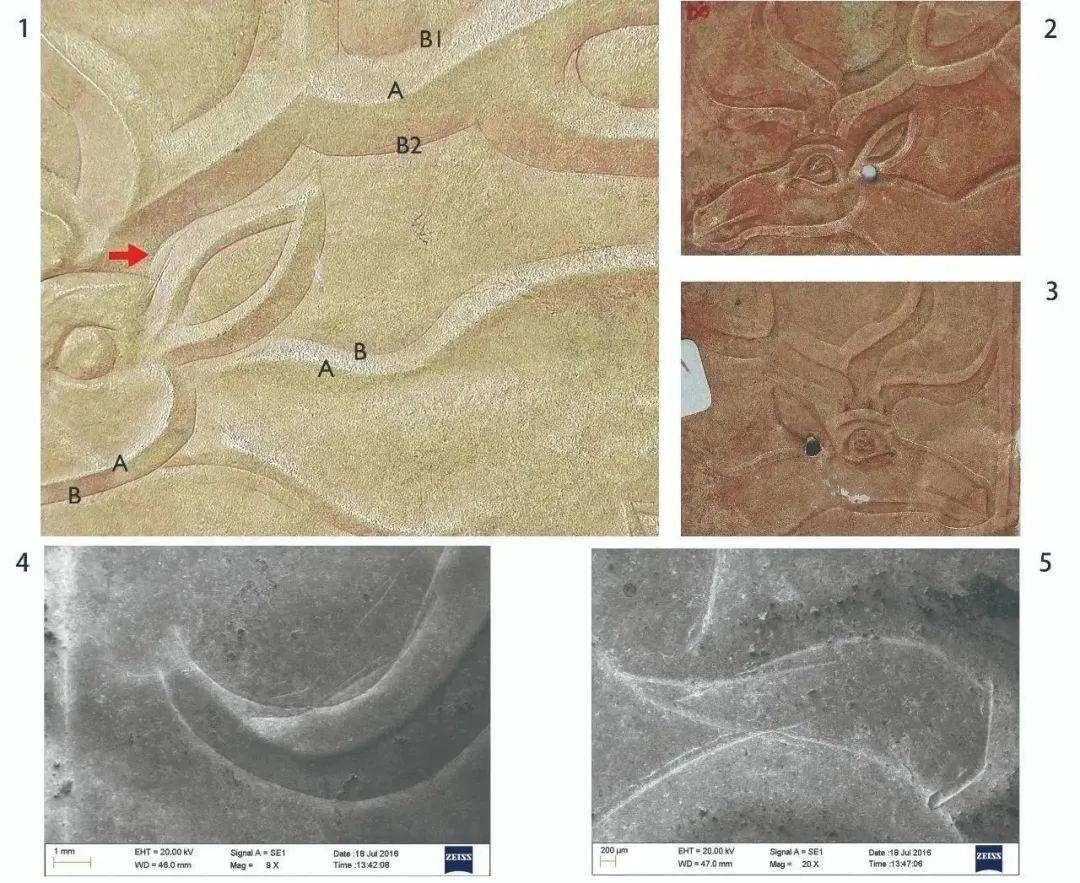
Figure 5 Incised marks on the antlers, ears and body of a reclining deer gold piece (XGP1770.8)
1. obverse side 2. front of deer head under microscope 3. incised marks on reverse side 4. return cut on antlers 5. SEM image of repeated incised marks
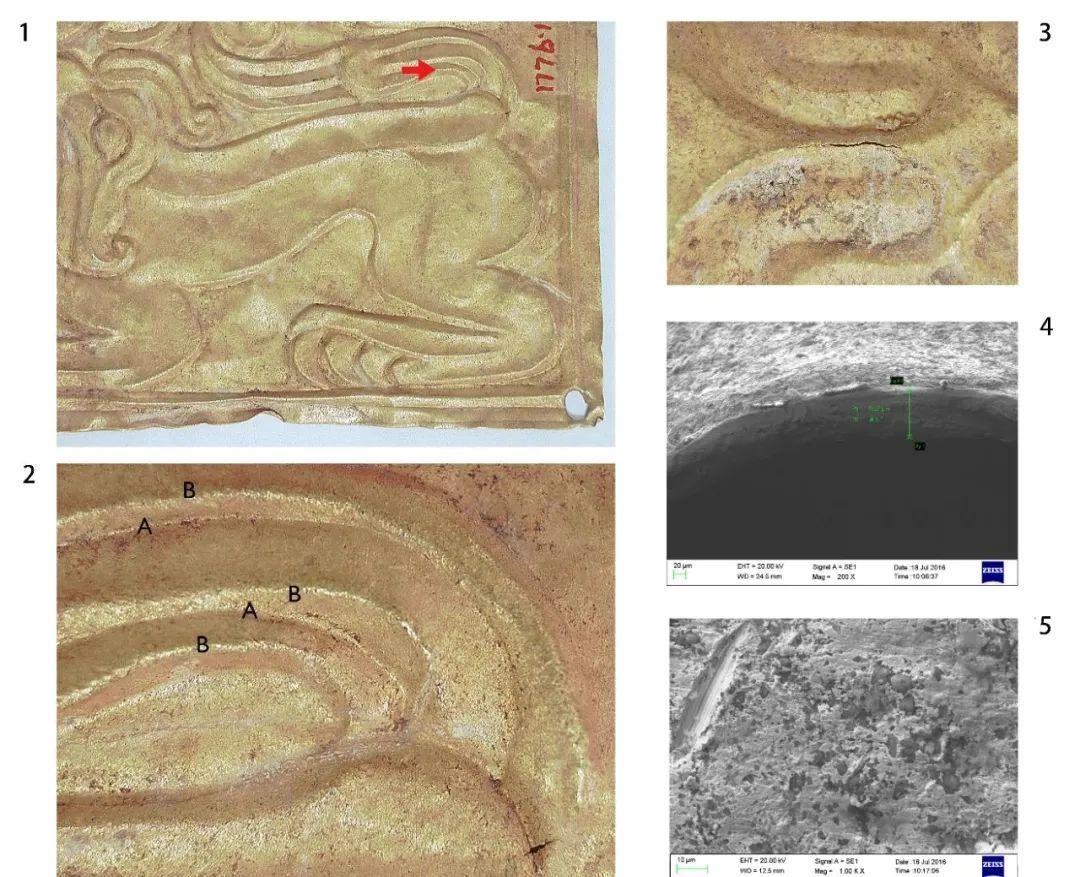
Fig. 6 Beast-shaped gold ornament (XGP1776.14)
1. obverse 2. partial detail of tail 3. partial crack 4. thickness of gold decoration 80-100 μm 5. partial scratches
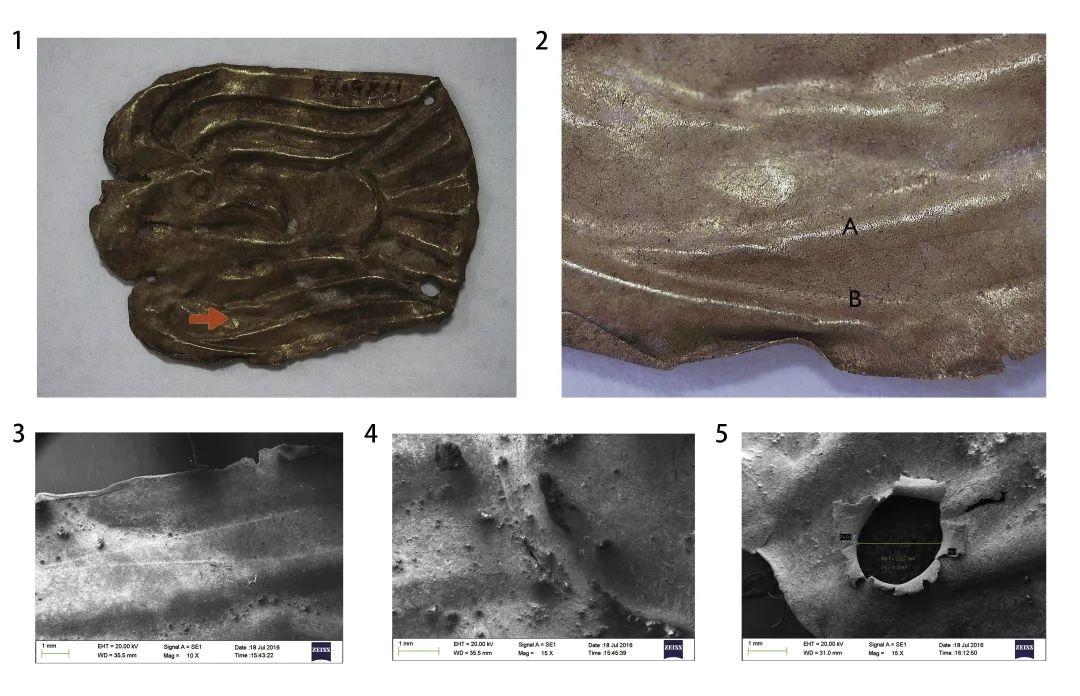
Figure VII 1. Bird-shaped gold ornament (XGP1785.23)
1. obverse 2. frontal micrograph of wing detail 3. localized scratches 4. surface cracks 5. poke hole detail
Further observation reveals that the edges of all four pieces are not very regular, and that the cutting tools are not very sharp. In addition, microscopic observation reveals that all four pieces have “jabbed” holes (fig. VII, 5), which were used for threading cords through clothing or other objects; measurements show that the jabbed holes have a diameter of about 1 mm, and that a few are larger, at about 2 mm in diameter, and that some of the holes have a diameter of about 2 mm. Scanning electron microscopy analysis of the cross-section of the ornaments and thickness measurements revealed that the thickness of the gold ornaments is not uniform: the horse-rimmed gold ornament (XGP1769.7) is about 200 μm thick, the deer-rimmed gold ornament (XGP1770.8) is about 80-93 μm thick, and the beast-rimmed gold ornament (XGP1776.14) is about 80-112 μm thick (fig. 6). 80-112 μm (Fig. 6, 4), and the bird-shaped gold ornament (XGP1785.23) is approximately 68-72 μm thick.
(2) Metal composition
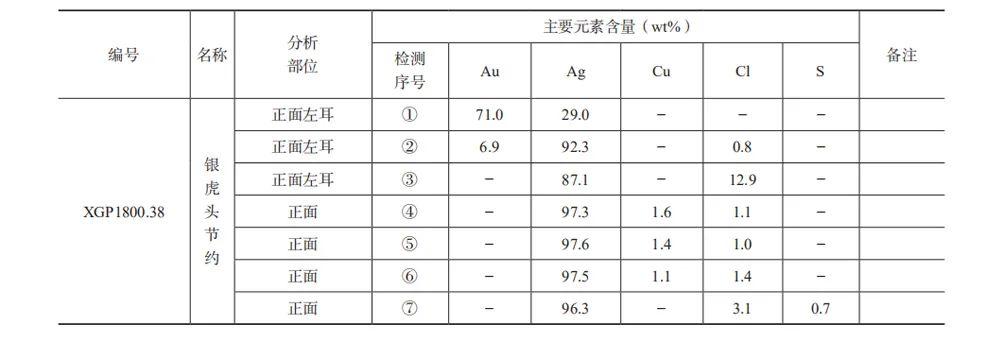
From the results of the energy spectrum analysis in Table II, the Au content of the Reclining Horse gold fragment (XGP1769.7) varies from 81%-91 wt.%, the gold content of the Reclining Deer gold fragment (XGP1770.8) varies from 78%-83 wt.%, the gold content of the Twin Beasts gold fragment (XGP1776.14) varies from 88%-91 wt.%, the gold content of the Bird-shaped gold fragment (XGP1785.23) is about 68-72 μm thick, and the metal composition is about 1.5 μm thick. XGP1785.23) has a gold content of 86%-93 wt.%. The distribution of the main gold and silver elements is very uneven, and some of them contain a small amount of copper, which should be made of natural gold. The EDS results of the silver jewelry show that the main element in the silver is silver, 87.1-97.6 wt.%, but also contains a small amount of copper, and the chlorine and sulfur elements are mainly from the soil in the burial environment.
Table 2 SEM-EDS analysis results of gold ornaments
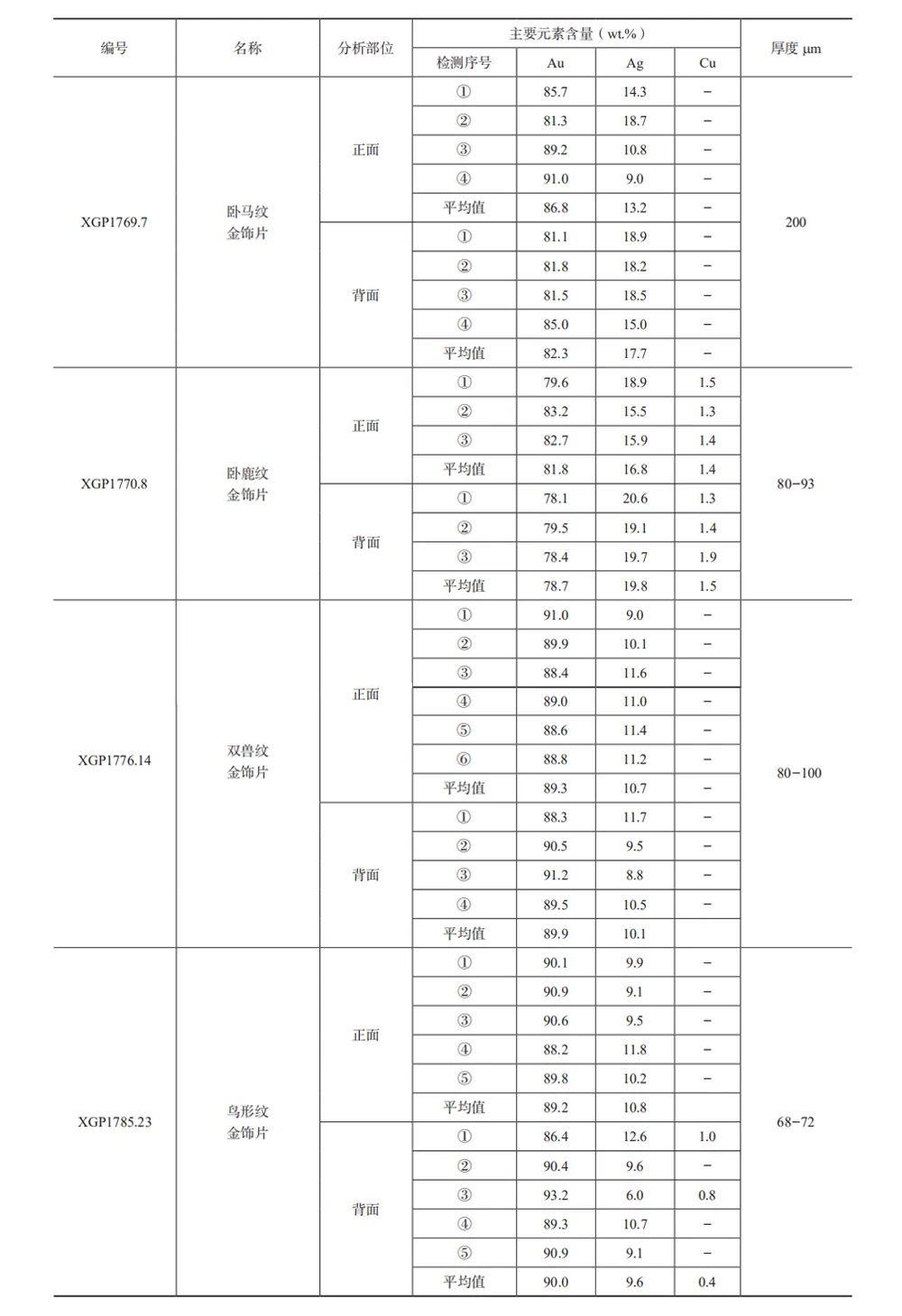
Table III EDS analysis results of silver jewelry
Triple,
Double-sided engraving and the Qin craft tradition
Gold has extraordinary ductility and can be pounded into thin slices, which can be engraved, scribed, and punched to form different shapes, and can also be combined with fine gold crafts such as beadwork (also known as “granulation” and “bead-blasting”) and filigree as fine decoration. In the Bronze Age, gold was often pounded into gold foil for surface decoration of bronze and lacquer wares, and gold foil with a thickness of only 10 μm was found at the site of Yinxu in Anyang, Henan Province [16]. As early as the 9th~7th centuries BC, gold ornaments decorated with animal motifs in shallow relief began to appear in the northwestern borderlands of China, such as the gold ornaments in the shape of snow leopards unearthed from the East Tallard Cemetery in Altay, Xinjiang [17]. In the fourth to third centuries, these gold ornaments were popular in the Ordos region. In addition to the deer pattern and other gold ornaments unearthed in the No. 2 tomb in Xigouxian, typical examples also include the dragon pattern gold ornaments found in the cellar of Mianfangqu in Dongsheng, Inner Mongolia (4th~3rd centuries B.C.) [18], the hedgehog pattern silver ornaments unearthed in the site of Lime Gou (4th~3rd centuries B.C.) [19], and the tiger pattern gold ornaments found in the cemetery of Aru Chaiteng (4th~3rd centuries B.C.) [20]. These burials with rich gold and silver ornaments belonged to steppe nomadic tribal leaders and notables from the northern borderlands, many of which were categorized as Xiongnu, a tribal confederation of states established in the northern part of the Asian continent by nomads in the northern part of the desert (4th~1st centuries B.C.) [21].
Some of the shallow-relief animal motifs on the gold ornamental pieces from Xiguanside were previously thought to have been whacked [22], and the results of the above analysis suggest that a double-sided engraving process was actually used. Among the gold remains from the same period, silver ornaments of large-horned deer unearthed from the Liu Ping Warring States Cemetery in Qingshui, Gansu (4th~3rd centuries BC) (Fig. VIII, 1), as well as gold and silver ornaments found in Tomb No. 3 and Tomb No. 5 of Majiayao Plateau in Zhangjiachuan, are also adorned with shallow-relief animal motifs [23], and have the same surface morphology features as those on the Xigouxian gold ornaments, especially in the neck and body of the silver large-horned deer as well as the whole body of the gold tiger, which is covered by a raised sinuous curves (Figure VIII, 2) to represent the animal's fur and the motion of walking, and it can be seen under the microscope that a double-sided incising process was used to create these raised motifs. Similar decorative styles first appeared at the early Qin site of Dabaozi Mountain in Li County, Gansu (8th to 5th centuries BC), where gold flakes were decorated with scops owl motifs, cloud motifs, and mouth and lip motifs.[24] The surface of the scops owl motif gold flakes can be clearly seen to be identical to the Xigouxian gold ornaments (Figs. VIII, 3 and 4), and the convex motifs on the surface should be made by the back side of the flake by forceful incision, and the incision marks on gold flakes of a carriages excavated from Liuping in Qinghui (Figs. VIII, 5 and 6) are also very distinctive. The engraving marks on the gold carriages excavated at Liu Ping in Qingshui (Figs. 8, 5 and 6) are also very obvious, and they are obviously derived from the same craft tradition.
Scribing has a long history in ancient China. As early as the Neolithic period, the complex patterns on the jade wares of the Liangzhu and Longshan cultures already reflected a very skillful scribing process. There are also many engraved decorative patterns on bronzes and bone vessels of the Shang and Zhou Dynasties. Since the beginning of the fourth century, gold and silver decorations began to popularize double-sided engraved animal figures, which appeared in large numbers in the tombs of the Warring States period in Lixian, Qingshui Liuping, Majia Plateau, and Xiguanshan. The ductility of gold and silver is very good, especially the texture of gold is very soft, and it is easy to be shaped after being pounded into thin pieces. Most of these animal-printed pieces, which are engraved on both sides, are concentrated in the Qin culture area. Early Qin culture was mainly distributed in eastern Gansu and western Guanzhong, including the Tianshui region of Qingshui, Zhangjiachuan, Qin'an and other counties, while the Dabaozi Mountain in Li County was the residence of the Duke of Qin Xian, “West Xinyi”.[25] The Qin Culture Area is located in the eastern Gansu and western Guanzhong. [In the Qin cultural zone of Dabaozi Mountain in Li County, the early Qin sites of Yimen Village and Fengxiang in Baoji, Shaanxi Province, and the Xirong tombs of Majia Plateau in Zhangjiachuan and Liuping in Qingshui, a large number of gorgeous and fine gold products have been found, reflecting the elite's preference for luxury artwork [26].
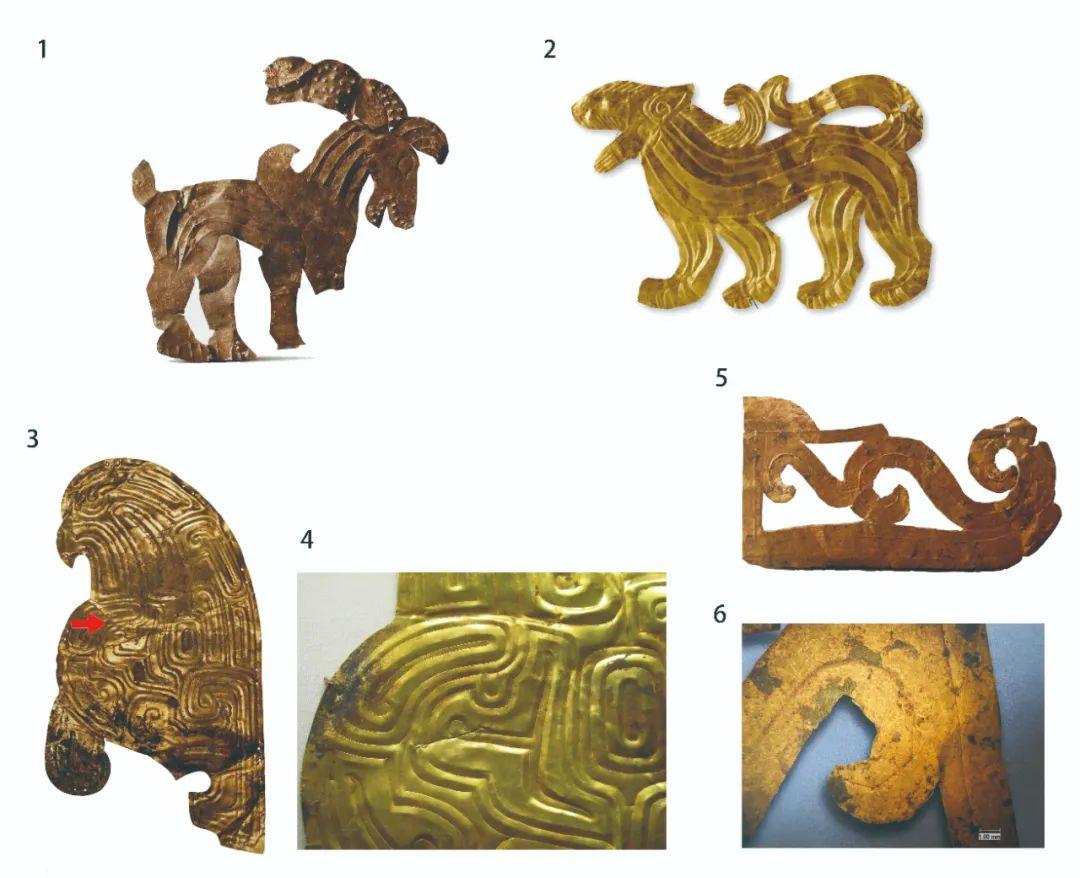
Figure eight Qin cultural area excavated double-sided engraved gold and silver jewelry pieces
1. Silver ornaments of large-horned wild goat unearthed in Liu Ping, Qingshui 2. Tiger-shaped gold ornaments from Tomb No. 3 of Majia Plateau 3. Scops owl-shaped gold ornaments from Dabaozi Mountain, Lixian County 4. Scratched marks 5. Gold ornaments of carriage unearthed in Liu Ping, Qingshui 6. Scratched marks under the microscope
In Tomb No. 2 in Xigouxian, some of the cast gold and silver objects are inscribed with Chinese characters, among which two gold medallions with animal bites are inscribed with different weight units, one of which is inscribed with the words “the old temple” (Fig. 9, 1-3), and seven pieces of silver objects are inscribed with the words “Shaofu” (Fig. 9, 1-3), in addition to the same labeling of the weight units, and some are inscribed with the words “the old temple” (Fig. 9, 1-3), while seven pieces of silver objects are inscribed with the same weight units. Shaofu” (fig. 9, 4). While the silver savings are thought to have come from the official workshops of the Zhao state, the style of the gold-plate markings and the units of weight are thought to be closely related to the Qin state, and Luo Feng suggests that they may even have been made in the Qin area. [27] In addition to this batch of gold and silver vessels with inscriptions from Xigou, a batch of gold vessels unearthed from Tomb No. 30 in Xinzhuangtou, Yanxiadu, Yixian County, Hebei Province, were also inscribed with Chinese characters, and decorated with subjects such as wolves, horses, wild goats with large horns, deer, camels, bears, and monsters, in a typical Scythian-Siberian style, and in some cases with inlays of turquoise. [28] Twenty-five pieces of ceramic molds were found in the tomb of copper-casting artisans in Youjiazhuang, a northern suburb of Xi'an, which were decorated with a number of Scythian-Siberian-style animal motifs, such as monster motifs (Fig. IX, 5), antler griffins, large-horned wild goats and eagle and tiger fighting motifs, all of which were in a strong steppe style. [29] These ceramic mold tools and related gold artifacts with characteristics of steppe culture provide strong support for the inference that Qin and other northern states made luxury artifacts for neighboring nomadic groups that met their aesthetic interests [30].
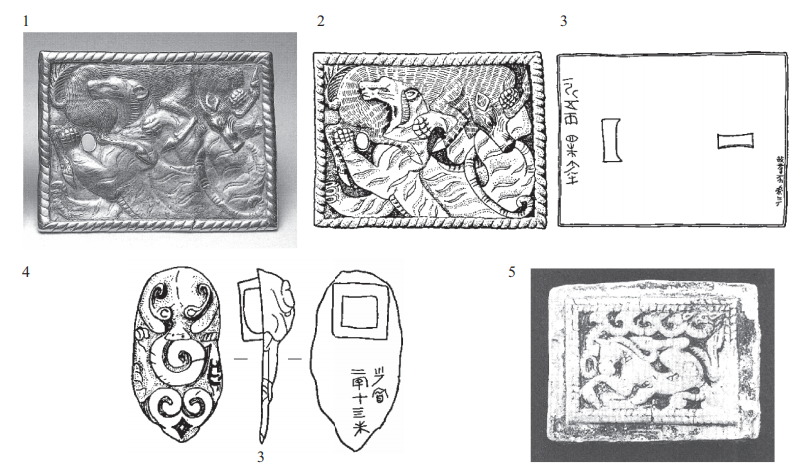
Figure 9 Grassland Style Casting Gold and Silver Vessels and Pottery Molds
1-3. Gold-plate decoration with animal biting and fighting motifs in Tomb No. 2, Xigoubian 4. Chinese characters inscribed on tiger-head silver savings 5. Pottery molds with steppe-style animal motifs unearthed from the tombs of bronze-casting artisans in the northern suburbs of Xi'an
The ravages,
Cultural Interaction between the Northwestern Borderland and the Central Asian Steppe
Cultural Interaction between the Northwestern Borderland and the Central Asian Steppes
It is worth noting that, at the same time that double-sided engraved gold ornaments became popular in the Qin culture area, molded gold ornaments were very popular among gold decorations in the northwestern borderlands of China and the steppes of Central Asia. The animal-printed gold ornamental pieces found in the Eurasian steppe, with raised patterns on them, were mostly made by the molding process, i.e., by placing the gold sheet on top of a metal or bone yangwen mold and pressing it to form a pattern, or by using a special tool with a pattern on one end and pounding it on the gold sheet, the latter being very similar to the production of ancient Roman gold coins. [31], [32] [33] The use of the molding process can quickly produce a large number of gold ornaments with repetitive patterns, saving time and effort, and saving gold material compared with traditional casting techniques.
Molding technology appeared in the Central Asian steppes no later than the 7th century BC, and thousands of tombs decorated with snow leopards, tigers were unearthed in the Southern Siberian region at the royal tombs of Arzan II (7th century BC, Fig. IX, 4),[34] the Issyk-Kul cemetery in the basin of the Seven Rivers of the Tien Shan (4th to 3rd centuries BC),[35] and tomb No. 6 of the Tarksei I Cemetery (6th to 5th centuries BC, Figs. IX, 6) in Kazakhstan[36], pan goat and bird's beak motifs (Fig. I0, 5), and these ornate gold ornamental pieces were often used to decorate clothing and crowns, reflecting the power and status of the bearer. The popularity of Scythian-Siberian-style animal motifs in molded gold ornaments found in the borderlands of northwestern China and the steppes of Central Asia reflects the close connection between the two. [37] Typical examples of molded gold objects from within China include a gold ornament piece with animal biting and fighting motifs unearthed from Tomb No. 4 in Majia Plateau (Fig. 100, 1), a gold ornament with a pan sheep motif on a carriage unearthed from Tomb No. 1 in Barkun Xigou, East Tien Shan, Xinjiang (4th~3rd centuries B.C.E.) (Fig. 100, 2) [38], and a gold ornament with bird motifs found in Aru Chaiden, Inner Mongolia (Fig. 100, 3). [39] The large number of gold ornamental pieces decorated with animal motifs in shallow relief found in northwestern China may have arisen under the eastward transmission of Siberian-Scythian molding techniques. The double-sided engraving process, which was popular in the gold objects from the Xigou-side tombs, is also found in the Majia Plateau in Zhangjiachuan, Gansu, and in Liu Ping, Qingshui, where gold and silver funerary objects include some molded objects, suggesting a close relationship between them. The use of double-sided engraving technology to shape a more three-dimensional animal image on the metal sheet reflects the gradual understanding of the craftsmen of that time of the properties of gold and silver materials. Against the background of more frequent material and cultural exchanges in early Eurasia, the double-sided engraving technique is not only a new development of the traditional engraving process, but also a fusion of some new concepts, which can be regarded as a local innovation under the influence of foreign cultures.
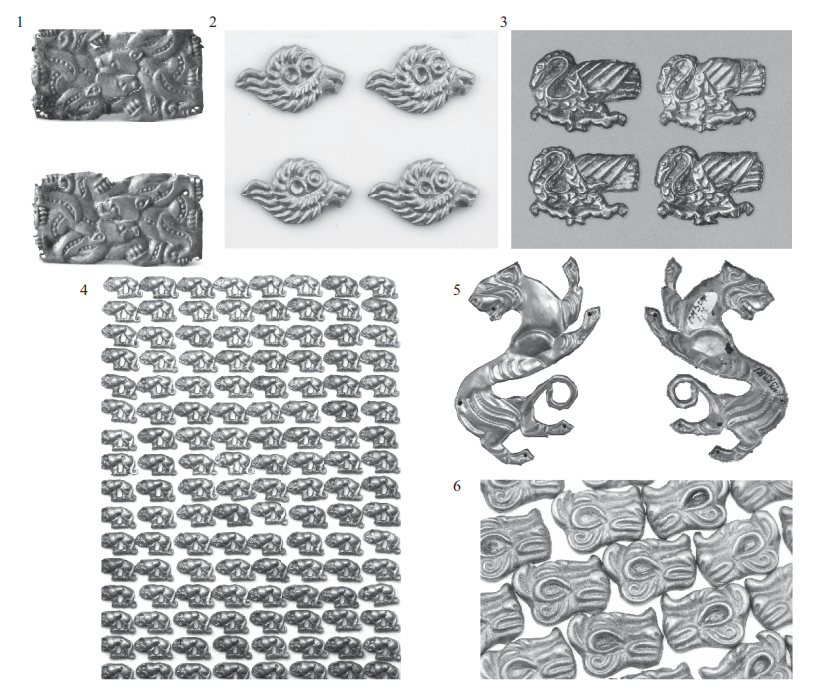
Figure 10: Molded gold ornaments unearthed in northwest China and the Central Asian steppes
1. Molded gold ornaments with animal biting pattern unearthed in Tomb No. 4 of Majia Plateau 2. Gold ornaments with sheep pattern unearthed in Tomb No. 1 of Xigou, Barkun, Xinjiang 3. Gold ornaments in the shape of bird unearthed in the ruins of Aru Chaiden, Inner Mongolia 4. Molded gold ornaments in the shape of tiger unearthed in the mausoleum of the King of Arzan No. 2 of the Republic of Tuva 5. Gold ornaments in the shape of tiger unearthed in the ruins of Issyk Kul in the basin of the Seven Rivers of the Tianshan Mountain 6. Gold ornaments in the shape of sheep unearthed in Tomb No. 6 of Tarkesai No. 1 cemetery in Kazakhstan
As with the production process, the origin of precious metals is also of interest to archaeological research. The fact that gold mines (gold resources such as sand or vein gold) were concentrated in only a few areas implies that the movement of people, minerals, and to a large extent, trade and exchange networks would have been facilitated in an ever-growing way. On the basis of the decorative styles and technical analyses described above, we have comparatively analyzed the metal composition data of a large number of gold artifacts unearthed in northwestern China, the Central Plains, and the Eurasian steppe (Fig. I.I; Fig. I.II). Natural gold often contains impurities such as silver and copper, with the typical silver and copper content ranging from 0 to 50% and 0 to 1-2%, respectively. The higher the copper content, the higher the potential for artificial smelting. Figure 1.1 shows that the proportions of silver (10-20%) and copper elements (<2%) in the Xigou-side gold wares overlap with the data for most of the gold wares excavated from Central Asia (Mongolia or Sayan Altai), other archaeological sites in the northwest borderlands of China, and the Central Plains (Shaanxi, 4th to 3rd centuries B.C.E.), which suggests that gold wares from these areas were made with natural gold [40]. Given the wide range of time and space involved, as well as the wide range of silver percentages (5-25%), it is possible that multiple sources of gold may have been mined in East Asia during the first millennium BCE.
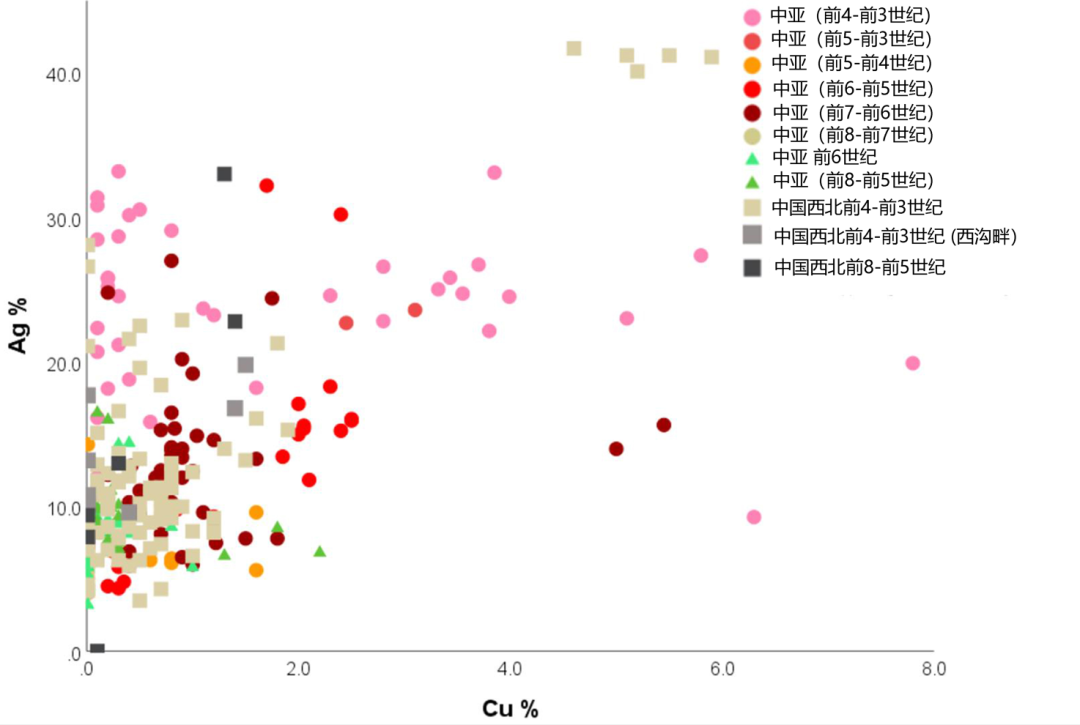
Figure I I Comparison of the metal composition of gold objects excavated in the Central Plains, Northwest China and the Central Asian steppes
In the above comparative analysis of the metal composition of gold objects unearthed in various places, of particular interest is a set of data on the composition of Central Asian gold objects from the 4th to 3rd centuries B.C.E. Figure I.2 shows that the content of silver (20%) and copper (2-8%) is much higher than that of other gold objects, and that the copper content is obviously over the threshold of copper elements in natural gold, which is likely to be an artificially smelted alloy, i.e., the copper (and sometimes silver) was deliberately added to the gold. In general, the addition of copper elements will make the goldware show a rose color. Wang Zhihao and other scholars used portable X-ray fluorescence spectrometry to analyze the five pieces of gold ornaments found in Tomb No. 2 in Xigouxian, and found that the copper content (4-6%) was significantly higher than the norm, and that the silver content was also very high (see Figure 1.2, upper right), so it was inferred that these pieces of gold ornaments were made of an artificially smelted alloy. It is worth noting that some of the gold pieces from Xigou Shore also contain elements of tin (0.2%) and lead (0.1%). If the copper were recycled, these three elements would have yielded a suitable lead bronze (94:4:2), a common alloy recipe for bronze smelting in the Late Bronze Age in China. On the other hand, tin and lead may simply be impurities associated with gold, but it is also possible that lead bronze was recycled (re)used in the smelting of gold prior to casting.
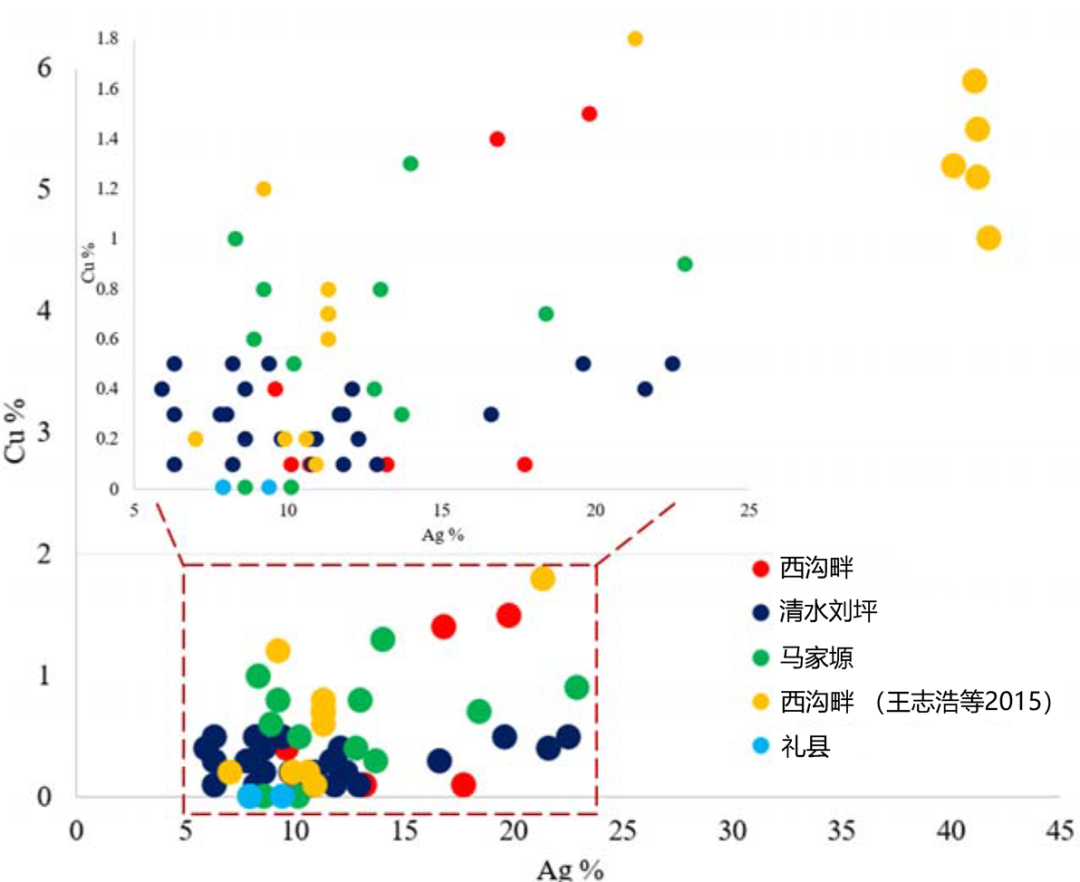
Fig. 12 Results of EDS analysis of metal composition of gold articles from Xigoubian, Qingshui Liuping, Majia Plateau, and Lixian and the
results of portable XRF analysis of Xigoubian gold articles (Wang Zhihao et al. 2015)
Wu,
Conclusion and Prospect
The results of the above scientific analysis provide new ideas for understanding the material properties and production process of Xigoubian gold and silver products. The gold ornaments found in Tomb No. 2 of Xigoubian in the Ordos region of Inner Mongolia have the same morphological and technical characteristics compared with similar artifacts found in the Li County and Liu Ping sites in Gansu and Qingshui, both of which used a double-sided engraving process to form raised decorations. Between the 8th and 3rd centuries B.C., the Qin state grew strong and had extensive dealings with the northern states as well as the neighboring nomadic grassland communities. Under the background of increasingly frequent material and cultural exchanges in Eurasia, some local technological innovations under the influence of foreign cultures began to appear in the gold production of Northwest China, and the double-sided engraved gold and silver ornaments found in the Xigouxian Tomb and other Qin cultural areas are the most typical examples. In addition, analysis of the metal composition of gold objects excavated from the Central Asian steppes, the northwestern borderlands of China, and the Central Plains suggests that around the first millennium B.C.E., gold production in the eastern part of the Eurasian continent would have utilized a variety of sources of natural gold, even though the exact location of these gold mines is not yet known. The results of the energy spectrum analysis indicate that some of the gold products found in Xigouxian were artificially smelted gold, and that the metal compositions of some of the gold artifacts found in Xigouxian, Lixian, and Qingshui Liuping are very similar. Further analysis of trace elements and lead isotopes will be needed in future research to determine whether these gold objects are from the same source. In addition, the regional cultural interactions between the East Tien Shan region, the Hexi Corridor and the Ordos region in Northwest China are more worthy of attention.
[1] This article is the phase-in result of the project “Early Gold Art and Cultural Exchanges: A Case Study of Archaeological Discoveries in the Altay Region of Xinjiang” (Project No. 20YJAZH071) under the Interdisciplinary Planning Fund for Humanities and Social Sciences of the Ministry of Education of the People's Republic of China. The original article “China and the steppe: technological study of precious metalwork from Xigoupan Tomb 2 (4th-3rd c. BCE) in the Ordos Region, Inner Mongolia” was published in Longolia Journal of Art. Mongolia” in Heritage Science 2021, 9:46, was revised by the author during the translation process.
[2] Yan Liu, “Exotica as prestige technology: the production of luxury gold in Western Han society”, Antiquity, 2017, 91.360 , pp. 1588-1602.
[3] Emma Bunker, “Gold in the ancient Chinese world: a cultural puzzle”, Artibus Asiae, 1993, 53, pp. 27-50.
[4] Jessica Rawson, “China and the steppe: arms, armour and ornaments”, Orientations, 2015, 46.5, pp. 28-35.
[5] Jenny F. So, Emma Bunker, Traders and raiders on China's northern frontier, Seattle: University of Washington Press, 1995.
[6] Yang Jianhua, Katheryn M. Linduff, K.M. “A contextual explanation for ‘foreign’ or 'steppic ' factors exhibited in burials at the Majiayuan cemetery and the opening of the Tianshan Mountain corridor”, Asian Archaeology, 2013, 1, pp. 73-84.
[7] Yu Jianjun and Ma Jian, “Briefing on the Excavation of the East Talladeh Cemetery in Habahe, Xinjiang
” [“Briefing on the excavation of the Habahe East Taled Cemetery in Xinjiang”], Cultural Relics, 2013, 3, pp. 4-18.
[8] Ikezhaomeng Cultural Relics Workstation, Inner Mongolia Cultural Relics Task Force, “Xigouxian Xiongnu Tomb,” Cultural Relics, 1980, no. 7, pp. 1-10.
[9] Tian Guangjin and Guo Suxin, “Xigoubian Xiongnu Tomb Reflecting the Problems,” Cultural Relics, 1980, no. 7, pp. 13-17.
[10] Linduff K., “Production of signature artifacts for the nomad market in the state of Qin during the late Warring States period in China ”, in Metallurgy and Civilisation: Eurasia and Beyond, edited by Mei J. & Rehren T., Archetype, 2009. pp. 90-97.
[11] Luo Feng, “Made in the Central Plains-About the Metal Plaque Decorations with Animal Patterns in the North”, Cultural Relics, 2010, No. 3, pp. 56-63 trans. 96.
[12] Xing Yitian, “Stereoscopic History-Ancient China and Extraterritorial Cultures from Images”, Sanmin Bookstore, 2014.
[13] Cosmo N.D., “Ancient inner Asian nomads: their economic basis and its significance in Chinese history”, Journal of Asian Studies, 53(4), 1994, pp.1092-126.
[14] Honeychurch W., “From steppe roads to silk roads: inner Asian nomads and early interregional exchange”, in Nomads as Agents of Cultural Change, edited by Amitai R, Biran M., University of Hawai'i Press, 2014. pp.50-89.
[15] Wang Z. H., Odagi J. Taro, Hirokawa M., Kikuchi Oki, “A new understanding of gold and silver artifacts from the Bronze Culture period in northern Ordos”, Grassland Cultural Heritage, Vol. 1, 2015, pp. 113-121.
[16] Institute of Archaeology, Chinese Academy of Social Sciences, Yinxu Excavation Report 1958-1961, Beijing: Cultural Relics Press, 1987.
[17] Xinjiang Institute of Cultural Relics and Archaeology, Xinjiang Habahe Dongtalde Cemetery Excavation Brief, Cultural Relics, 2013, no. 3, pp. 4-14.
[18] Ikezhaomeng Cultural Relics Workstation, “The Discovery of Gold and Silver Vaults in the Milling House Canal of Dongsheng City, Inner Mongolia,” Archaeology, 1991, no. 5, pp. 405-408, trans. 389.
[19] Wang Zhihao and Wu Zhanhai, “Ordos-style artifacts found in the lime ditch of Yijinholo Banner,” Inner Mongolia Cultural Relics and Archaeology, 1992, no. 1 and 2, pp. 91-96.
[20] Tian Guangjin and Guo Suxin, “Xiongnu Relics Found in Aruchaideng, Inner Mongolia,” Archaeology, 1980, no. 4, pp. 333-364 trans. 368.
[21] Unyue Stu, A Comparative Cultural Study of the Archaeology of the Northern Grasslands: The Bronze Age to the Xiongnu Period, Beijing: Science Press, 2008.Ungakstu《North Prairie Archaeological and Cultural Research: the Bronze Age to the Early Iron Age》,北京:科学出版社,2007年。
[22] Bunker E., “Significant changes in iconography and technology among ancient China's Northwestern pastoral neighbours from the fourth to the first century B.C.”, Bulletin of the Asia Institute, 1992, 6, pp. 99-115.
[23] Gansu Institute of Cultural Relics and Archaeology, “Xijong Ruijin: Unearthed Relics from the Majia Plateau Warring States Cemetery”, Beijing: Cultural Relics Press, 2014.
[24] State Administration of Cultural Relics, Qin Rhyme - Essence of Unearthed Relics from Dabaozi Mountain, Beijing: Cultural Relics Publishing House, 2015.
[25] Liang Yun, “The relationship between Qin and Xirong as seen in archaeology,” Western Archaeology, 2016, 02, pp. 112-146.
[26] Liu Y., “Nomadic influences in Qin gold”, Orientations, 2013, 44(2), p. 1-7.
[27] Tian Guangjin and Guo Suxin, “The problems reflected in the Xiongnu tombs at Xigoubian”, Cultural Relics, 1980, No. 7, pp. 13-17 trans. 23. Qianjie Luofeng 2010.
[28] Hebei Provincial Institute of Cultural Relics, Yanxiadu (The Lower Capital of Yan), upper volume, Beijing: Cultural Relics Publishing House, 1996, pp. 715-731.
[29] Shaanxi Provincial Institute of Archaeology, Excavation Bulletin of the Tomb of the Warring States Copper-Casting Artisans in the Northern Suburbs of Xi'an, Cultural Relics, No. 9, 2003, pp. 4-14.
[30] Linduff,2009 年。
[31] Treister, M.Y., “Hammering techniques”, in Greek and Roman jewellery and toreutics (Colloquia Pontica 8), edited by J. Hargrave, Brill, 2001.
[32] Higgins, R.A., Greek and Roman Jewellery.2nd edition, British Museum, 1980.
[33] Williams, D. & Ogden, J., Greek Gold, Jewellery of the Classical World, British Museum Press, 1994, pp.
[34] Cugunov K.V., Parzinger H., Nagler A., Der skythenzeitliche Fürstenkurgan Arzan 2 in Tuva. Von Zabern, 2010.
[35] Onggaruly A.:The Tomb of Prince Sakya of Zhetsu, in Gold of the Kazakh Steppe Elite, edited by Onggaruly A, National Museum of the Republic of Kazakhstan. Seoul: National Institute of Cultural Heritage, Republic of Korea, 2018, pp. 212-33 (in Russian and Kazakh)
[36]Onggaruly A. The Heritage of the Steppe: Masterpieces of Jewelry Art. vol. V. Art Language. the Exhibition Catalogue, National Museum of the Republic of Kazakhstan, 2018. (in Russian and Kazakh).
[37] Liu 2017.
[38] School of Cultural Heritage, Northwest University, Hami Regional Cultural Relics Bureau, and Barkun County Cultural Relics Bureau, “Briefing on the Excavation of Tomb No. 1 at the Xigou Site of Barkun, Hami, Xinjiang,” Cultural Relics, 2016, no. 5, pp. 15-31.
[39] Zhang Jingming, Ancient Gold and Silver Ware from the Grasslands of Northern China, Beijing: Cultural Relics Press, 2005.
[40] Yang J., Jett P., Chen J. L., Ancient Chinese Gold and Silver Artifacts from 2000-200 BCE. Cultural Relics Press, 2017.