

History of the City-States of Central Asia | The Ancient City of Yulong Jechi
Mr. Jin Yong old in the “Eagle Shooting Heroes” in the 37th written about Genghis Khan expedition to the western region of the country of Huarazimo, back after a note: Huarazimo for the Muslim country, the national border in the southern part of the USSR, Afghanistan, Iran and the area. The city of Samarkand was in the Uzbek Republic of the Soviet Union. According to the “History of Yuan”, Genghis Khan attacked the old capital of Huarazimo Yulong Jiechi, had poured oil on the house and burned it, because of which the city was broken.
The ancient city of Yulongjerch, which appeared in the book and left its mark on history, is now called Kurnia-Urgench, located on the northern edge of the mysterious Central Asian country of Turkmenistan, across the Amu Darya River from Nukus, Uzbekistan, and in the middle of the country's capital city of Nukus. Nukus, Uzbekistan, on the northern edge of the mysterious Central Asian country of Turkmenistan, across the Amu Darya River.
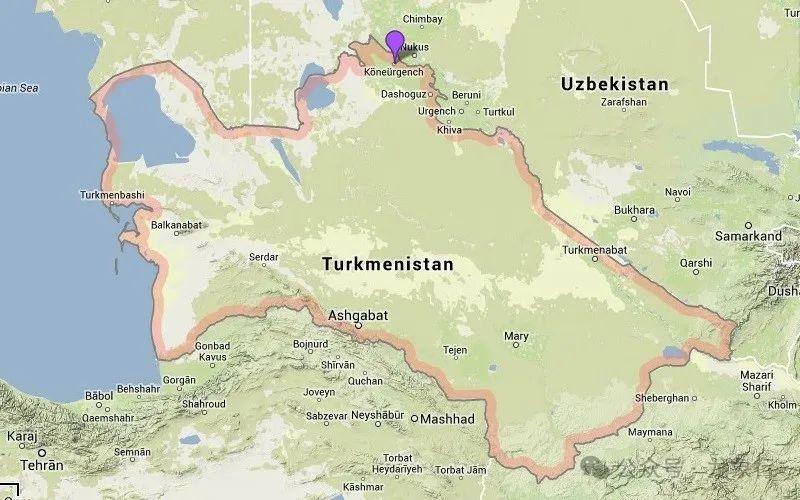
Location of Kurnia-Urgench
Yulong Jechi, the capital of the ancient kingdom of Khorezm and one of the major trading centers of the Silk Road in Central Asia, was invaded by Mongol forces led by Genghis Khan in 1220, and after a stubborn resistance fell to the Mongols in 1221, when the city was massacred. The city was rebuilt under the rule of the Golden Horde, but was destroyed by the Timurid Empire at the end of the 14th century, and the prosperity of the region declined.
Before being flattened by Genghis Khan, it was the center of Islam and was considered by Westerners of the time to be one of the most beautiful Eastern cities. Khorezm then included most of what is now Turkmenistan and Uzbekistan, and was a major player on the Silk Road. After Genghis Khan, Timur once again trampled on the land because it threatened the rise of Samarkand, leaving the ancient city of Yulong Chijie in its present, grassy and desolate state, and its former glory can only be imagined from the scattered buildings and mottled colors of the present day.
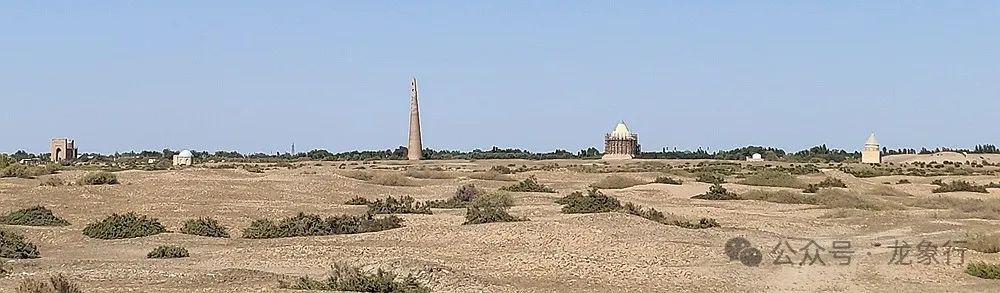
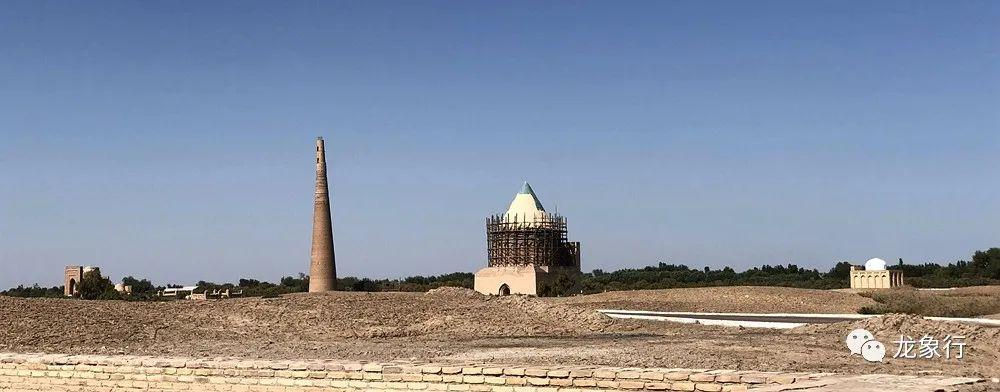
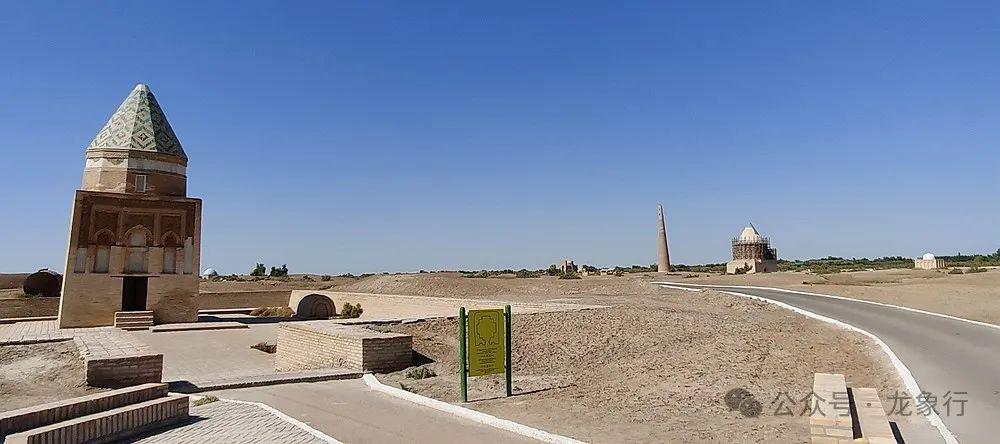
Scattered Ancient City Ruins from Different Perspectives
Early stages of development
The exact date of the founding of Kurnia-Urgench is uncertain, but archaeological finds at the Kyrkmolla Hill fortress on the northeastern outskirts of the region indicate that ceramics have been found at the site dating as early as the 5th century B.C.E. The early history of Kurnia-Urgench may therefore date back to the Achaemenid dynasty of Ancient Persia.Protected by a thick mud-brick wall, the history of Kyrkmolla currently dates back to the 10th to 14th centuries and was partially rebuilt after archaeological excavations.
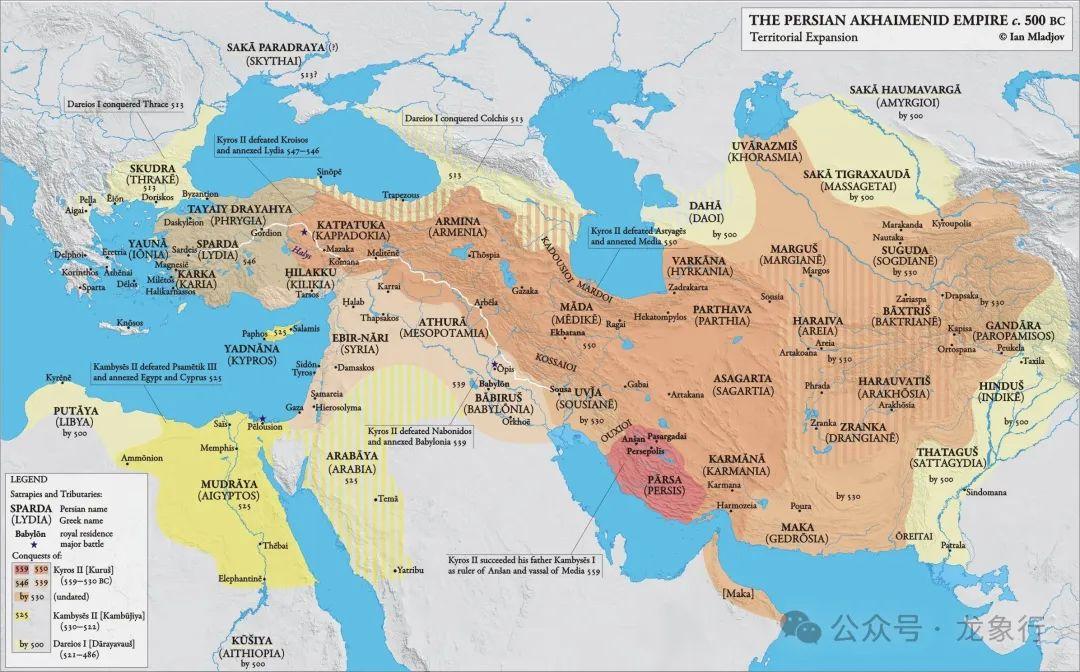
Achaemenid boundaries in 500 BCE
Period of the Arab Empire (7th-11th centuries)
#History#
Some early records indicate that the Arabs conquered Khwarezm and captured the city of Kath, the capital of Kah, belonging to the Iranian lineage of Khwarazmian Afrighid Dynasty lranic Khwarazmian Afrighid Dynasty, in 712 A.D. The Arabs invaded the town and renamed it Yulonjerchik Gurgandj.
Thereafter, Yulonjerch gradually rose in prominence, replacing Kach as the capital of the Khwarazmian region.
After the division of the Arabian Empire in the mid-8th century, Khorezm came under the Iranian Tahir, Safar, and Samanid dynasties, as well as the Turkic Ghazni dynasty, which ruled from 1037 to 1194 under the Seljuk Empire.
In the 100 years between the second half of the 11th century and the middle of the 12th century, Khorezm became a place where Turkic Islamic culture flourished and Urgench became one of the centers of knowledge and literature.
#Architecture#
The Gutluk Temir Minaret is a landmark in Kunia-Urgench that was once part of the Gutluk Temir Mosque, which no longer exists, leaving only the towering minaret. Dating back to the 11th century, the minaret is considered to be one of the earliest surviving structures in Kunia-Urgench, which was destroyed probably due to the Mongol invasion in the 13th century, and rebuilt in 1330 by Gutluk Temir, the then ruler of the Khanate of Chincha (also known as the Golden Horde).
At about 60 meters high, with a diameter of about 12 meters at the base and 2 meters at the top, the Minaret is one of the tallest minarets in Central Asia, and is said to be visible from as far as 30 kilometers away. The tower is made of brick with bright blue flying buttresses and is circled by a staircase which has 144 steps but visitors are not allowed to climb it. The tower is skillfully decorated with floral carvings, including decorative motifs in Arabic script. The minaret was originally topped by a wooden lighthouse built around a stone core, which could conceivably have been used not only for invocations and prayers, but also as a watchtower and a guide for caravans traveling at night. Today, only a few strips of weathered wood remain at the top of the tower as a testament to the lighthouse's former existence.
There is no gate underneath the minaret, which used to be accessed via a footbridge above the mosque and then up steps to the top of the tower. For conservation purposes, tourists are no longer allowed to enter the minaret, and the top 10 meters of the minaret have tilted slightly.
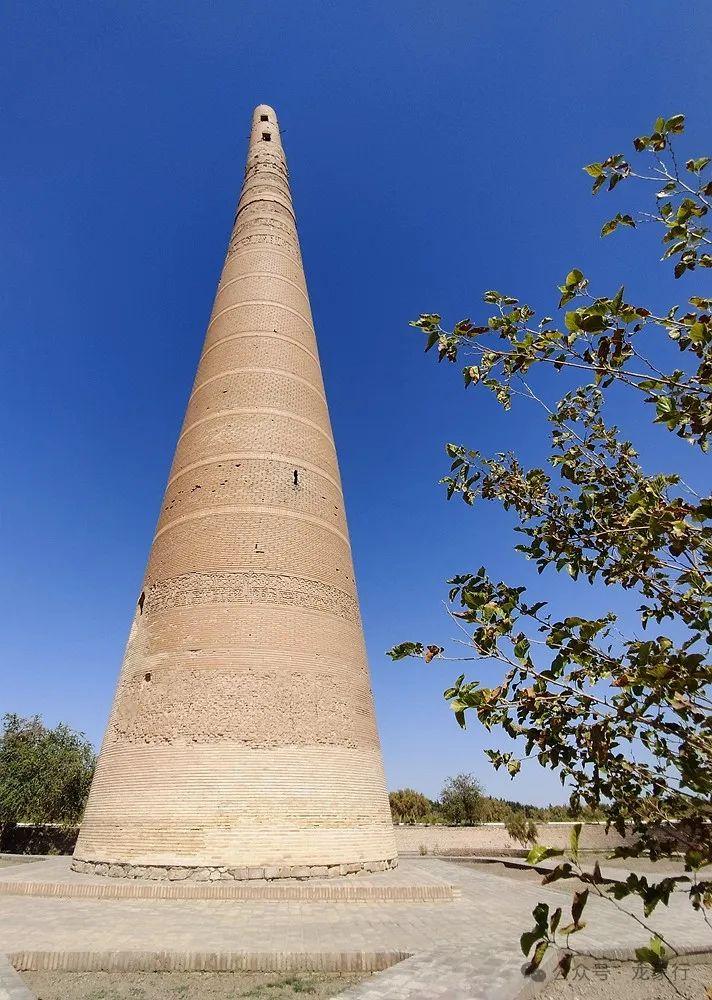
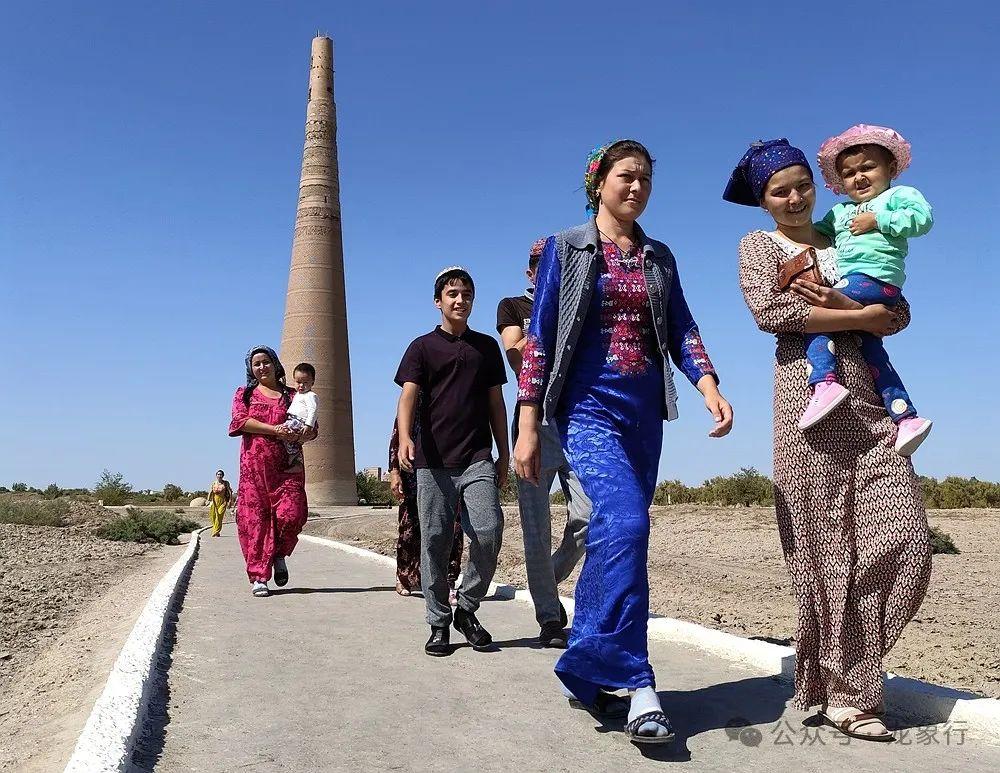
Gutruk-Timur Minaret
Kingdom of Khorezm (1142-1231)
#History#
The Khorezm Kingdom was a Turkic state founded on the Khorezm Oasis, which was small at the time of its creation, occupying only the lower delta of the Amu Darya River, with its capital at Kurnia-Urgench on the oasis (now located on the northern edge of Turkmenistan), and which successively belonged to the Ghassenid dynasty of Central Asia, the Seljuk Empire, and the Western Liao (Kharakidan).
In the late 12th and early 13th centuries, the Khorezm state gradually annexed the Seljuk territory of Khorasan, seized the territory of the Western Khara Khanate centered in Samarkand, conquered the Khamri people of the northern steppes of Central Asia, and defeated the Ghor dynasty (also known as the “Ghor dynasty,” a Muslim dynasty established by the Turks in Afghanistan and northern India in the 12th-13th centuries), an Afghan state that had been in the process of being established in the late 12th century, as well as the Gur dynasty. Afghanistan and northern India in the 12th and 13th centuries). At this time, Yulon Jeche rivaled many other Central Asian cities such as Bukhara and Samarkand in fame and population as an important trading center.
In the early 13th century, when the Mongols were expanding westward, they first destroyed Western Liao, which had the Western Tien Shan and the Seven Rivers Valley as its core dominion. The Khorezm state also took over the Hezhong region at the same time, and developed into a large empire with a vast territory, ruling the Hezhong region, most of Afghanistan, and a part of the Iranian plateau. At this time, Khorezm had a direct border with the Great Mongol Empire, and Khorezm became the next target of the Mongol army's westward advance.
Genghis Khan's army conquered two important cities, Bukhara and Samarkand, in 1220, followed by Yulong Jeche, the former capital of Khwarizm. Genghis Khan initially sent Chaghatai and Woguatai to lead his army to the Khwarazm Oasis to attack Gurganj, and ordered his eldest son Juchi, who was on the Qincha grassland, to lead his army southward to assist in the attack on Yulongjiechi.
At this time, the Khorezm Emperor Mahomet Ala ad-Din Muhammad (also translated as Muhammad) retreated to the south, and it was this Khorezm Emperor who angered Genghis Khan by ordering the lord of the border town of Blackmail to execute the Mongol caravan in 1218. This provoked Genghis Khan to lead the Mongolian iron horsemen across the Eurasian continent and establish the huge Mongol Empire, thus influencing the course of world history.
At this time, the city of Yulong Jeche was under the jurisdiction of Mohammed's mother, Baldur Hatun. After learning that the Mongol army had captured Bukhara and other cities, she fled westward with Mahomet's son and his harem, so the people of Yulong Jeche elected Kumaer's jin to be the temporary lord of the city to fight against the Mongol army.
In July 1220, Juchi, Chaghatai and Wukodai were deployed around Yulongjiechi, and they first sent small groups of Mongol cavalry to approach Yulongjiechi and drive away the livestock. Yulong Jiechi defenders rashly out of the city to pursue, Mongolia cavalry ambush, will be besieged, killed more than 1,000 Huarazimo army. On the next day, the Mongol army besieged the city. Since there were no stones outside the city, the Mongol stone throwers could only throw mulberry wood into the city. The Mongols forced their way into the city and burned the houses with barrels of kerosene. Inside the city, the two armies fought each other briefly, and when they captured a bridge over the Amu Darya River, 3,000 Mongols were besieged and annihilated, demoralizing the defenders of the city.
Due to the Juchi, Chaghatai character is different, has never been the same, coupled with Genghis Khan has Huarazimo sealed to the Juchi, Juchi is not willing to destroy the city, in this case, the Mongolian army orders are not the same, each of their own views, resulting in the army's discipline is loose, the casualties are huge, the attack on the city was blocked, after 7 months has not been able to break the city.
Genghis Khan learned of this matter is very angry, changed the name of wu guaotai command of the siege of the city. After the attack, the two brothers were reconciled, and the army was reorganized to restore its fighting strength. The reunited Mongol army fought a street battle with the defenders of the city and captured the city in seven days.
The Mongols drove the inhabitants of Yulongjiechi out of the city, sent more than 100,000 artisans to Mongolia, plundered their women and young children as slaves, and assigned the rest to the Mongol army for slaughter. 50,000 Mongol soldiers were assigned 24 men each. After the massacre, the Mongol army dug the dam of Amu Darya River and drew water to flood the city, Yulong Jeche was submerged in a sea of water, and all the people who hid in the city were drowned to death.
The fall of Yulong Jeche marked the conquest of Central Asia by the Mongols, and the dominant Khorezm Empire was finally destroyed by the Mongols after several years of struggle. The last emperor of Khorezm, Mahomet's eldest son, Zalandin, died in the Diyarbakir Mountains in 1231, and Khorezm was completely destroyed.
#Architecture#
Il Arslan Il Arslan was a powerful ruler of the Khorezm state in the late 12th century, whose reign lasted from 1156 to 1172. Among the many accomplishments of his life, none was more notable than his expansion to include Bukhara and Samarkand in 1158 and to capture Nishapur and other territories now located in northeastern Iran in 1167. Shortly before his death, however, war was triggered by his failure to pay the annual tribute due to Western Liao (Kharakhetan). As Il Arslan was too ill to lead the army himself, he gave command to a former rebel leader, who fought poorly and was captured by the Kharachitans, leading to Arslan's humiliating defeat. Despite Arslan's death the following year, his reputation survived and his son Tekesh consolidated power and established himself as the next ruler of Khorezm. It is therefore possible that the construction of the mausoleum of Il-Arslan was completed during the reign of his son Tekesh, or that it was built while he was still alive. It is rare that this mausoleum has survived to this day, as it escaped the destruction of the two great conquerors of the world, Genghis Khan and Timur.
The mausoleum is one of the oldest surviving structures in Kurnia-Urgench. It is famous for its conical twelve-sided dome, the facade of which is made of alternating brick and glazed bricks. Below the dome is a plain twelve-sided plinth, which sits atop a square mausoleum. The front of the mausoleum is carved with elegant decorative motifs in Arabic calligraphy.
Restoration work initiated during the Soviet period in the 1980s thoroughly repaired the Il-Arslan Mausoleum, especially the brickwork on the walls and dome of the mausoleum, which were in a precarious state at the time.
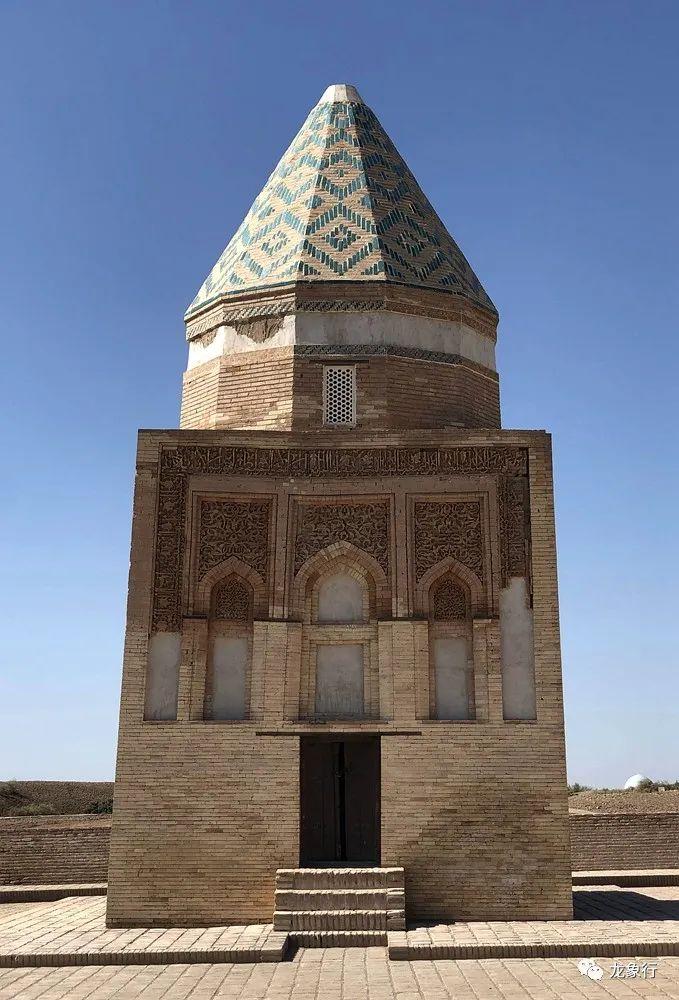
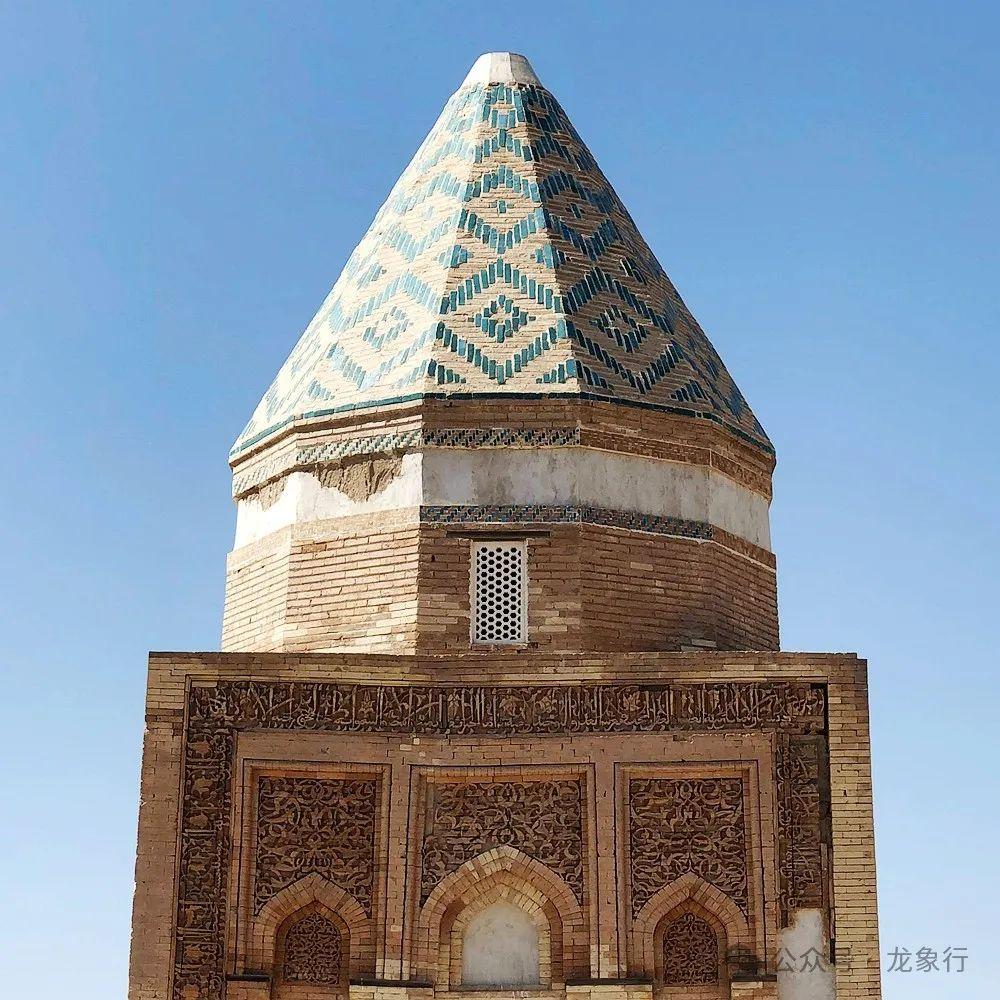
Il Arslan Mausoleum Il Arslan Mausoleum
Not far from the Mausoleum of Il Arslan, there is another building of a similar nature to the Mausoleum of Il Arslan, thought to have been built possibly by Sultan Ala al-Din Tekesh. Tekesh ruled the Khorezm Empire from 1172 to 1200, and was the son of Il Arslan Il Arslan, who was militarily strong during his reign, and who captured territories in Khorasan and western Iran in the year before his death due to illness (i.e., 1200). It was Tikis' son, Mahomet, the heir to the kingdom, who triggered the end of the Khorezm Empire.
This building, built by Tikis, bears some formal resemblance to the mausoleum of his father, Il-Arslan. Both are square buildings with conical roofs, and both are ornamented with plain and glazed brickwork. But Tikis's mausoleum is much larger. Tikis' tomb is said to be the first building in Central Asia to be decorated with large glazed tiles in a calligraphic pattern, the richly colored tiles wrapping around the base of the dome to form a long band of inscriptions. Dozens of the original green-glazed tiles still remain on the southeast façade. However, as the site was under repair at the time of the visit, it was not possible to glimpse this ancient delicacy.
Although the building is similar in style to the Mausoleum of Il-Arslan, it does not conclusively prove that it is a mausoleum. In Islam: Art and Architecture, Chmelnizkij points out that recent research suggests that the building may not have been a mausoleum at all, but more likely a royal audience hall or the centerpiece of a larger complex that no longer exists.
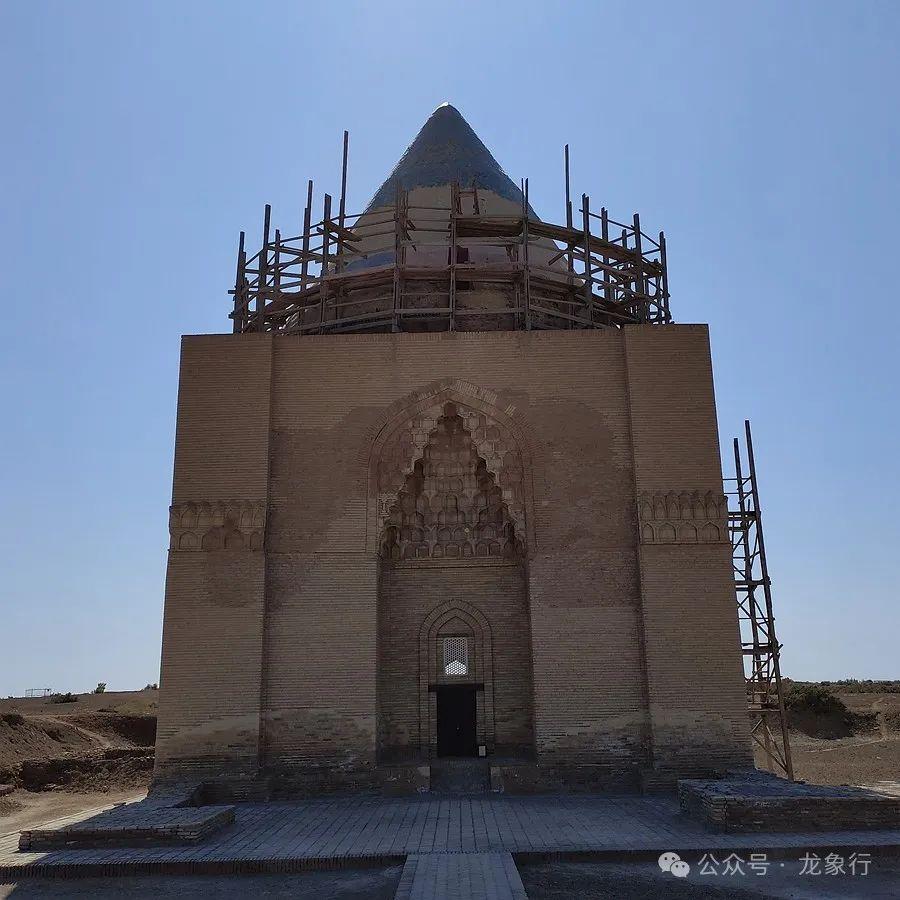
Sultan Tekesh Mausoleum
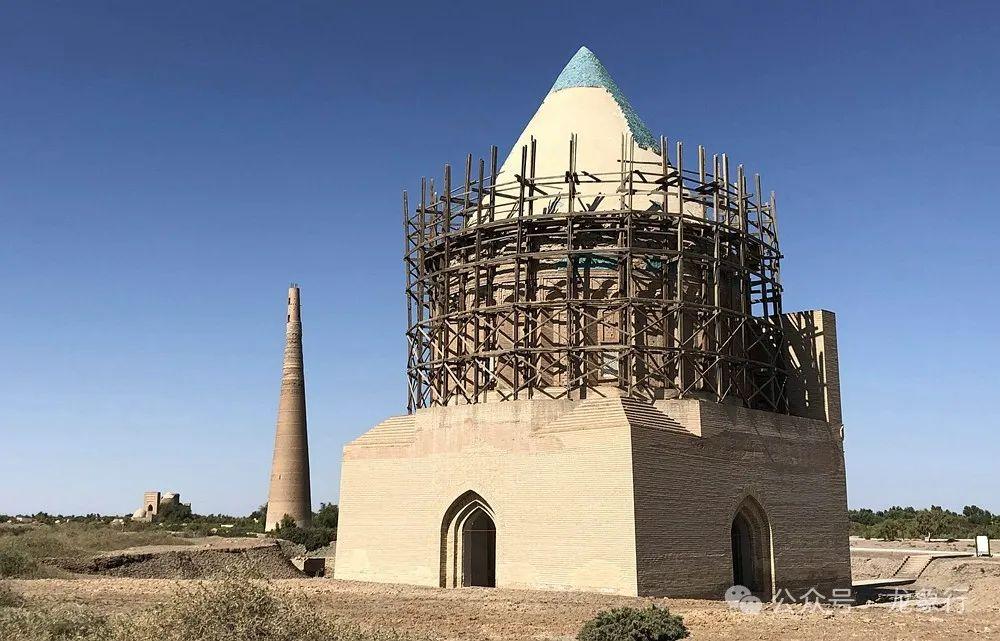
Mausoleum of Sultan Tikis and Gutluk Timur Xuanli Tower
Mongol Khanate Period (1270-1370)
#History#
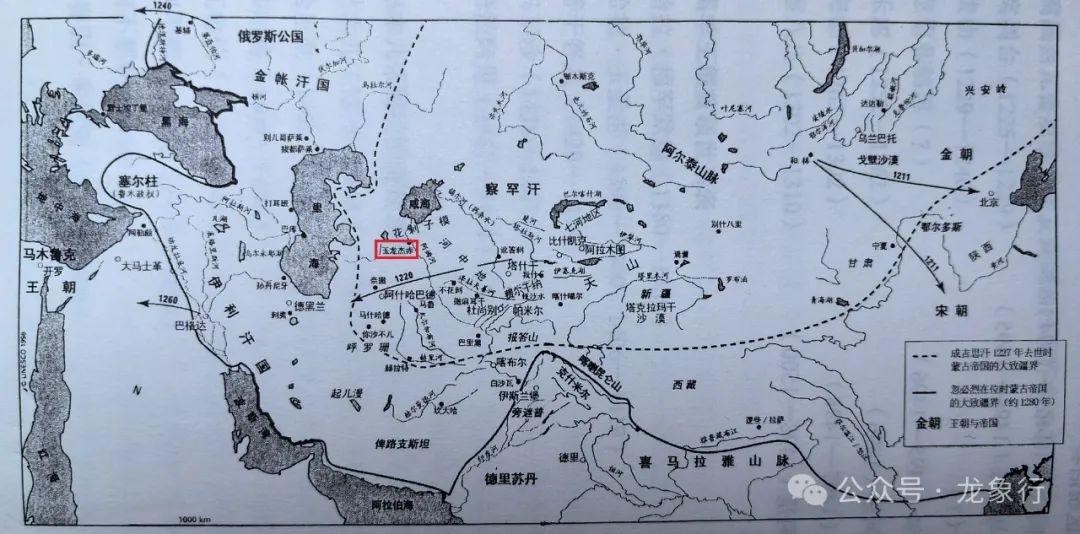
The Mongol Empire in the 13th century, image from History of Central Asia Book 4
After the Mongol armies conquered Yulongjechi, Genghis Khan granted the Khorezm Oasis to his eldest son, Juchi, and in 1260-1246, Khorezm became a territory of the Chaghatai Khanate when Chaghatai Khan Arukhul took the region of Khorezm from Beelzebub of the Qinca Khanate. Shortly thereafter, the Qinca Khanate recaptured the northern part of Khorezm and took control of the Syr Darya Delta and Yulong Jeche, while the Chaghatai Khanate still ruled the southern part of Khorezm, including Koti.
Thanks to the rule of the Great Mongol Empire and the subsequent Mongol Khanate, the western section of the Silk Road prospered in the mid-14th century. The Northern and Middle Roads of the ancient Silk Road were the busiest. The Northern Route traveled from the Volga River valley and the Black Sea coast to Constantinople via the Khorezm Oasis. Yulong Jiechi on the Khorezm Oasis became a distribution center and transit point for the East-West trade. All the cities of the Volga Valley were connected to the East through it. Thus, the Khorezm Oasis became an important part of the Central Asian commercial economy.
As the economy recovered, Central Asian cities were revived and built. In Ibn Battuta's travelogue, in the 14th century Yulon Jeche developed into “the most extensive, majestic, beautiful, and large city of the Khanate of Chincha. It had beautiful bazaars and wide streets, with many houses and rich goods”. Goods from China, Central Asia, and Europe were shipped here, and through it to the East and West.
In the 1360s, the Hongjirat tribe, a Mongol tribe to the north of Khorezm, became powerful, and the tribal leader, Husayn Sufi, established an independent Islamic dynasty, known as the Sufi Dynasty, which took advantage of the war in the central part of the river to move southward and capture the Chaghatai family territory of Koti.
#Architecture#
Turabek Khanum Mausoleum, the Turabek Khanum Complex, is one of the largest and most unique of the surviving monuments in Kunia-Urgench. Archaeologists are still disputing whether the building was a mausoleum or a palace due to the fact that it had a well-developed heating system. Either way, it is an architectural masterpiece full of ingenuity. Widely regarded as one of the earliest and finest monuments to use mosaic colored glazes or colored ceramic tiles, it is particularly distinguished by its interior dome, which displays a stunningly detailed celestial conception.
The entire building follows a geometric spatial structure that expresses astronomical and temporal connotations. The interior of the dome is decorated with glittering mosaics divided into 365 zones representing the 365 days of the year, 24 arcs immediately below the dome representing the 24 hours of the day, 12 larger arcs further down representing the 12 months of the year, and 4 large windows representing the 4 weeks of the month.
Although the site is traditionally considered to be the final resting place of Turabek Hanim-representing the wife of Kutlug Timur, who ruled Khorezm from 1321 to 1336 under the Khanate of Chincha (also known as the Golden Horde), this monumental building may also date from much later in the reign of Timur the Great (1370-1405), or perhaps even later.
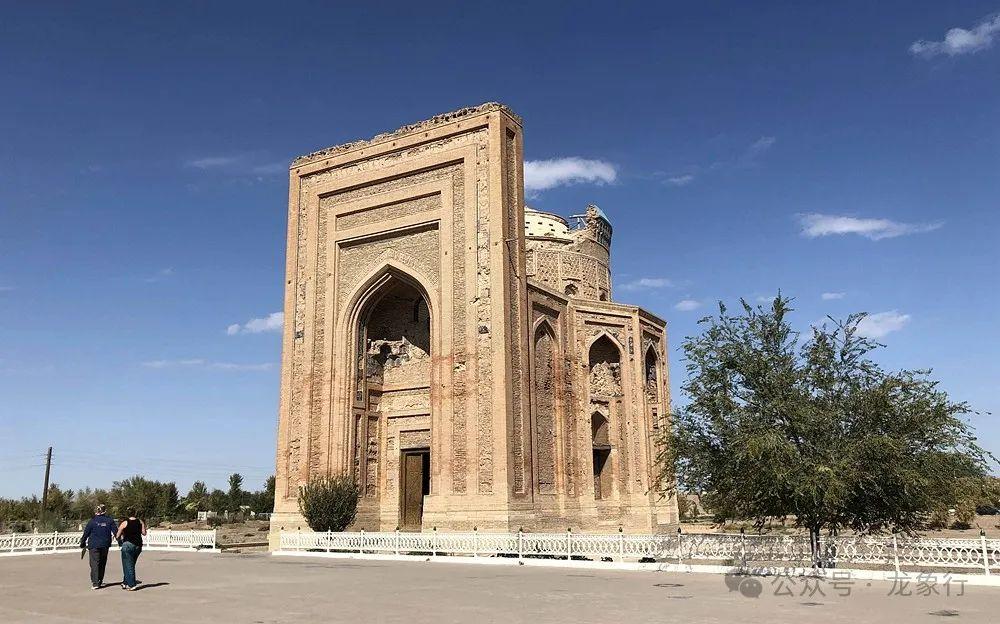
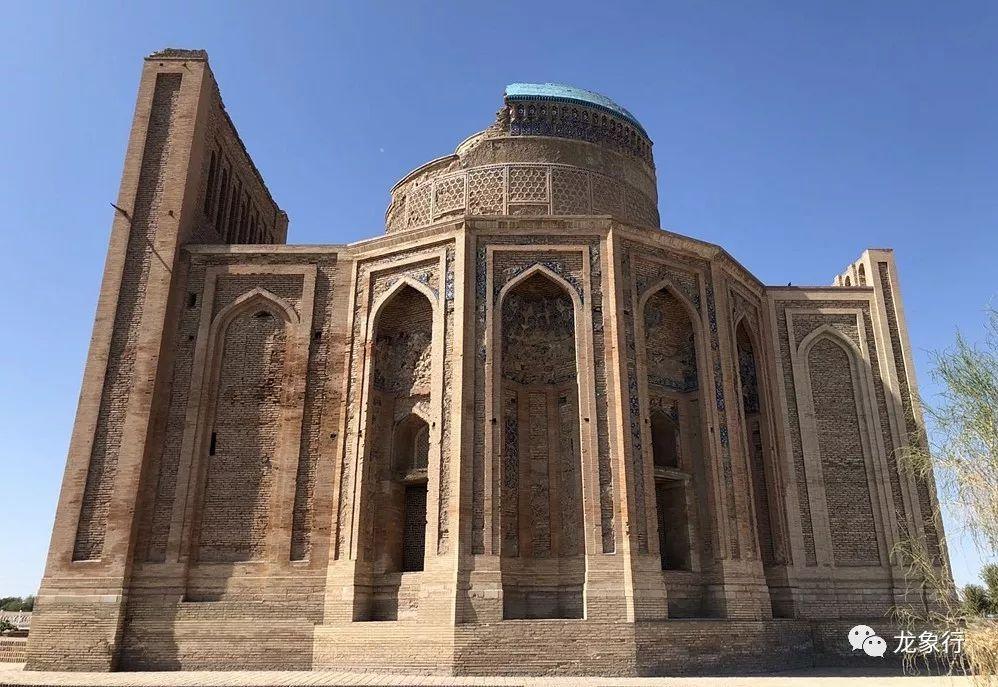
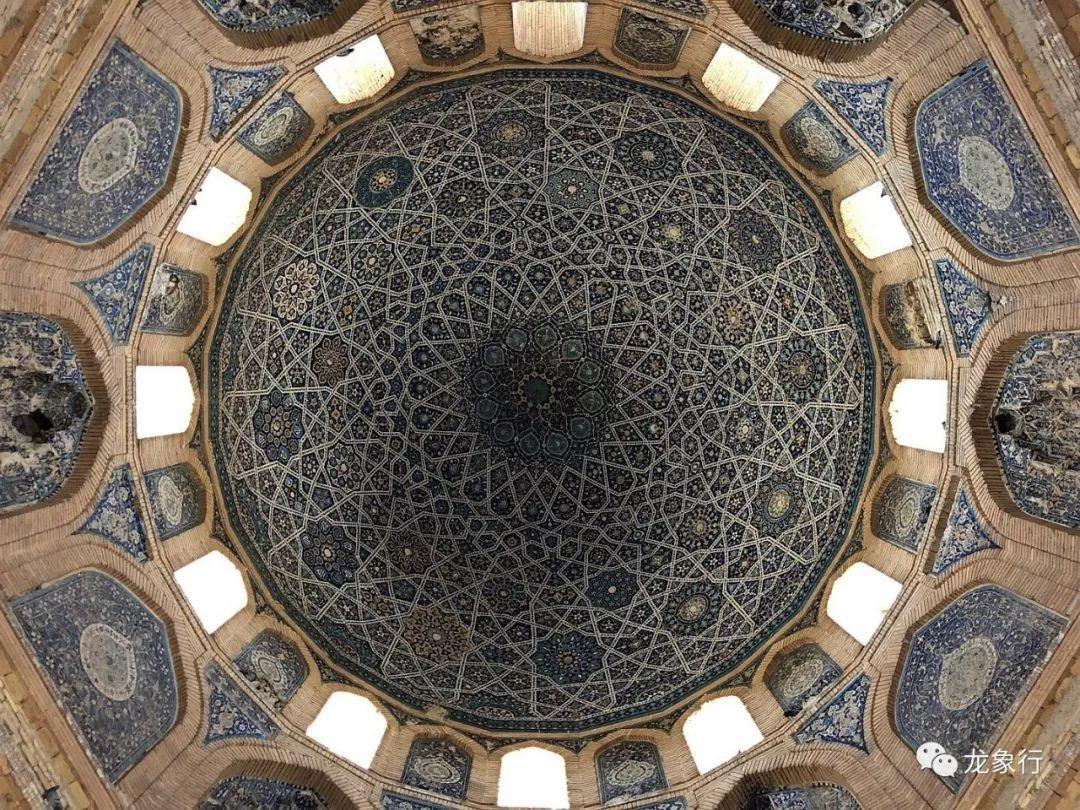
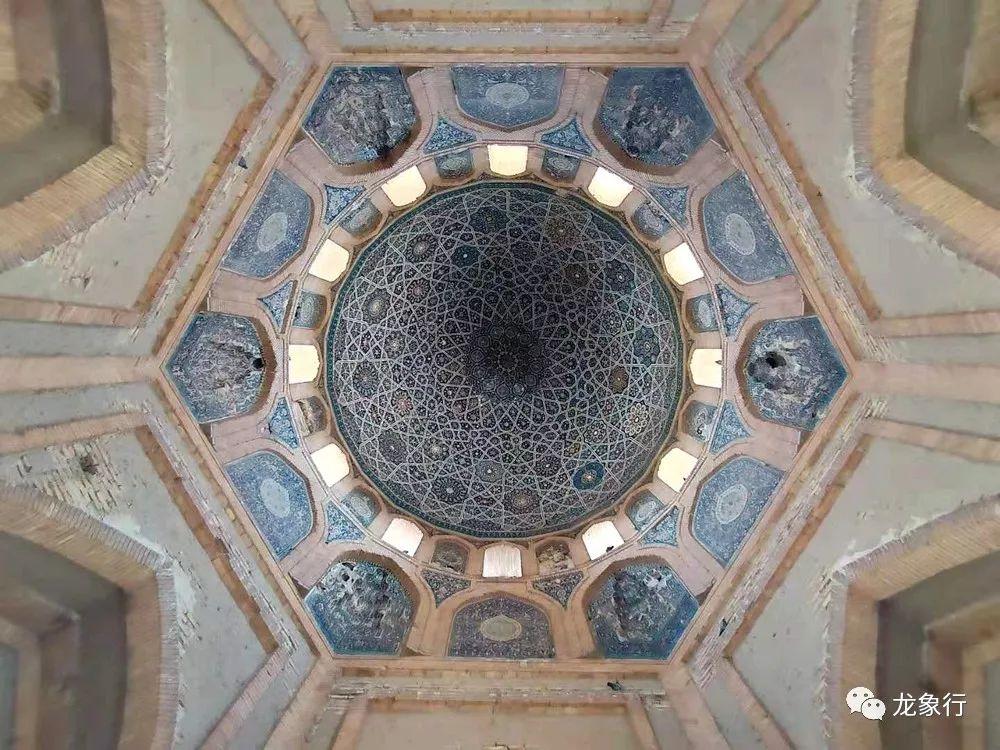
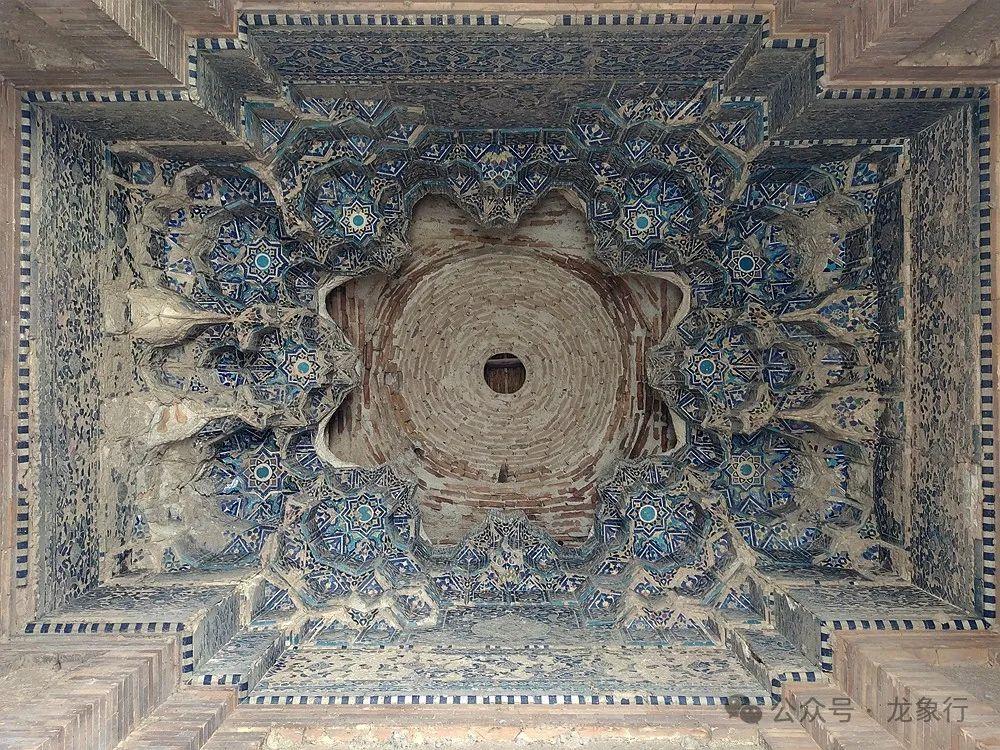
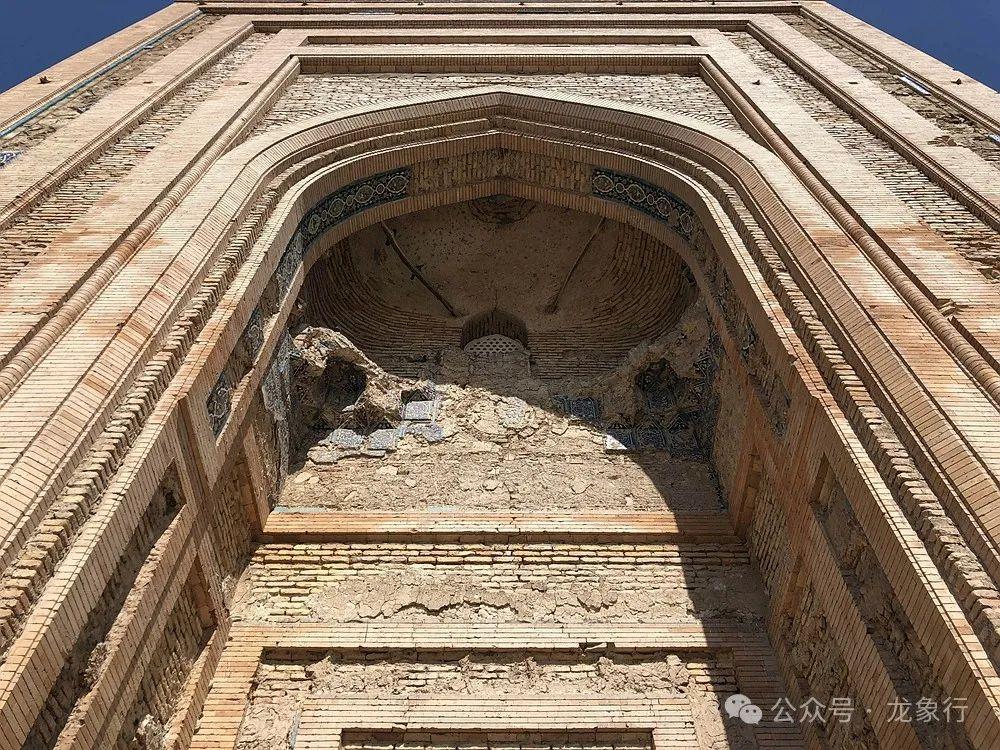
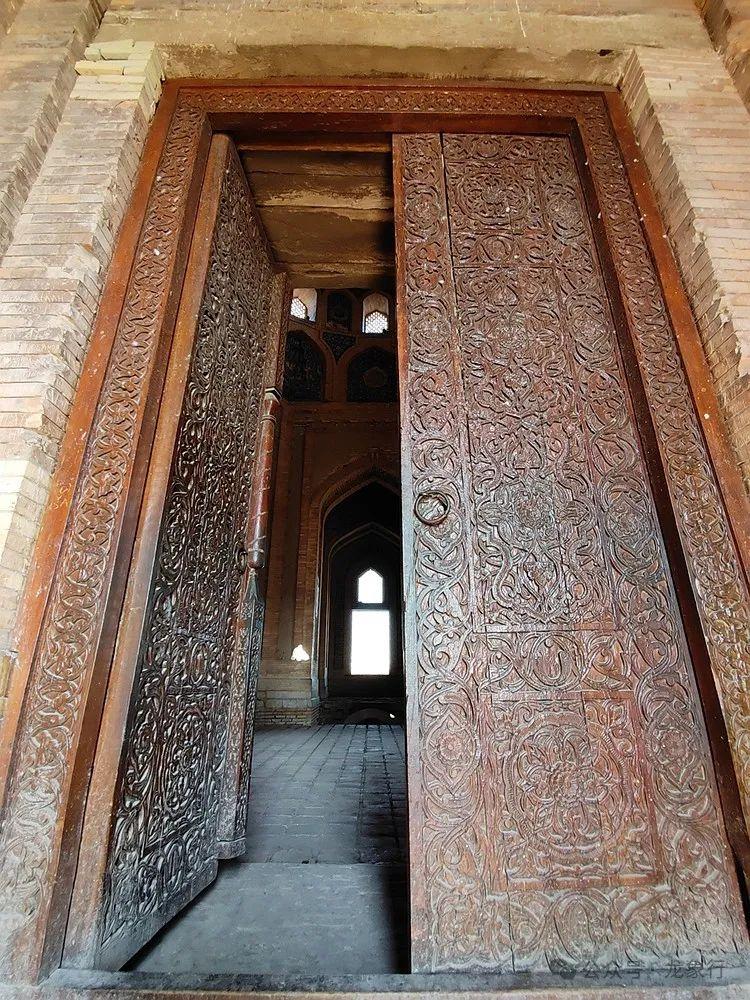
Turabek Hanim Complex
The Najm-ad-Din al-Kubra Mausoleum of Nejamedin al-Kubra and the Sultan Ali Mausoleum of Sultan Ali and the PiryarVali Mausoleum of PiryarVali complexes are located in the center of the new city of Kurnia-Urgench.
Built in the first half of the 14th century, the Naim al-Din Kubra Mausoleum is named after Naim al-Din Kubra, founder of the Kubrawiya Sufi order, philosopher, painter, physician, chess master and general. It is one of the buildings rebuilt after the Mongol invasion.
The mausoleum of Piryar Vali, a contemporary of Naim al-Din al-Kubra, is located to the west of the latter's mausoleum and was built between the 13th and 14th centuries.
Located opposite the mausoleum of Naim al-Din al-Kubra is the mausoleum of Sultan Ali, a 16th century ruler. Its main body is hexagonal and the dome is 9.5 meters in diameter.
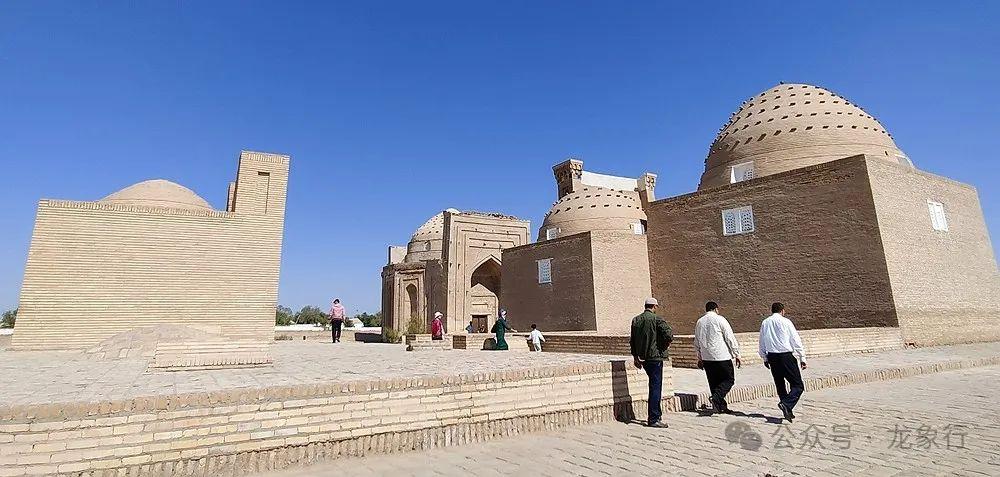
mausoleum complex
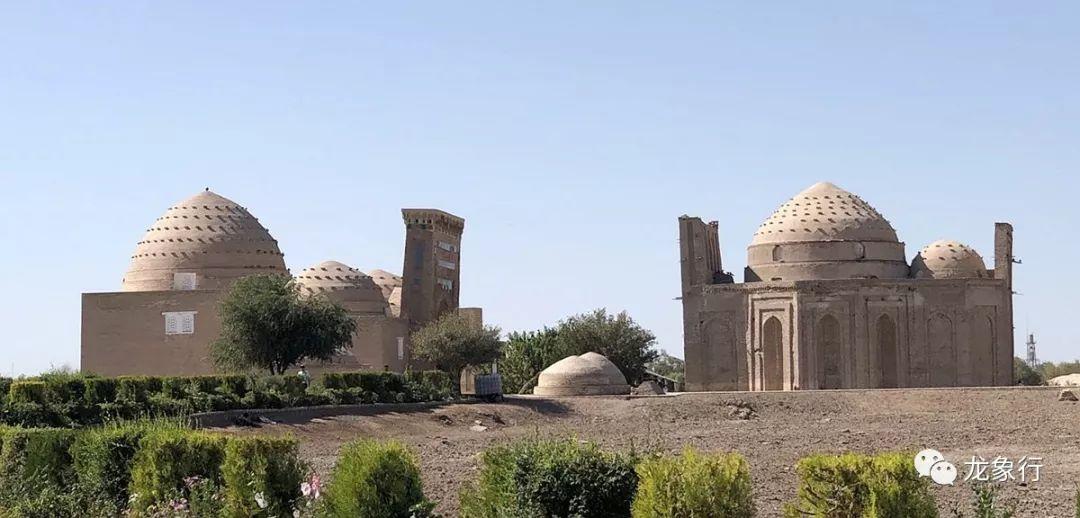
Mausoleum of Nejameddin Kubera (left) and Sultan Ali's Mausoleum (right)
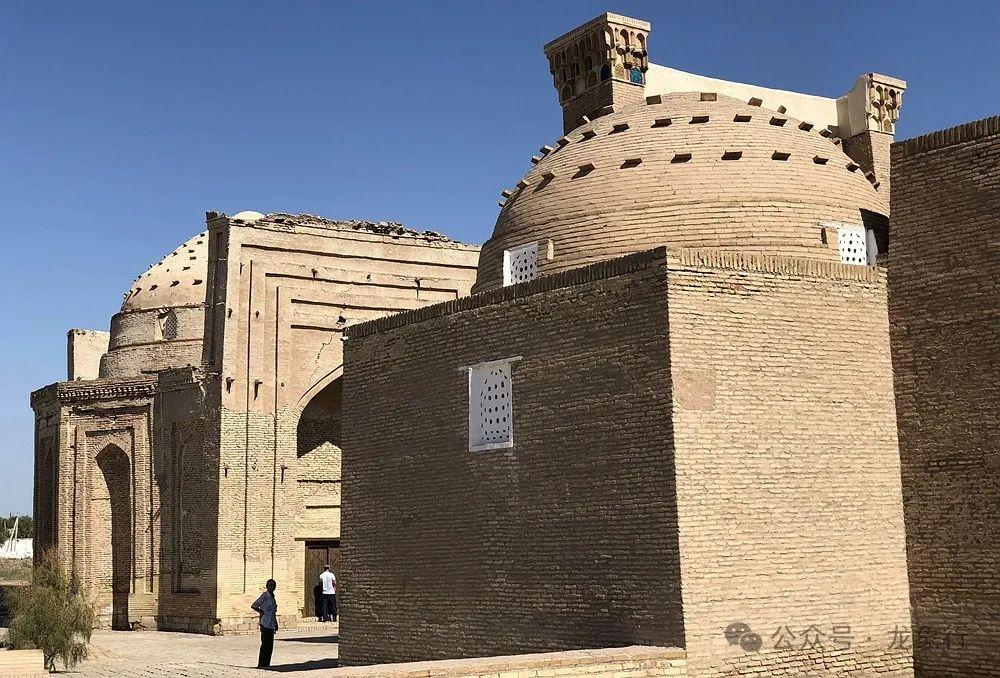
Mausoleum of Nejameddin Kubera (near) and Mausoleum of Sultan Ali (far)
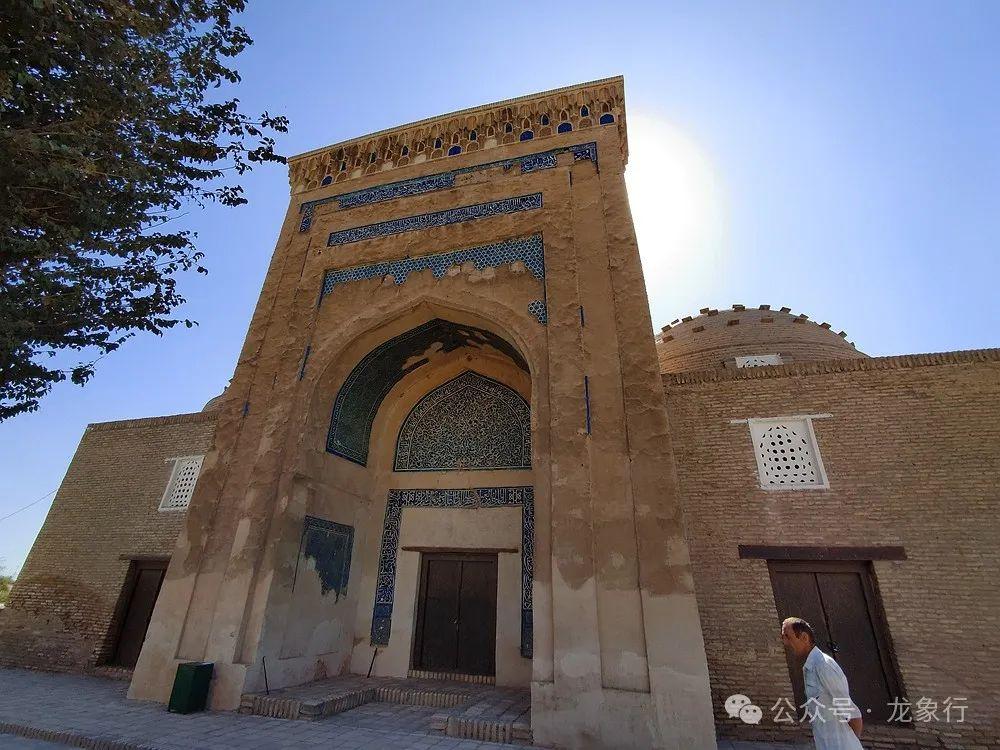
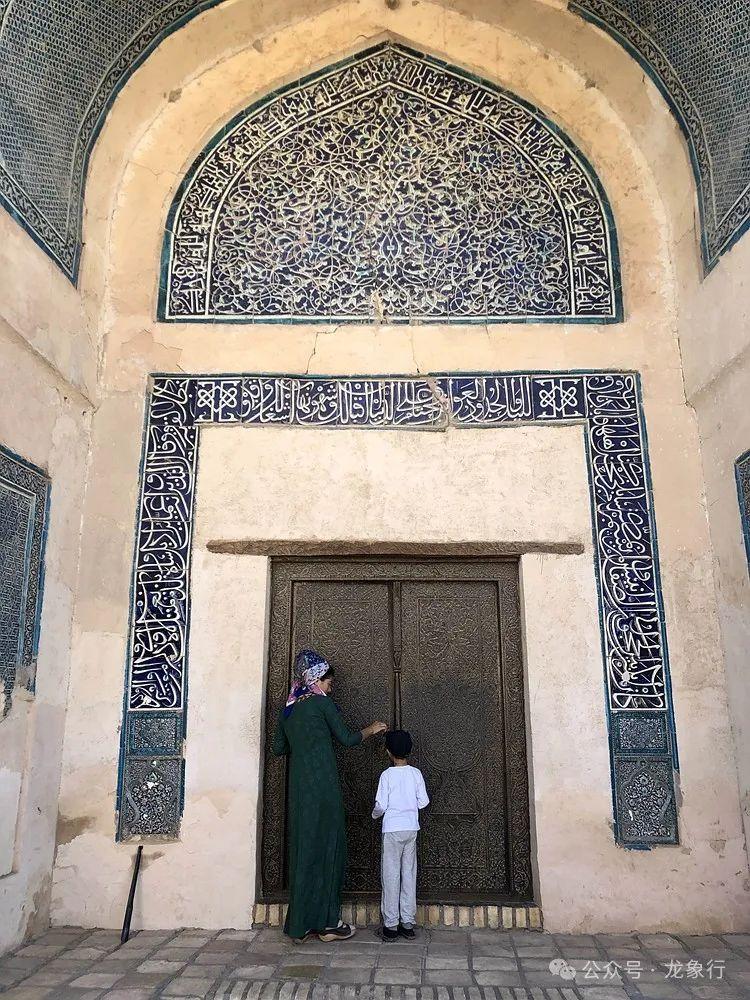
Mausoleum of Nejameddine Kubaila
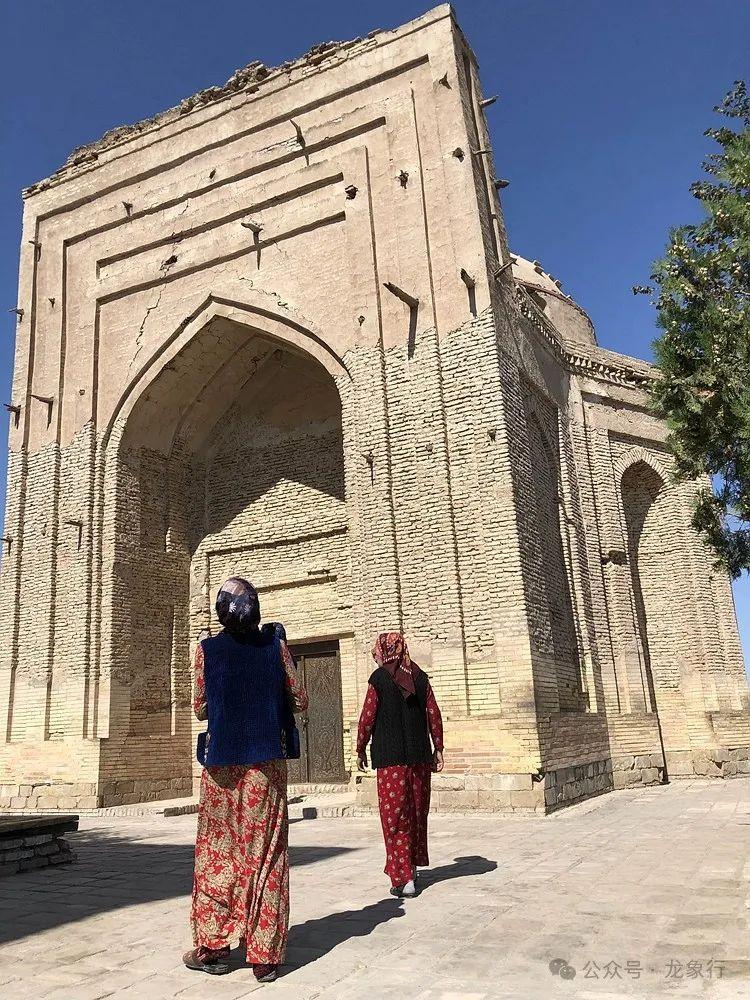
Sultan Ali's Mausoleum built in the 16th century
Caravanserai Gate, pronounced Caravanserai Gate. caravan means a group of travelers, which in ancient times referred to a caravan of merchants and travelers, and from the name it probably relates to the ancient trade routes. However, the purpose of the gate is unclear; it may have been an entrance to a caravan inn, or it may have been part of a palace, madrassa, or other large building.
The surviving remnants of the gate face north, and a number of regularly spaced column bases were excavated on the south side, which run east-west and parallel to the gate. Archaeologists believe that these regularly spaced column bases suggest the possibility of a colonnade that extended inward into the atrium further south. The underside of the gate is decorated with a geometric arrangement of colorful glazed majolica tiles in a relatively good state of preservation. Because these tiles are mosaic tiles composed of many small fragments rather than painted in colored underglazes, archaeologists speculate that the building may have been constructed in the late 14th century or later, when the technique became popular, possibly due to Timur the Great's capture of skilled artisans from Iran who were proficient in the technique.
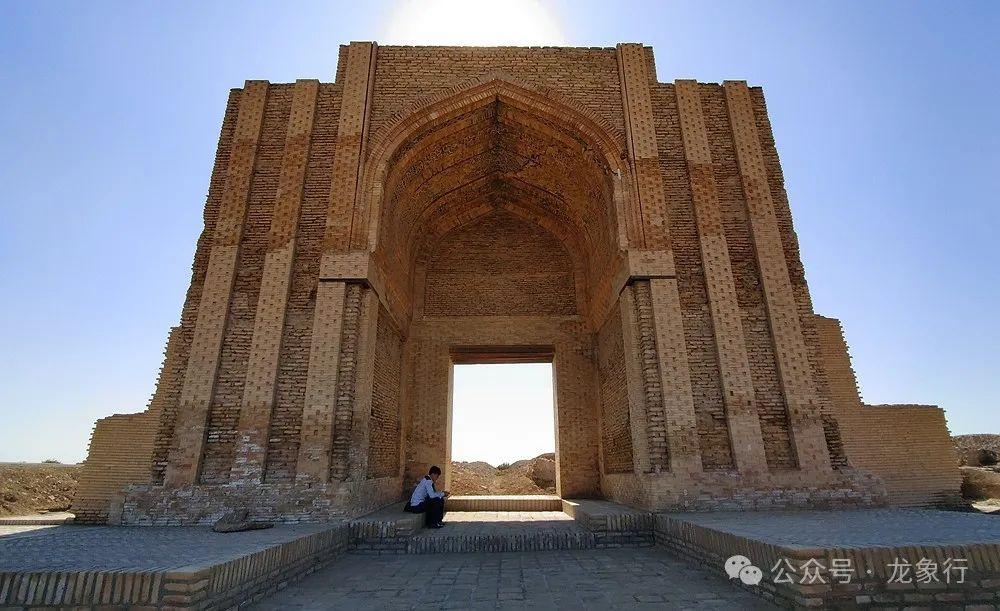
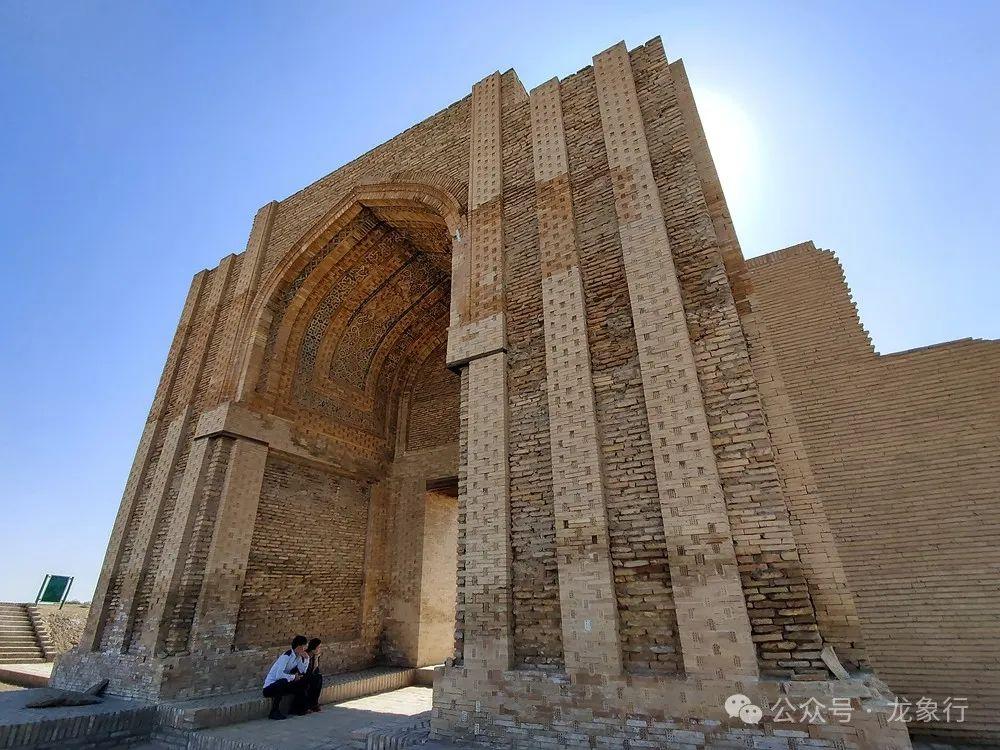
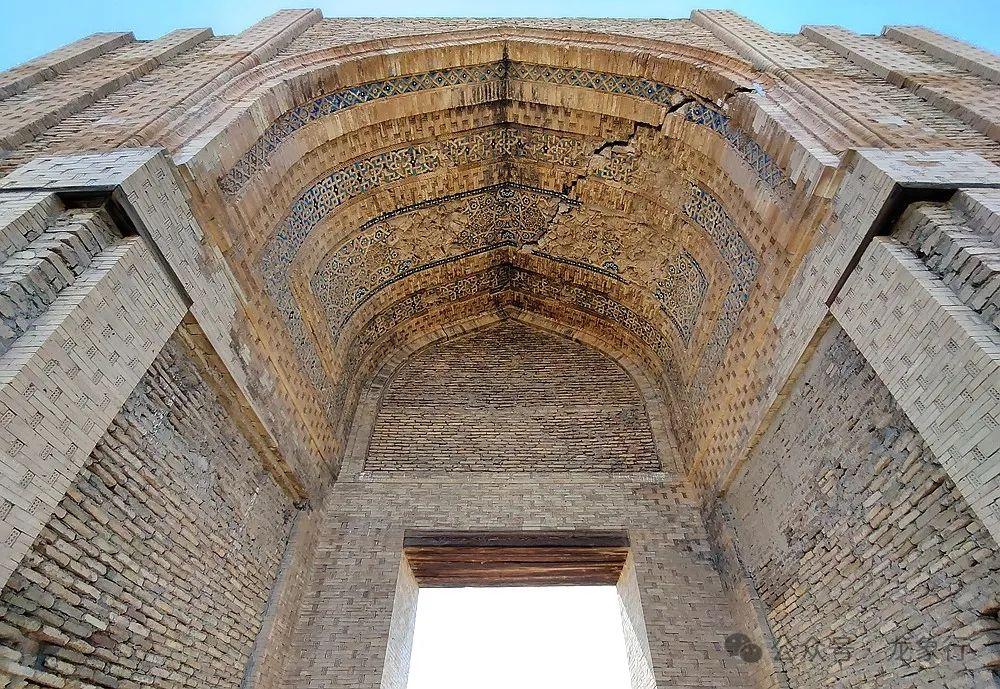
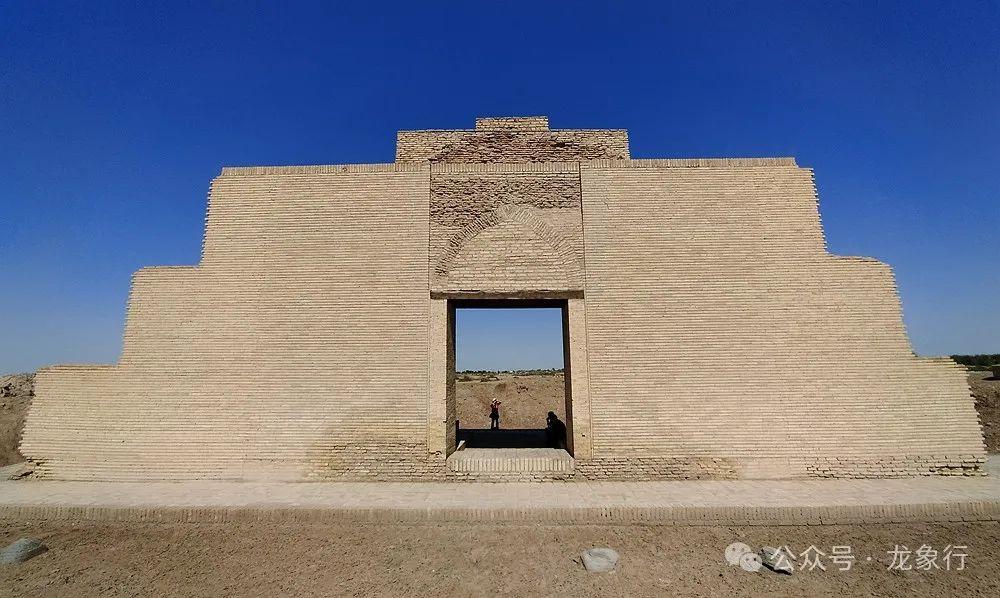
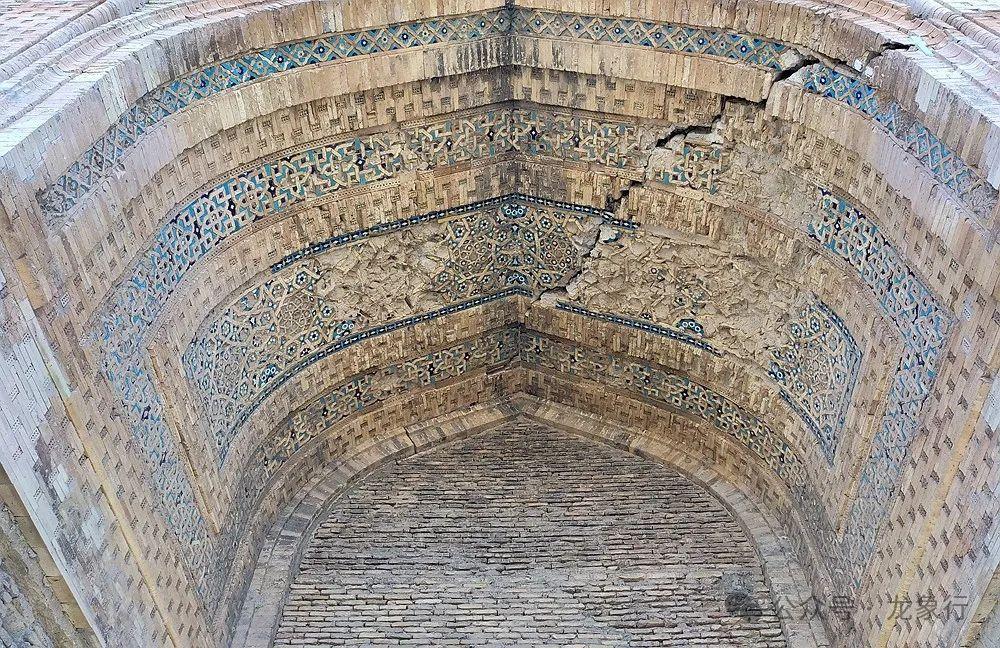
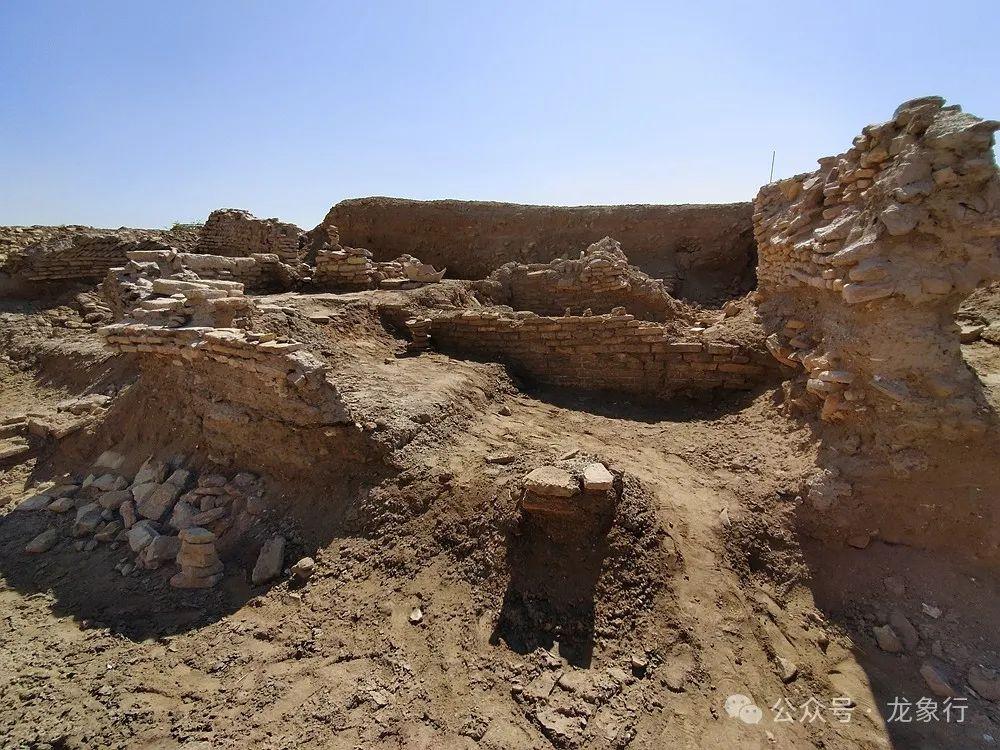
Caravanserai Gate
Timurid Empire (1370-1507)
In 1370, Timur established his rule in the Hezhong region. He wrote to Husayn Sufi of the Sufi Dynasty, asking him to return Kirti and other lands which had belonged to the Chaghatai Khanate, but was refused. Therefore, in the second year of his seizure of power in Hezhong (1371), Timur led his army to besiege Yulongjiechi, and Husayn Sufi died in the siege, and his brother Yusuf Sufi succeeded him. Yusuf Sufi realized that he was incapable of fighting against Timur, so he begged Timur for peace on the condition of returning Kirti, which Timur accepted, and the southern part of Khwarazm, centering on Kirti, became Timur's possession. However, Yusuf al-Sufi soon reversed his position and took Kirti by force, and in 1373 Timur again invaded Khwarazm, where Yusuf al-Sufi was defeated and begged for peace.
In 1377, Timur fought with the White Horde on the lower Syr Darya, and Yusuf Sufi took advantage of this to attack the area around Samarqand, and in 1379, Timur once again marched to Khwarazm, and his troops reached Yulong Jeche. Timur, “wearing a light breastplate, a sword at his waist, a shield on his shoulder, and a king's helmet on his head, rode his horse towards the city of Yulongjechi. Believing in God, he went towards the trench below the city and called Yusuf to fight with him. But Yusuf ignored him, preferring to save his life rather than his honor.” Yulong Jeche was besieged for three months, during which time Yusuf died. After capturing the city, Timur's army carried out a massacre in which most of the people were killed, except for the intellectuals, scholars, artists and craftsmen who were sent to Thirsty Stone (today's Shahrisabz, Timur's hometown). The Ak-Salai Palace in Thirsty Stone was built by these captured Khorezm craftsmen.
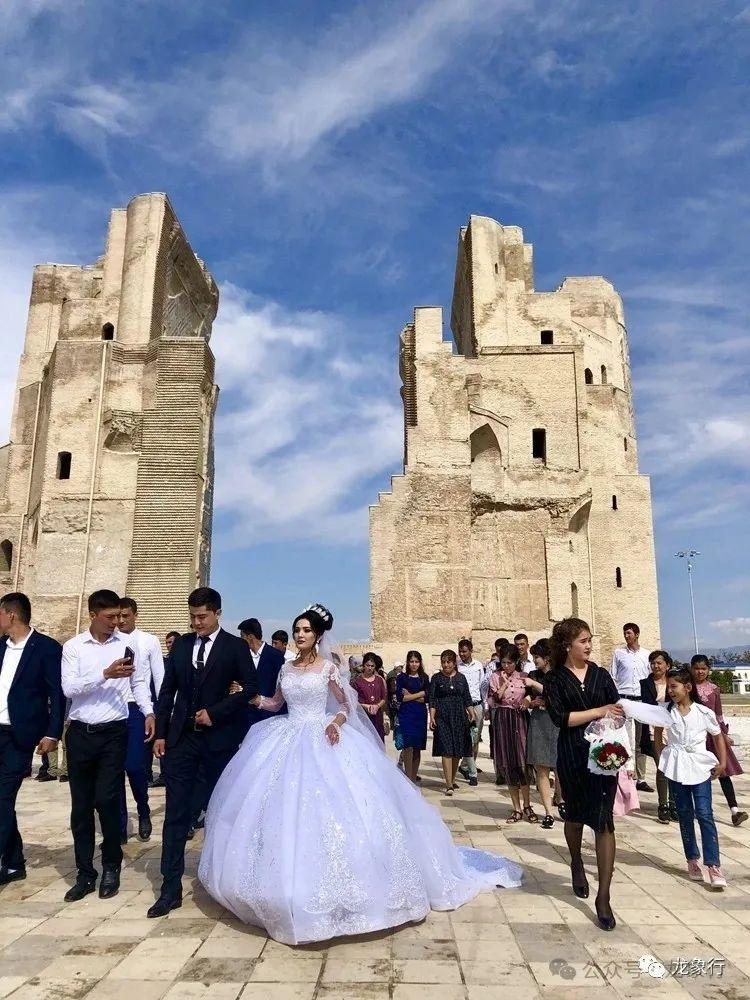
Ruins of Ak-Saleh Palace in Shahrisabz
Timur's occupation of Khwarazmu aroused the dissatisfaction of the Khanate of Chincha, so the Khan of Chincha, Tetu Lost, launched a war to recover Khwarazmu, who was a descendant of Juchi's longest branch of Guerdan, and had received Timur's support on his way to the throne. However, when he became powerful, Tetu lost a hostile attitude towards Timur, who had helped him. He believed that he was a descendant of Genghis Khan, while Timur had neither a distinguished background nor a clear legal title. So he began to wage war, trying to recover the former territory of the Chincha Khanate occupied by Timur.
In 1383, while Timur was fighting in Khorasan, he captured Khorezm, where he established his rule and minted coins in his own name, and in 1387, he marched to the banks of the Amu Darya River. Upon learning of Timur's return, he retreated to the White Horde (a semi-independent khanate of the Khanate of Chincha, which originated from the feudal system of the Khanate of Chincha), leaving Yil Yiglıyılıyılıyı Uğırın, the king of the Yüchi lineage, and the local royal family, the Süleyman Süüpühü, to defend Khwarizmü.
In 1388, Timur marched to Khorezm and once again captured the important city of Yulongjerch, this time ordering its inhabitants to move to Samarkand, destroying the entire city, sparing only the chapel and its minarets, and then ordering that the ruins be sown with barley and turned into pastureland. This act was not only a cruel punishment to the locals, but also reflected Timur's strong rule over the conquered lands.
Later, at the end of 1391, Timur ordered the reconstruction of Yulongjechi, and the governor of the city, Musahei, who was ordered to carry out the reconstruction work, could only restore a quarter of the original Yulongjechi. Bartold, a famous Soviet expert on Central Asian and Mongolian history, said that this was the only case in the history of Timur's conquests in which a city was intentionally and completely destroyed and then rebuilt. The reason for this is that Yulong Jeche was a rather prosperous commercial city, and its restoration had a very positive significance for the promotion of commerce in the Timurid empire.
Timur's conquest of the Khorezm oasis devastated the region's economy. Until the 16th century due to the diversion of the Amu Darya River, Yulong Jeche's position as the regional capital was replaced by Khiva and eventually abandoned.
From then on, Yulonjechi, a major town on the northern Silk Road, declined and dropped out of the historical scene.
Modern times
At the beginning of the 19th century, with the construction of a new canal, the Turkmen people resettled in the area, but they mostly developed towns outside of the old city, using it as a cemetery. Of course this reuse of historical sites has now ceased and has also cleared the impact.
Nowadays, most of the ruins of Old Urgench are buried in the ground, but the remaining ruins and the vaguely visible layout of the town still give a sense of its former splendor.
The Kurnia-Urgench Museum is a simple one, housed in the Daesh madrasa established at the beginning of the twentieth century, just in front of the main mausoleum complex, and contains a number of ancient Arabic collections as well as artifacts unearthed in several ancient cities.
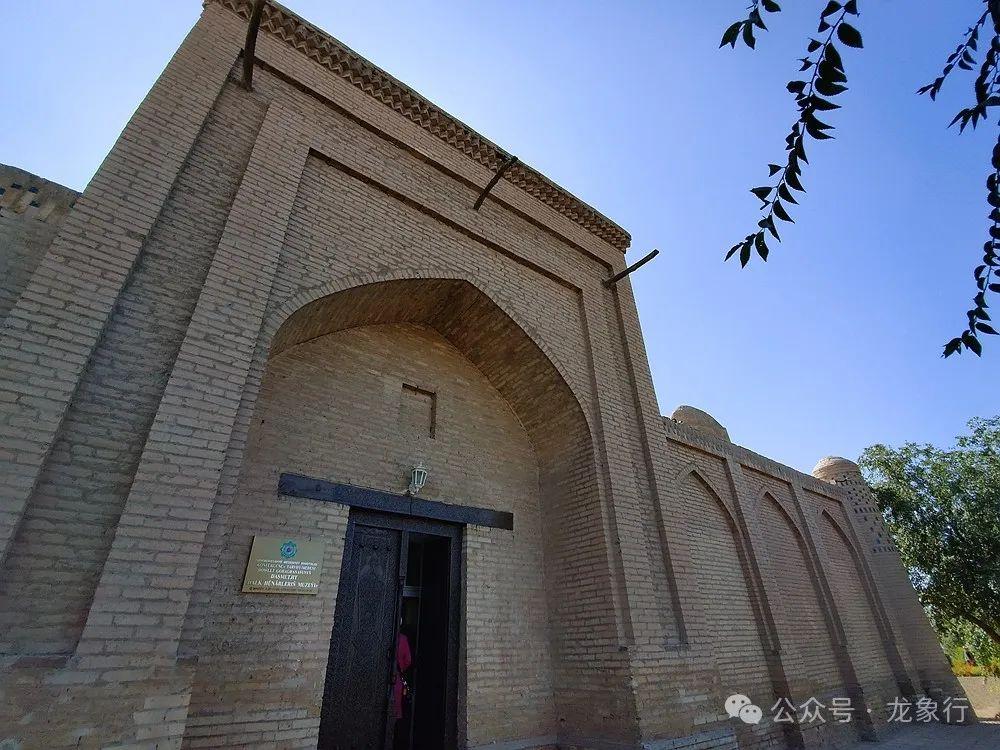
Cunha-Urgench Museum
Kurnia-Urgench has long been a school of master architects. Over the centuries, the knowledge and skills of this school have spread throughout the Muslim world. This can be seen in many buildings and their decorations in the territory of Turkmenistan, as well as in Uzbekistan, Afghanistan, Transcaucasia, Turkey, Iran, Pakistan and India, starting from the Timurid period. For example, many of the buildings in the famous Central Asian city of Samarkand were constructed in the 14th century by architects and craftsmen from Kurnia-Urgench.
The originality and mastery of local architects and craftsmen can be seen in particular architectural details such as structures, shapes and decorations, which developed over time and became more and more perfect.
In addition, traditional building techniques continue to this day. For example, the traditional brick kiln in Kunja-Urgench still produces bricks for the reconstruction of historical buildings in the region.
In 2005, UNESCO listed it as a World Heritage Site, making its uniqueness known worldwide.