

Some associations between bronzes and deer stones in northern China
Abstract: Some of the bronze weapons and tools unearthed in northern China are similar to those engraved on the deer stones in the Eurasian steppe zone, especially in Mongolia, and there are also individual humanoid bronze objects that are similar to the figures shown on the deer stones. Through the comparative study of bronze knives, short swords, tube axes, hanging hooks (bow-shaped tools), Cheyuan and other artifacts with the engravings on the Deer Stone, this paper explores the age of the Deer Stone and the related bronze artifacts, and further demonstrates the commonality of the bronze culture of the Eurasian steppe and its interaction with the Shang and Zhou cultures.
Keywords: northern China, bronze, Eurasian steppe, deer stone
I. Introduction
The more than 600 deer stones found in the Eurasian steppe zone are commonly carved with jewelry, costumes, weapons, tools, other animals and other engravings, as well as car-shaped and similar bow-shaped tools, in addition to the engraved deer motifs. Some of the deer stone carvings, especially the carvings showing tools and weapons, are similar to some bronzes unearthed in the northern part of China, and some other bronzes unearthed in China have similar carvings with deer stone carvings. In addition, the deer as the main theme of the ornamental plaque, ornaments, pole head ornaments are also widely distributed in the Eurasian steppe zone.
At the end of the 19th century and the beginning of the 20th century, deer stones attracted the attention of Russian and Nordic travelers, and in the middle of the 20th century, deer stones began to be studied by Soviet scholars as a specialized object of research [1]. In the 1980s, V.V. Volkov wrote a special book on 450 passages of Mongolian deer stones, and classified and studied the artifacts represented by the deer stone carvings [2]. At the beginning of the 1990s, Hatakeyama Shaku made an overview of the research history, characteristics, and chronology of deer stones in North Asia [3]; Takahama Hidetoshi also made a comparative study of deer stones and their related artifacts when he explored the archaeological culture of northern China during the Zhou Dynasty [4]; and Wang Bo summarized the deer stones found in the Xinjiang region [5].At the beginning of the 21st century, Une studied the chronology of deer stones in Mongolia, and proposed that some kind of bronze culture should have existed in Mongolia that corresponded to the chronology of deer stones [6]. Bronze culture [6]. The Arctic Research Center affiliated with the Smithsonian Institution used GIS to do a field survey on the spatial and temporal changes of Bronze Age culture and deer stones in northern Mongolia [7]; Pan Ling explored the relationship between the sharpened stone and circular plaque carvings of deer stones and related artifacts in northern China [8], and conducted a systematic study on the dating of deer stones and related issues [9].
The above studies have explored the cultural attributes and age of the deer stone around the artifacts engraved on the deer stone, but there is a gap between the deer stone engravings and the objects they represent, such as regional differences, cultural differences, era differences, as well as engraving techniques, the degree of resemblance, differences in the stone, weathering effects, etc., which are prone to cause bias in understanding. This paper is an attempt to explore some of the problems that existed in previous studies by studying the relationship between deer stone carvings and some northern Chinese bronzes.
Deer stone usually use long stone processing into anthropomorphic form, most of which can be divided into three sections, the upper end of the cut into a sloping top for the head, to distinguish between the head and torso necklace, and then distinguish between the torso and the lower limbs with a belt, generalized performance of the limbs, and very few carved out of the human face form. Deer stone more square rounded corner stone columns stand in the grassland, part of the horn, plate or not quite regular strips of stone carved into. Most of the deer stone carving pattern to deer lines, deer lines occupy most of the surface, but also occasionally carved other animal images, there are also part of the pillar only carved jewelry and carry things, due to the overall meaning of nearly the same, but also included in the scope of the deer stone.
Based on the content and form differences of the main decoration of the deer stone, it can be roughly categorized into three types:
Type A: beak-kissed running deer. Deer muzzle elongated like a bird's beak, antlers exaggerated volume, the body shape of running or leaping, patterned pattern style is remarkable, most of the layers of dense layout engraved on the deer stone (Figure 1: 1), while engraved with necklace, earrings, belt, weapons, tools and other motifs. This type of deer stone is mostly distributed in the northern part of Mongolia to the Trans-Baikal region, and there are also sporadic distribution in the Altai region, which is the type with more individuals.
Type B: realistic standing deer. Deer shape near real, standing, pattern layout sparse, or coexist with other animal-shaped carvings, jewelry, clothing, weapons, tools, carvings are also more concise (Figure 1: 2) [10]; this type of deer stone is mainly distributed in the Sayanling, Tuva, Altai area, the survival of rare.
Type C: no deer-shaped main pattern, but focus on the carving of ornaments, belts, tools, weapons and other patterns, occasionally individual deer or other animal patterns appear (Figure I: 3). This type of deer stone is widely spread in the steppes of Asia and Europe, but the number is scarce.
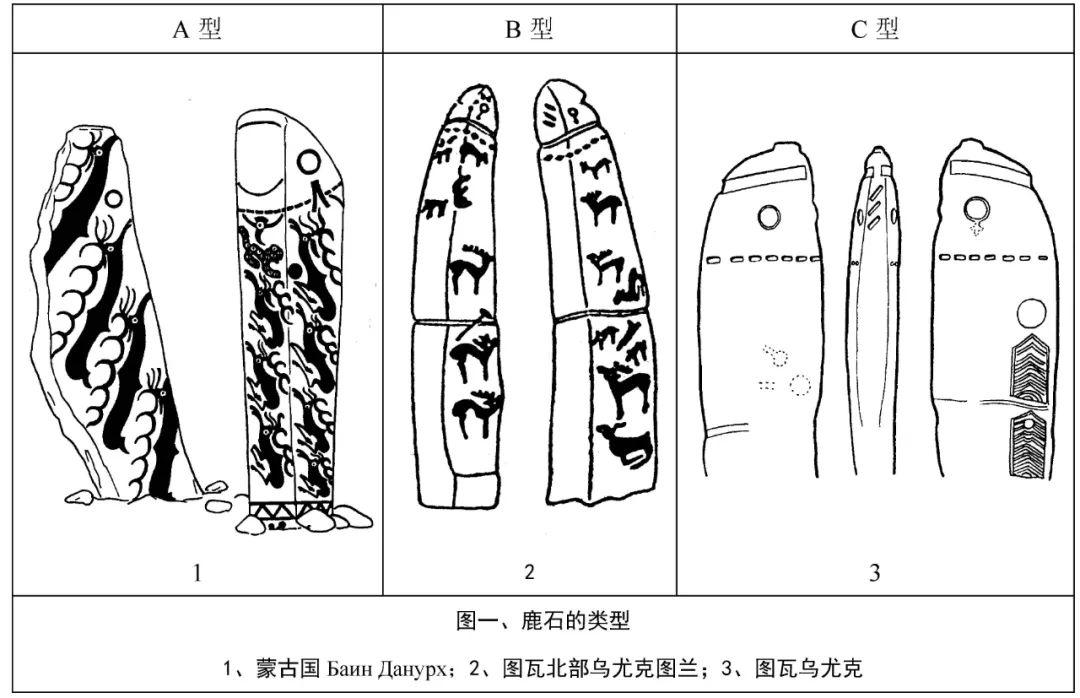
Second, bronze knife and deer stone
Bronze knife is common in the Eurasian steppe zone, but also common on the Deer Stone artifacts carving, more often shown in the belt in the belt with utensils. In the deer stone engraving can be identified on the shape of the instrument are: three convex knob ring first knife, horse head first knife, circular first knife, semi-circular first knife, double ring first knife, triangular through to, round through the knife, and so on, there are a number of may be engraved with the bell first knife or mushrooms first knife, but the textual data pattern is crude, difficult to confirm, so this paper is not involved for the time being.
The three-convex knob ring head knife, that is, the outer edge of the ring head has three columnar projections. This type of knife in northern China and southern Siberia have been found. In northern China, it was mainly found in Shilou Houlanjiagou and Shilou Erlangpo in Shanxi, on both sides of the Yellow River in Jin and Shaanxi, and in Xingcheng Yanghe, Suizhong Qianwei, and Fushun Wanghua in Liaoning, as well as in Yinxu [11] (Fig. II: 1), and in southern Siberia, mainly in the region centered on the Minusinsk Basin (Fig. II: 2) [12], and also in Trans-Baikal (Fig. II: 3). An engraving of this type of knife was found in the post-Hangai province of Mongolia (Fig. II: 4), apparently depicting a knife with a sheath, which is barred and convex-toothed, and is closer to the same type of knife found in China and in Trans-Baikal, whereas this type of knife found in the Minusinsk region is not barred.
Most of the three-convex knobbed knives excavated in China were accompanied by Yin culture bronzes from the 13th-11th centuries BC. The same type from the Minusinsk region belongs to the Karasuk culture, and the upper limit of its age should be no later than that of the Yin culture, as is the case with the deer stone with this engraving. The commonality of these knives suggests that they belonged to a culture that developed in parallel, and that their place of origin may have been in the northern steppe. Three convex knobs such as the ring head, currently only seen in the knife, does not seem to be seen in the short sword.
Horse head knives, i.e. knives decorated with the head of a horse, of which several have been excavated in Yinxu, have two ears that fit together (Figure II:5-6); this type of knife has also been found in the Minusinsk region, but with the horse's ears raised (Figure II:7), which is closer to the engraving of the deer stone (Figure II:8). The popularity of the Horsehead Knife corresponds roughly to the period of the Yinxu culture, and there seem to be no reports of discoveries in later generations.
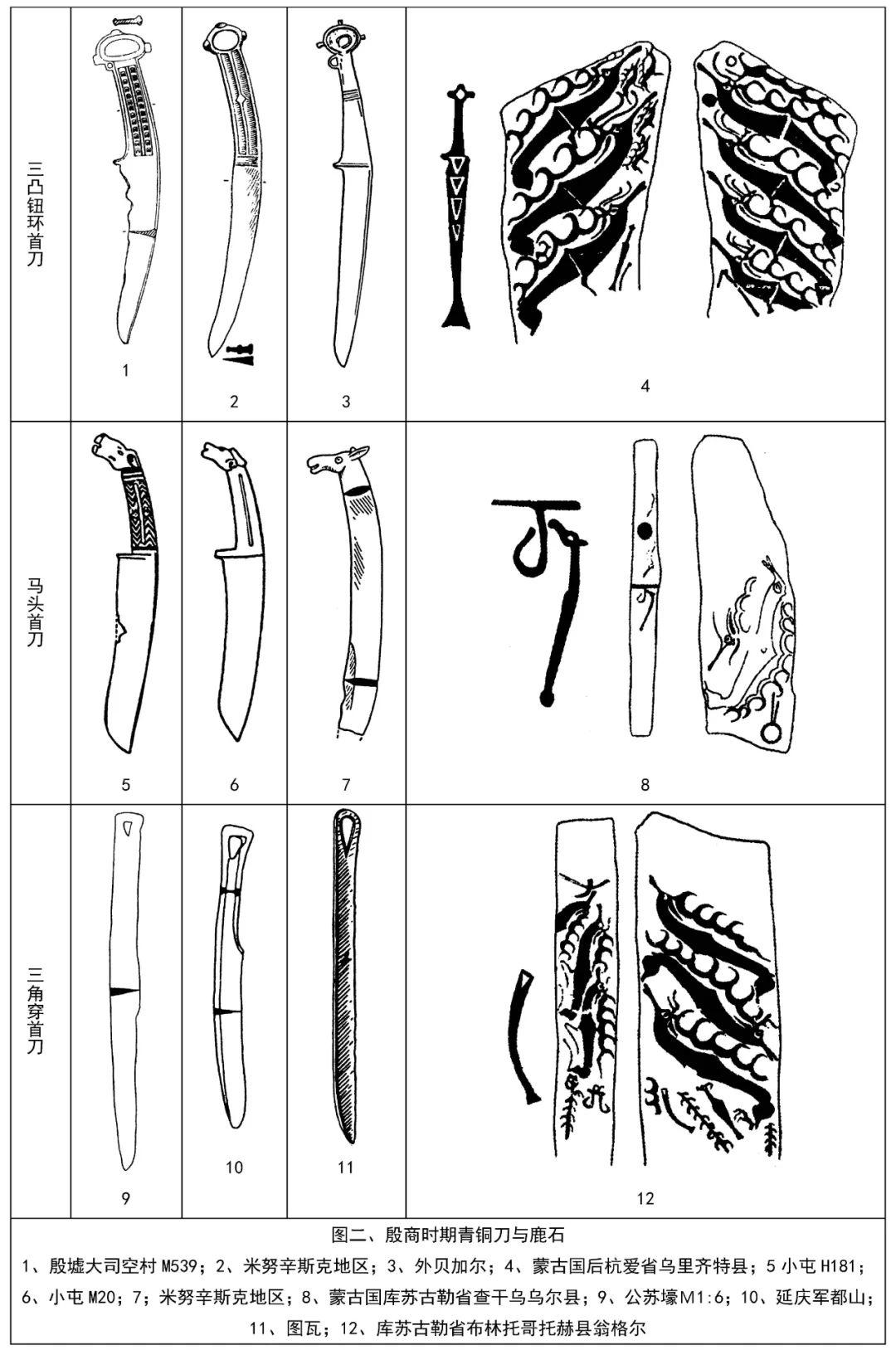
Triangle through the head of the bronze knife in Inner Mongolia (Figure 2: 9) and Beijing Yanqing (Figure 2: 10) there are a number of excavations, Inner Mongolia Ikezhaomeng Hangjin Banner Taohongbala cemetery unearthed through the head of the knife 4, wear a round and triangular type, the excavators believe that the cemetery of the bronze, gold earrings and Huailai Beixinbao tomb is similar to the age of the Spring and Autumn period should be in the late period [13]. The same type of knives from the Jundushan Cemetery in Yanqing also belong to the Spring and Autumn Period. In addition, a bronze knife with a similar shape of perforation was excavated in Tuva (Figure II:11), but its blade is straighter and somewhat different from the curved-backed knife engraved in Deerstone. Mongolia kusugul province brintogotokh county on the deer stone can be seen clearly this triangle through the head of the knife carving (Figure 2: 12), but the same carving can be seen Ⅰ type bowie and the head of the animal short sword, these two types of objects are popular in the yin shang to the middle of the western week, such as the knife is also with the other patterns on the deer stone is a carving, then the triangular through the head of the knife in the distribution of the deer stone area is likely to appear earlier. Otherwise, the deer on the stone all kinds of engraving may not be contemporaneous works.
Circular head knife from the Yellow River basin to the northern steppe have been found (Figure 3: 1-2), the distribution of more concentrated areas are Ordos and Minusinsk basin (Figure 3: 3). Dozens of pieces were also unearthed in the Yinxu. Most of the bronzes from the Ordos area were collected, and most of the circular-headed knives have no clear provenance, and the accompanying objects are unknown, making it difficult to determine their age. Minusinsk Basin found in the circular head knife is the bulk of the local bronze knife, and the majority of convex arc back, and the Ordos has many similarities, the academic community is generally believed to be the relics of the Karasuk culture. Mongolia deer stone can be seen on a number of circular head knife engraving [14], mostly convex arc back modeling, there are small ring head, there are also large ring head.
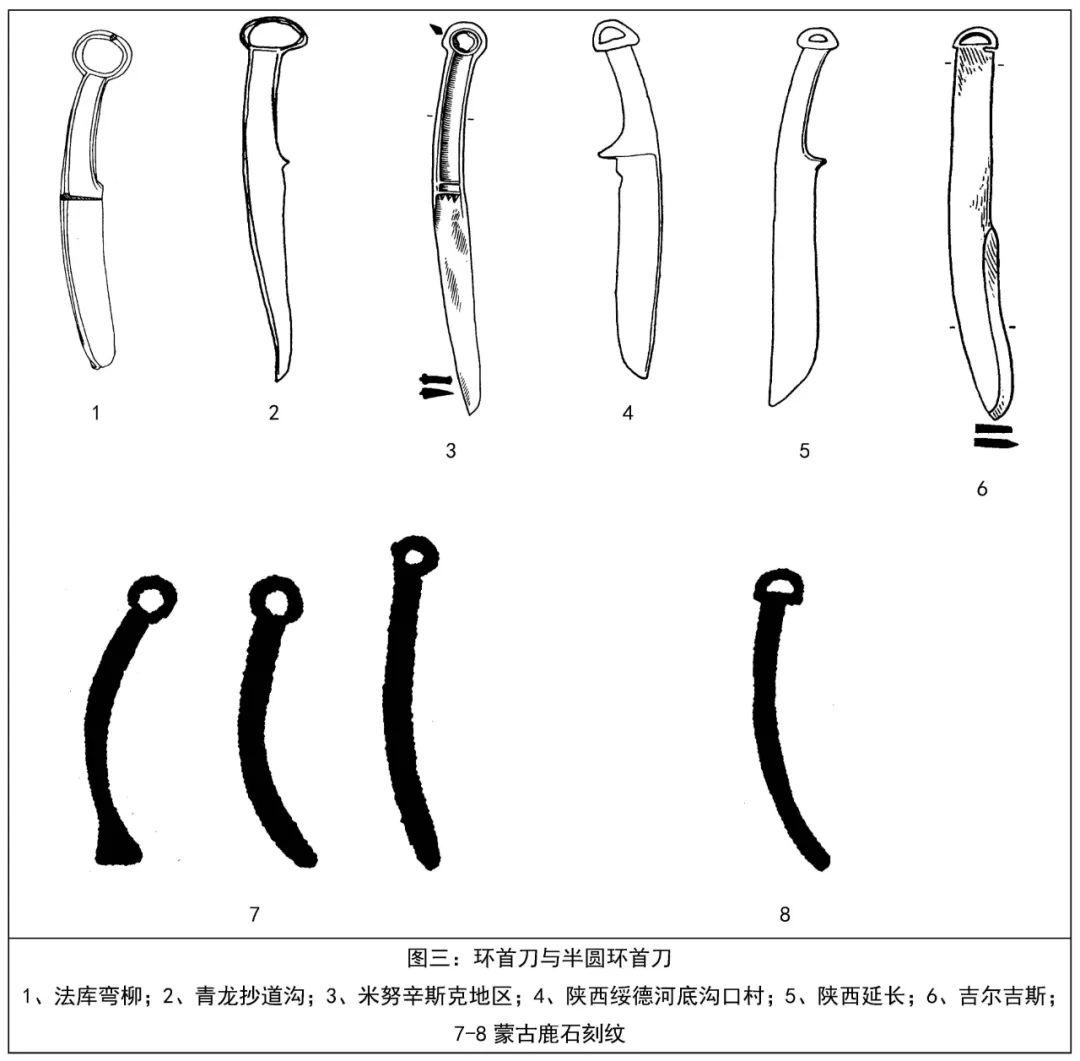
Ring head knife popular for a long time, in northern China since the beginning of the second millennium BC to BC are in use, deer stone carvings are also difficult to identify the exact shape, so this type of knife is not suitable as the basis for the generation.
Semi-circular ring head knife, handle end of the ring is semi-circular, straight edge and the hilt. The knives of this type found in the northern part of China are mostly convex arc back or handle slightly downward, with a stop, double-sided open edge, the edge is longer than the handle length, about the late Shang period (Figure 3: 4-5). In the Kyrgyz steppe zone, this type of knife has no stop, and the handle and blade are not clearly separated (Figure III:6). There are also individual deer stone carvings showing the semi-circular ring head of this type of knife [15], the age should be close to the same type of bronze (Figure III: 7, 8).
Third, the bronze short sword and deer stone
Bronze short swords found in northern China can be categorized into bell-headed swords, beast-headed swords (including beast-headed heads and beast-shaped heads), bird-headed swords (including bird-headed heads and pairs of bird-headed heads), mushrooms-headed swords, ring-headed swords, and T-shaped-headed swords by the difference in hilt heads. Deer stone is also seen on the short sword carving, but because of carving or copy of the pattern is not very clear, can clearly identify the head of the sword form of the head of the beast, bird head head and ring head. There are a number of nearly spherical short sword hilt head engraving, it is difficult to determine is the bell head or mushroom head, so this paper does not discuss.
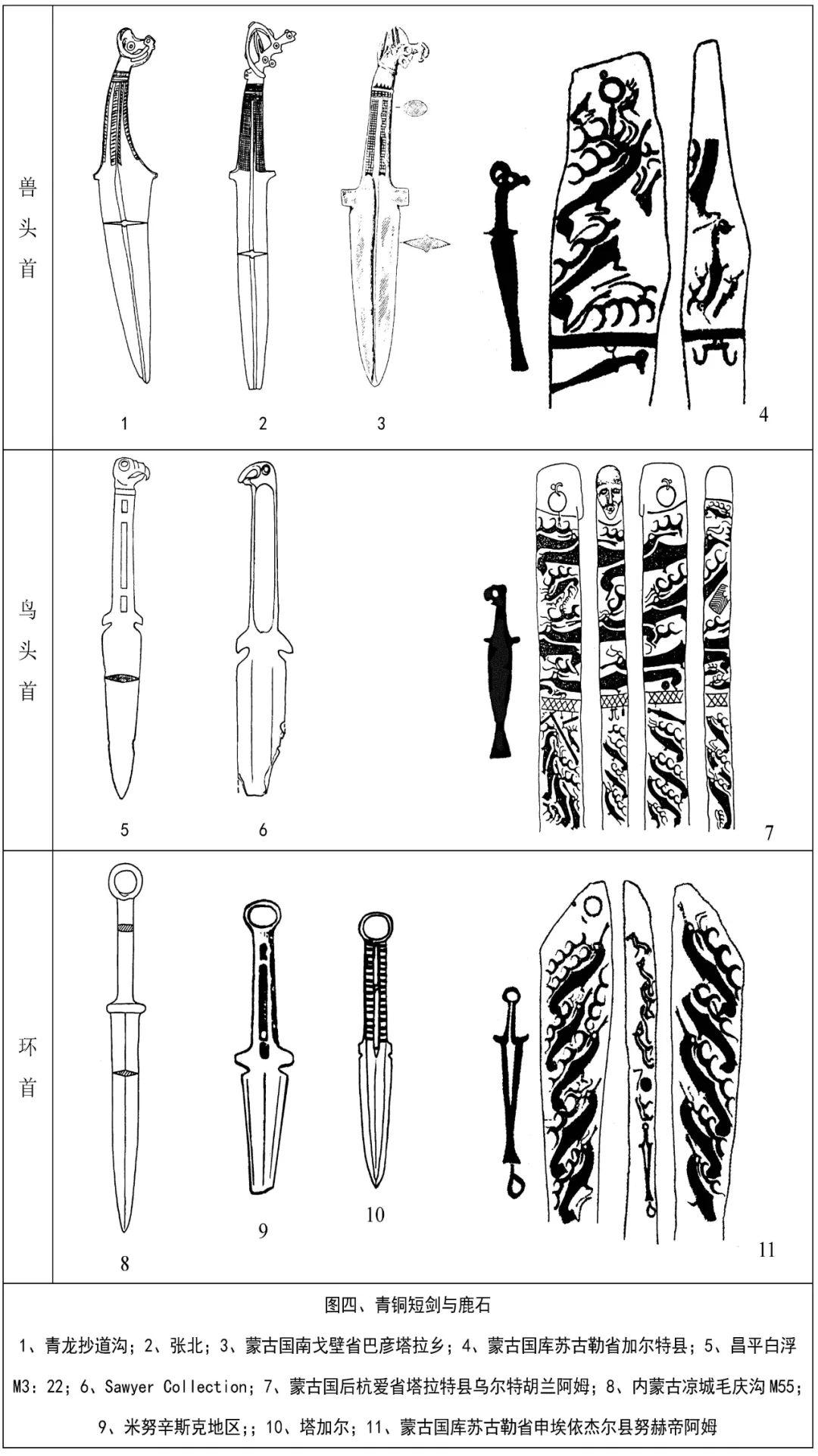
Bronze shortswords with animal heads at the end of the hilt are found in northern China, the Yin ruins, as well as in the Minusinsk Basin and Mongolia, such as those excavated in Qinglong Cidougou, Hebei (Fig. 4:1) [16], Zhangbei (Fig. 4:2), and Bayantara Township, South Gobi, Mongolia (Fig. 4:3) [17]. Engravings of short swords with animal head heads can also be seen on deer stones in the western part of the Mongolian Plateau (Figure IV: 4). Swords with animal-head hilt ends were popularly made in the eastern Eurasian steppe region and are roughly contemporaneous with the Yin culture. A dagger with an animal's head was unearthed at the early Shang site of Taixi Village in Gaocheng, which may be called a spoon, but its animal's head is similar to some of the swords from the eastern Eurasian steppe, so the upper limit of the age of this type of vessel can be dated to the 14th or 15th century B.C.E. However, due to the small number of discoveries, it is difficult to determine the main distribution area and the place of origin for the animal's head shank vessel.
Very few bird-headed swords have been found, such as the eagle-headed sword unearthed at Baifu M3 in Changping (Fig. 4:5) [18], and individual heirlooms (Fig. 4:6) [19]. The hilt of the Baifu Eagle's Head Sword is grooved on one side and has a C-shaped cross-section, which is the same as the hilt of some Musashi swords. This form of short sword was popular between the 10th and 9th centuries B.C.E. Bronze ornaments or bronzes with eagle motifs are also common in the Xajiadian Upper Culture area in western Liaoning, and the octagonal lattice is similar to that of the Baifu eagle-headed sword [20]. In Mongolia, there is also a deer stone engraving that can be recognized as a short sword with a bird's head, which is engraved on the same deer stone as the Type I bowed vessel (Figure IV:7).
None of the ring-headed swords unearthed in northern China are dated earlier than the first millennium BC and there are not many of them, such as those from M55 in Maoqinggou, Liangcheng, Inner Mongolia (Figure IV: 8). The earlier ring-headed swords were found in the Minusinsk Basin, belonging to the Karasuk culture and the Tagar civilization, respectively (Fig. 4:9-10) [21]. On Mongolian deer stones, however, there are many engravings of ring-headed swords (Fig. 4:11), and there are also engravings of deer stones that resemble double ring-headed swords, but the engravings are simple and crude, and the period characteristics are not significant.
Fourth, pipe axe axe and deer stone
Pipe axe axe is also called “battle axe”, which is a close-range fighting weapon, appearing more in the west and north of the distribution area of the Late Shang culture, which can be divided into three types according to the shape of the axe body, and three subtypes according to the difference of the tail. type A: wide blade, narrow body, curved edge; type B: blade and body of the same width, straight edge; type C: wide blade, body of the narrow, straight edge. subtypes: type a, tail hammer at the end; type b: tail knob at the end of the axe; type c: no tail.
Subtypes: type A, axe end with tail hammer; type B, axe end with tail knob; type C, no tail.
Type A bronze pipe axe axe contains two subtypes Aa and Ac. But Ac type axe body curved, mostly seen in the Caucasus region, and in the deer stone almost can not distinguish this type of axe carving, so this paper is omitted.
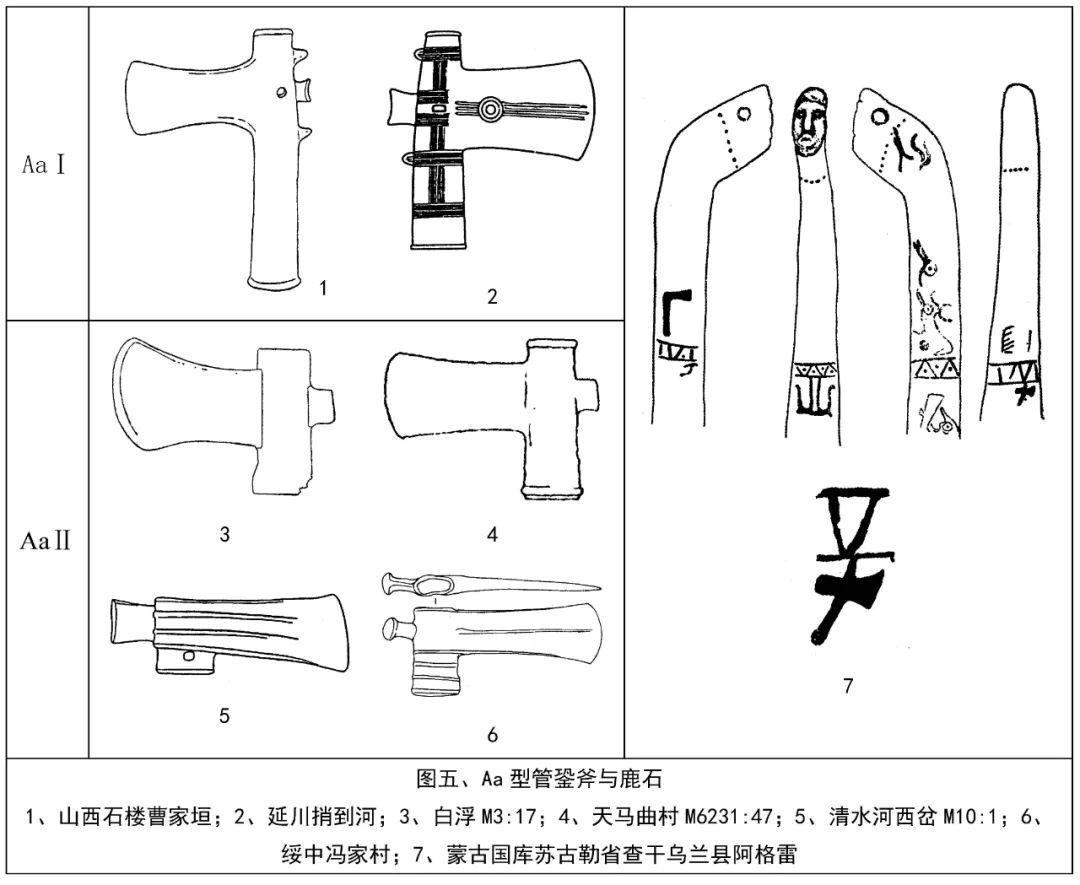
Aa Ⅰ tube eye axe axe mostly seen in Jin and Shaanxi on both sides of the Yellow River (Figure 5: 1-2), shaped like a horse head, axe long like a neck, and more than out of the late Shang ware coexist, the age of the late Shang at the same time.
AaⅡ pipe axe axes are found in Changping Baifu, Tianmaqu Village, Qingshui River West Fork, Suizhong Fengjiacun, etc. The degree of resemblance has been reduced, and the axe has become shorter, accompanied by the early and middle Western Zhou bronzes, and the age may be as late as the beginning of the 1st millennium B.C.E. (Fig. 5: 3-6).
The engraved patterns of the pipe axe seen in Deer Rock are still difficult to identify those with long axes similar to the Aa Ⅰ type, but the individual ones are similar to the Aa Ⅱ type (Fig. 7), which can be corresponded to the bronze pipe axe axes found in Baifu of Changping and Tianmachu Village (Figs. 3 and 4).
The B-type pipe axe axe contains three subtypes: Ba (tail hammer), Bb (tail button), and Bc (no tail).
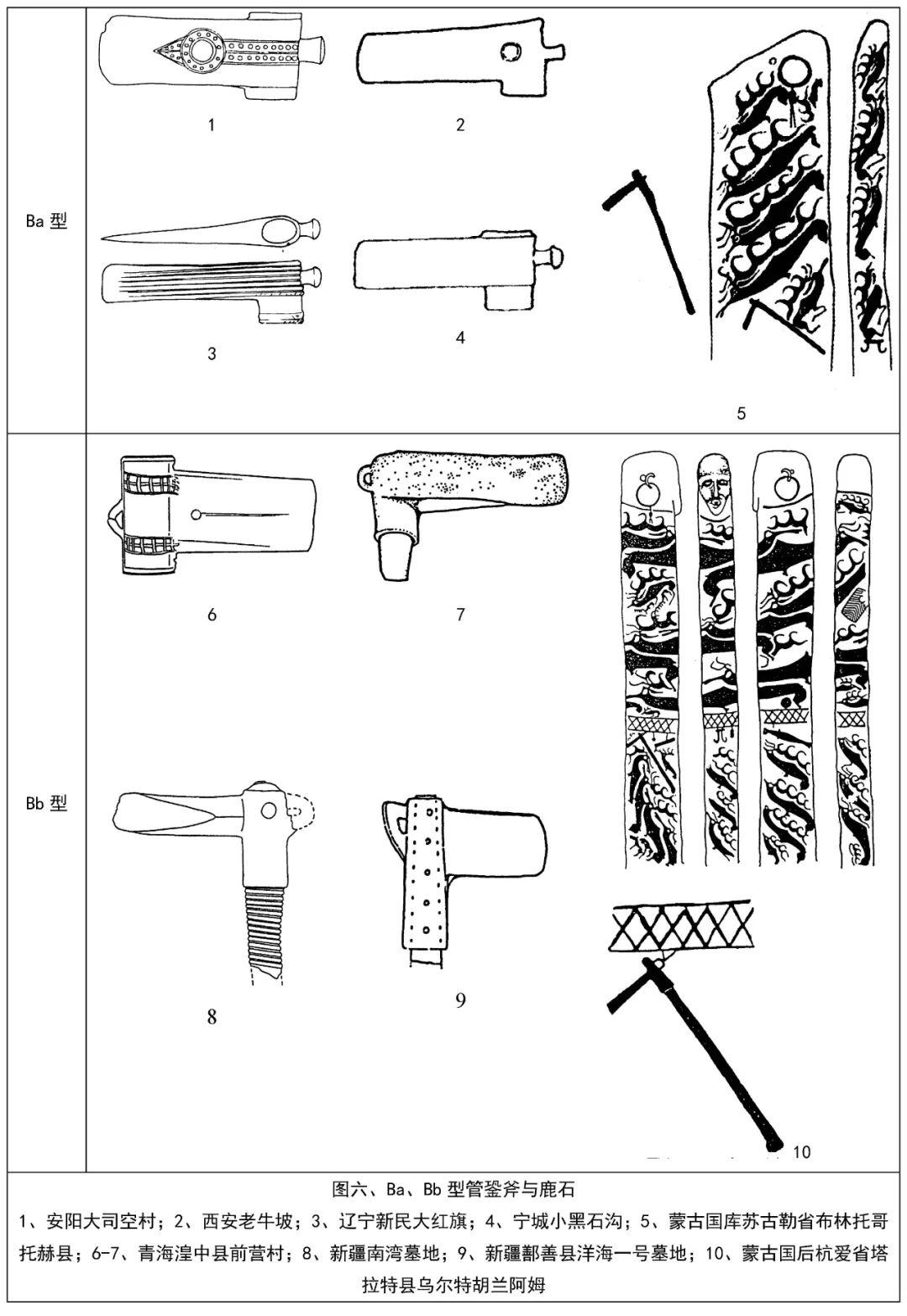
The Ba-type bronze pipe axe axe is found in Shang culture sites such as Yinxu in Anyang and Laonupo in Xi'an, as well as in the upper culture site of Xiajiadian in western Liaoning (Figure 6:1-4), and is popular for a long period of time, from the end of the second millennium B.C. to the first half of the first millennium B.C., with a tendency to migrate from the west to the east. Some of the carvings on the Deer Stone are similar to this type of pipe axe (Figure 6:5), so the two must have co-existed for some time.
The Bb type bronze pipe axe axes are all from Qinghai and Xinjiang (Figure 6:6-9). Some scholars have pointed out that the pipe axe axes excavated in Qinghai belong to the Kayo culture [22], dating to the second half of the second millennium BC. The pipe axe axes excavated in Xinjiang are also not later than the end of the second millennium BC. The Bb-type pipe axe axes seen in deer stone carvings are more numerous, and are often found on a pass of deer stones together with Type Ⅰ bow-shaped vessels and short swords with animal heads (Figure 6:10). Judging from the dates of similar bronzes unearthed in China, these deer stones are roughly equivalent to the period of the Yin and Shang cultures, i.e., a quarter of a millennium after the second millennium B.C.E. However, the date of the appearance of this type of bronze pipe axe axes is likely to be much earlier.
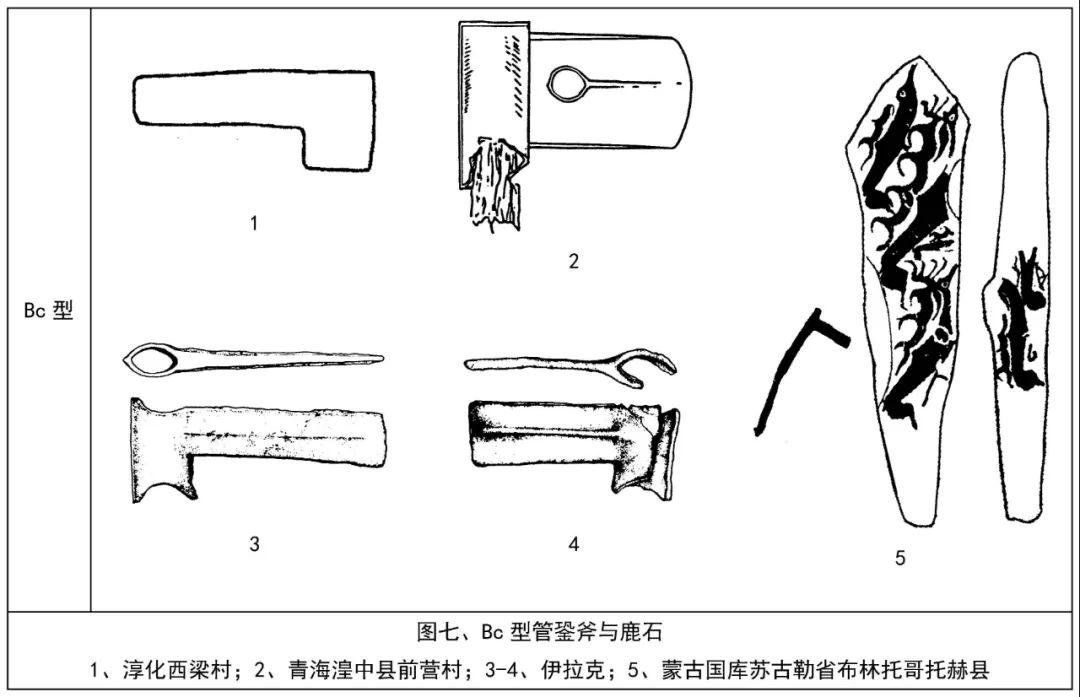
Bronze pipe axe axes of type Bc have been found in Shaanxi and Qinghai (Fig. VII:1-2) and are popularly dated in China to Ba and Bb. A number of tube axe axes have been excavated from Hamrin in the middle reaches of the Diyala River, a tributary of the Tigris River in Iraq, and are dated by G. Philip to the beginning of the 2nd millennium B.C.E. (Fig. VII:3-4) [23]. These pipe axe axes have a straight body, the angle with the pipe axe is about 90 degrees or slightly less than 90 degrees, and the back end of the axe is straight and without a tail, which can be categorized as type Bc. This type of pipe-axe axe can also be found on the type A deer stone with more engraved lines, and the deer stone engraved with this type of pipe-axe axe has a more sparse distribution of deer lines.
V. Hooks and Deer Stones
The Mongolian deer stone is commonly carved with “π”-shaped and “ω”-shaped patterns below the belt on the front side. “π"-shaped pattern depicting the artifacts and the Yellow River basin Shangzhou tombs, as well as the Minusinsk Basin bronze bow-shaped ware out of the similarity, the academic community is often referred to as a bow-shaped ware, Mr. Lin Rushing put forward the concept of ‘hanging reins hook’, pointed out that its harness function [24], the author according to the The author, according to “Shuowen” interpretation of “more” as “the car ride on the curved copper also” and Duan note “the car ride on the curved hook also” of the notes, the original name of the bow-shaped tool may be more [25]. “ω” shaped engraving, there are corresponding bronze exist, should be nearly the same function with the ‘hook’. As the name suggests, this paper temporarily borrowed the hook as the name.
Examination of the northern region of China found in the evolution of the shape of bronze hooks, roughly experienced three stages of development, can be divided into three styles:
Ⅰ type: by the center plate and both ends of the curved arm composition, also known as the bow-shaped device. The Ⅰ type can be divided into two types according to the shape of the center plate: A type is the curved center plate, and B type is the flat and straight center plate. According to the difference in the shape of the ends of the curved arms, there are three subtypes: a (bell head), b (animal head), and c (hoof head); in type A, all three subtypes are present, while in type B, only subtype c is found. For a discussion of the physical evidence for this type of bowed vessel, see [26]. Only wares similar to the deer stone carvings are discussed here (Figure VIII: 1-2). Type II: the curved arm is extended like a curved hook, with a webbed plate connecting the two curved hooks on both sides, the hook shape is similar to that of a scissors handle, and two holes are placed at the upper end (Figure VIII: 5-6). Type III: the two hooks are brought together in an “omega” shape, with only one hole for hanging (Figure VIII:9-10).
The above three types of hooks for hanging reins all have corresponding carvings on the deer stone: Ⅰ type carving, (Figure VIII: 3-4); Ⅱ type carving (Figure VIII: 7-8); Ⅲ type carving (Figure VIII: 11-12).
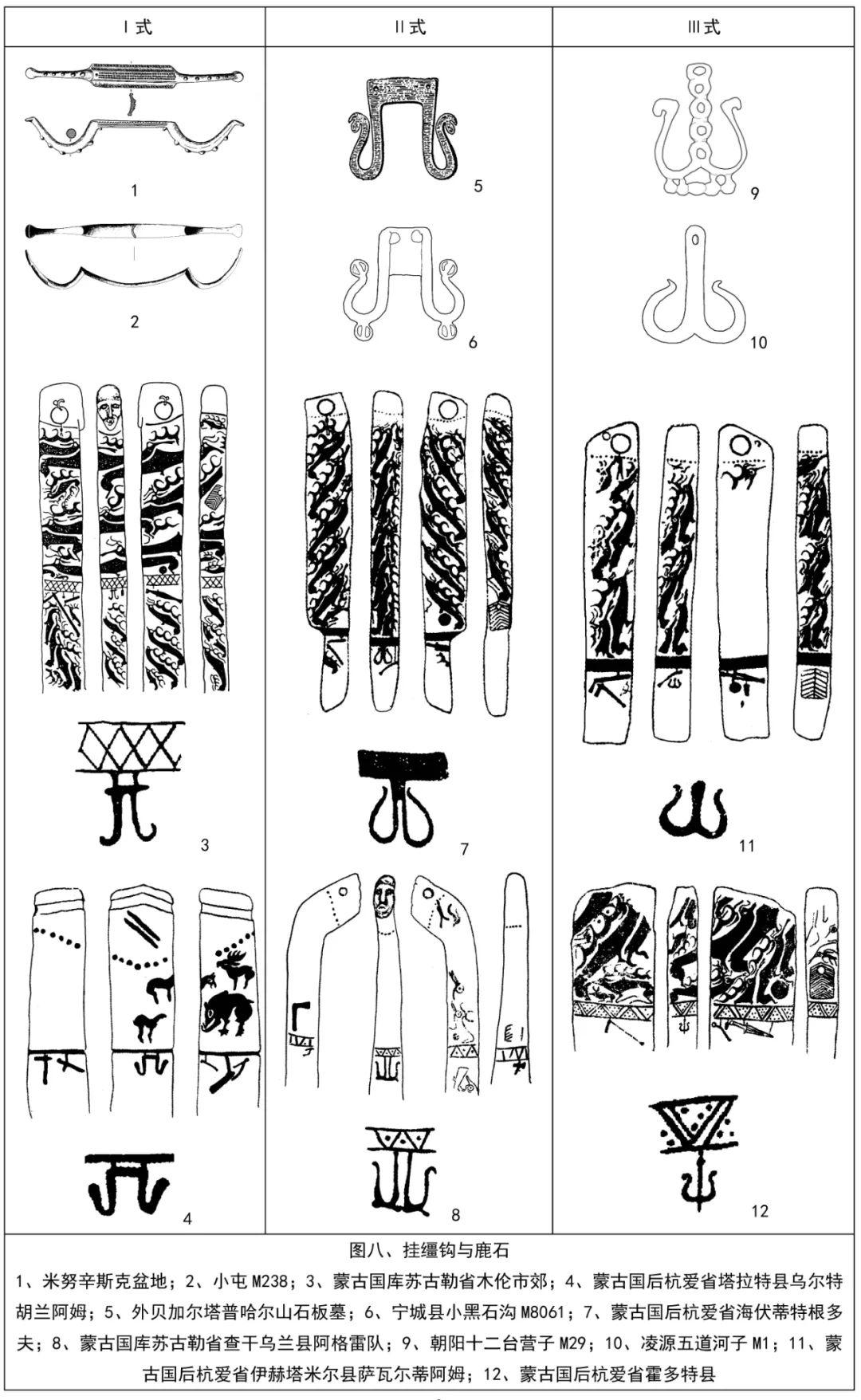
The three subtypes of Type Ⅰ have been found in the Yellow River Basin; in the Minusinsk Basin, there are mostly Bc-type hoofs and individual Ac-type hoofs; and only Bc-type hoofs have been found engraved on deer stones in Mongolia.
Type II bronze hooks are found in Trans-Baikal and the western part of Liaosi, China, and in Mongolia, they are mostly found on deer stones, while in the Yellow River Basin and the Minuschensk Basin, they have yet to be reported as found in kind.
Type III hooks are found in the western part of Liaosi, and there are some engravings on deer stones in Mongolia, but there are no reports of their discovery in other areas.
Regarding the development of the age and shape of the hooks, Mr. Pan Ling has made a systematic study and divided them into five periods: the late Shang period to the middle of the Western Zhou, the middle and late Western Zhou, the late Western Zhou to the early Spring and Autumn period, the early and middle Spring and Autumn period, and the middle of the Warring States period [27]. Among them, the physical objects involved in the first two phases and the forms set out in the deer stone carvings are equivalent to the Ⅰ type of hanging rein hooks in this paper, while the third and fourth phases are equivalent to the Ⅱ type in this paper, and the last phase corresponds to the Ⅲ type in this paper.
From the observation of the objects found in the Yellow River basin, the late Shang period and the Western Zhou period of hanging hooks, its shape has no obvious changes, is a typical “bow-shaped ware”, that is, this paper is scheduled for the Ⅰ type. Spring and Autumn period, bow-shaped ware in the Yellow River Basin has disappeared, and in the Liaohe River Basin and Trans-Baikal appeared in the same function of the artifacts, there is no center plate, replaced by webbed or flaky structure connecting the two sides of the curved hooks, Mongolia deer stone also has a similar pattern of carving to the “bow-shaped ware” as the name is quite reluctant, so it will be categorized into the type of Ⅱ. During the Warring States period, hanging hooks in the western region of Liaosi further simplified, the two hooks converge, the whole was “ω” shape, hanging from two holes is reduced to a hole, that is, Ⅲ type, Mongolia Deer Stone also has a corresponding pattern. Therefore, the development of the above mentioned hooks shows a more obvious three-section change, in the distribution area of Mongolian deer stone, the relevant carvings, although the shape has changed, but all three sections survive, maintaining the functional heritage; in China, it reflects the trend of eastward movement, that is, only one section of the Yellow River Basin is found in the artifacts, and the second to third sections are moved to the western part of Liaozhi.
However, in the process of the development and change of the Ⅰ to Ⅲ style hooks for hanging reins, the iconic engraving pattern of the deer stone itself, the deer pattern, did not change accordingly. As shown in Figure 8: 3, 7, 11, A type of deer stone of the deer pattern (beak kiss running deer) with Ⅰ to Ⅲ type of hooks, B type of deer stone of the deer pattern (realistic standing deer) also with Ⅰ, Ⅱ type of hooks. From this, type A, type B deer stone seems to be no difference between early and late, and the deer stone of the deer pattern is also difficult to be used as a deer stone generation or staging basis. If based on the hook for the deer stone hanging bridle broken, seems to correspond to only Ⅰ to Ⅲ type divided into three periods.
Mongolia Kusugul Province, Chagan Ulaan County, Aggrey team No. 3 deer stone, carved out of the head of the figure, the front of the belt hanging a bow-shaped tool, the upper body is carved with a more concise beak-shaped deer pattern (Figure VIII: 8). This bow is characterized by a curved line above the two curved arms of the bow, which resembles a hanging bridle, and can be used as part of the evidence for the function of the hook.
Sixth, 䡇 and deer stone
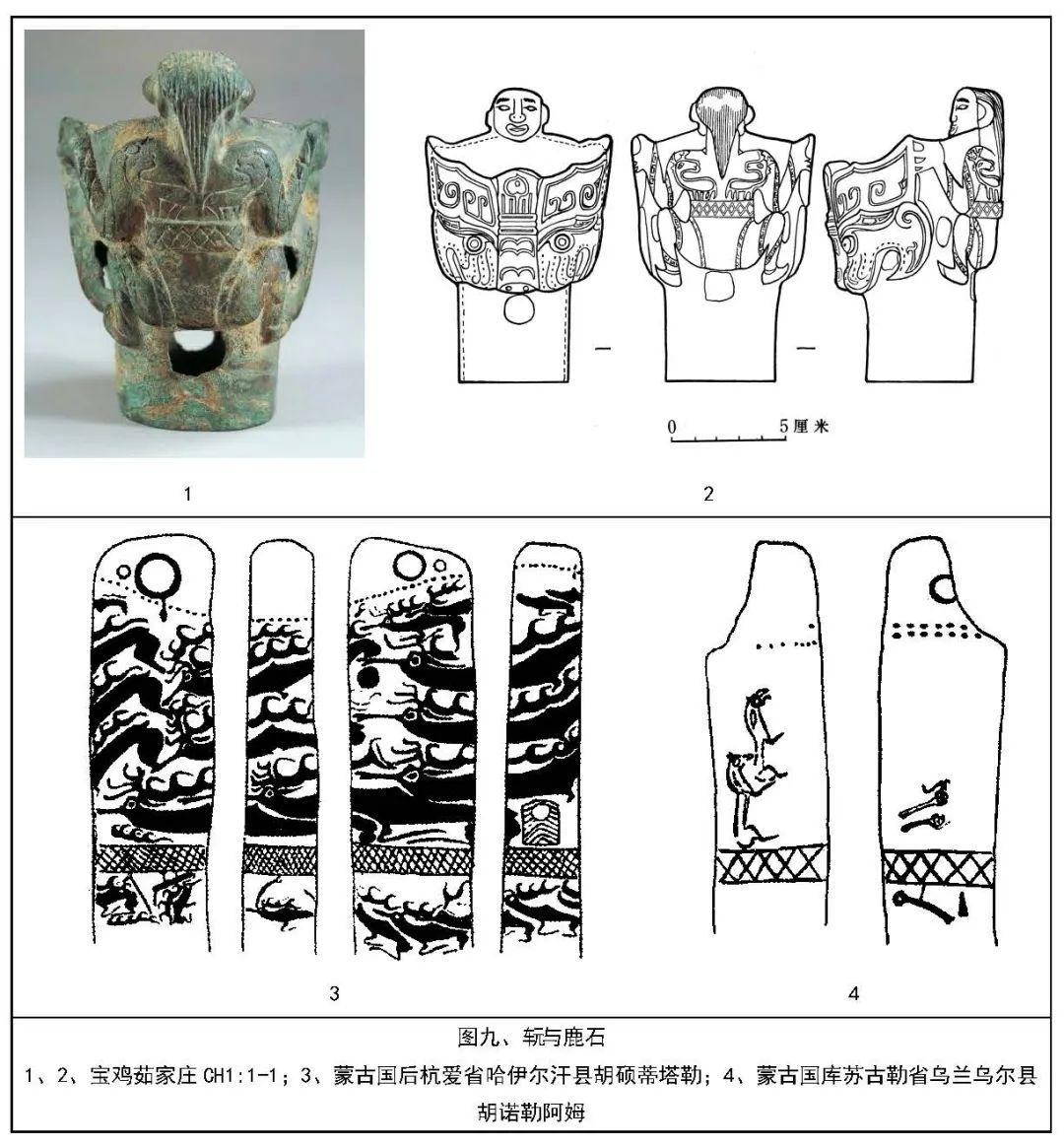
Baoji Rujiazhuang unearthed a vehicle - figure beast head 䡇 (CH1:1-1), that is, a human figure climbing behind the head of the beast, the figure cloaked hair, back shoulder blades decorated with engraved deer motifs, the tie diamond lattice belt (Figure 9:1-2). This vessel figure attire and deer stone engraved figures similar to the figure back deer pattern concise realistic, seems to be similar to the B-type deer stone deer pattern. The diamond-checkered belt is also common on deer stones (Figure 9:3-4). The deer pattern on the figure's back is either a clothing pattern or a tattoo, which is quite close to the figure shown on the Deer Stone. Chen Jianwen believes that this cloaked figure is related to the Rong, and cites the Historical Records of the Zhou: “And King Mu attacked the Injun, and got four white wolves and four white deer to return”, referring to the white wolves and white deer as Rong people's pronouns [28].
Rujiazhuang cemetery is not later than the early Western Zhou Dynasty Bowfish State cemetery, the Bowfish State migrated to this should begin in the late Shang Dynasty [29], in the period of the popularity of deer stone and bow-shaped ware, and Rujiazhuang adjacent to the cemetery of Zhuyuangou, that is, unearthed Ⅰ type bow-shaped ware. The figure on the 䡇 should be a foreigner image, cloaked hair pattern deer, not unrelated to the northern steppe.
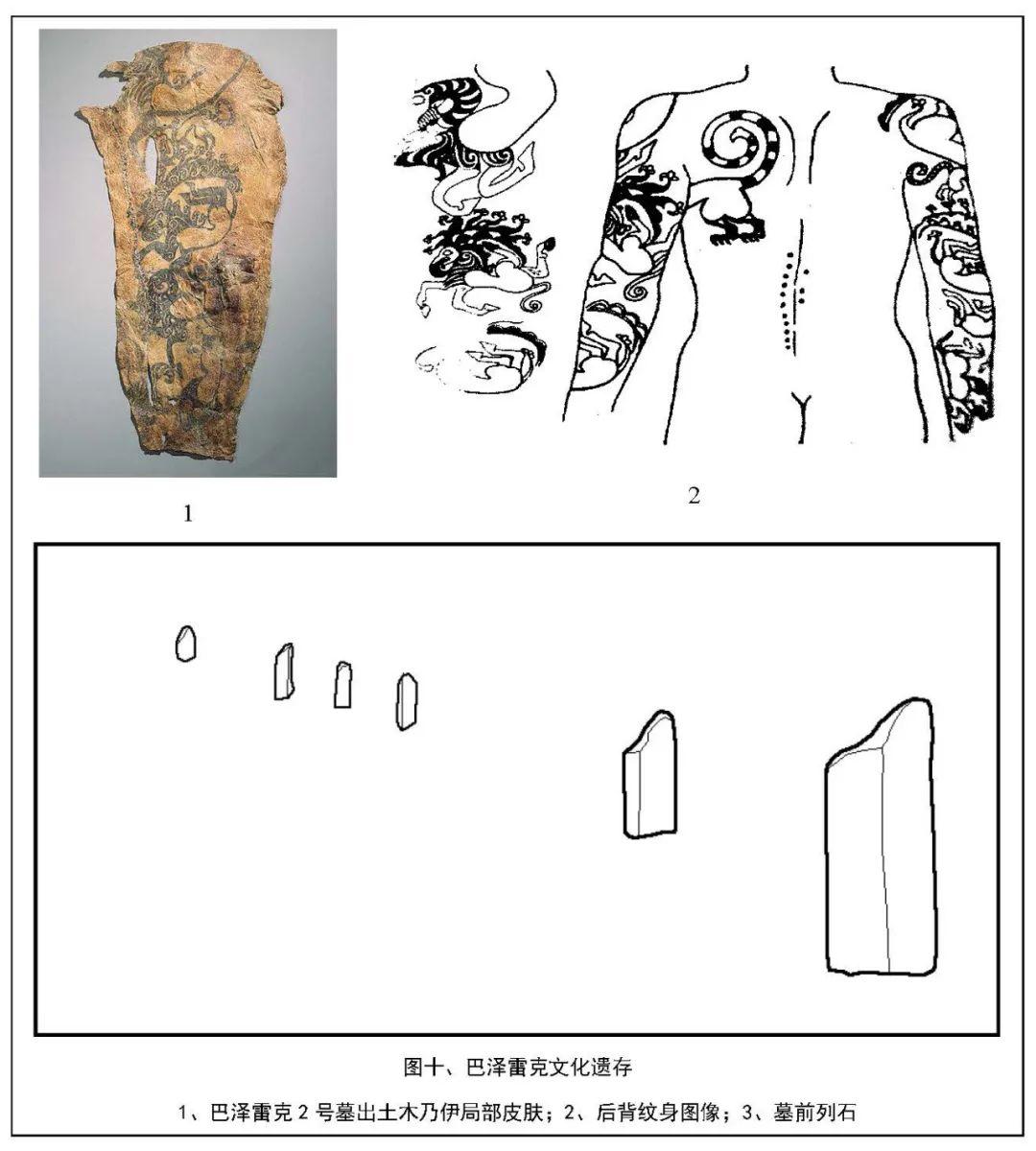
Physical evidence of tattooing with a deer icon can be found in the mummy excavated from Tomb 2 of the Bazerek cemetery (Figure X: 1-2). Although the Bazirek culture dates from the late “Deer Stone Culture”, the form of the pre-tomb stone is quite similar to the Deer Stone (Fig. 10: 3). The location of the Bazerek cemetery is also the main area of the distribution of B-type deer stones, and the deer pattern on the deer stone can also be interpreted as a tattoo pattern, coupled with the figures on the deer stone, it is difficult to separate the cultural factors of the three deer pattern motifs. The four mountain mirrors and embroidered silk fabrics unearthed in the Bazerek burials also reflect the logistics and transportation between the Altai and the Chinese hinterland.
The 䡇 excavated in Rujiazhuang not only indicates the relationship between the Zhou and the northern peoples, but also serves as a reference for the dating of the deer stone. Deer stones similar to the attire of the figures on this vessel are also found in Khairkhan district, Erdene Emandar district, Erdene Dar district, Ulaan-Uul district of Kusugul province, the suburbs of Muren, Otgon district of Zabkhan province, and Xirustsian district of Mongolia's Houkhangai province, but in Kusugul province, the number of deer stones is higher.
VII. Conclusion
The morphology and distribution area of deer stones show a unique cultural appearance and existence space. Most of the bronze patterns engraved on the deer stones can be found in the northern region of China or in Baikal and Siberia as a physical basis. Through the comparison of cultural factors, it can be seen that the culture represented by the deer stone has a long history of interaction with neighboring cultures, and a wide range of images have occurred.
From the examination of the period characteristics indicated by the changes of the bronze engravings on the deer stone, its unique culture had developed along with the Yin and Zhou cultures in the Yellow River Basin and the archaeological cultures in the north of China, and at the same time persistently maintained its own cultural traditions, which is an important reference for the study of the excavated northern style bronzes in China, and also an important basis for the exploration of the mutual influence of the archaeological cultures in the Yellow River Basin and the northern steppe cultures in different historical periods. It is also an important basis for exploring the interaction between the archaeological culture of the Yellow River Basin and the northern grassland culture in different historical periods.
P.S. The author had gone to Mongolia in the fall of 2006 to investigate some ground cultural remains and also saw a number of deer stones. However, due to the field observation experience is too little, and the previous deer stone engraved pattern facsimile and not detailed enough, so that many types of tools can not be studied in depth, this paper omissions, errors and errors will be more, but also please Fangjia do not begrudge the correct.
May 2012 in wenxi yupo archaeological excavation site
Notes:
[1] Окладников А.П., Оленный камень с реки Ивоги. Советская археология 19, 1954; [Soviet] н-л Chilenova, On Deerstones of Mongolia and Siberia, Collected Papers on Mongolian Archaeology, Academy of Sciences of the USSR, 1962, translated by Chen Hongfa, in Inner Mongolia Autonomous Region Cultural Relics Task Force, first issue of Cultural Relics and Archaeological Reference Materials, August 1979, 4 pp.
[2] В.В. Volkov, Mongolian Deer Stones, 1981, in Chinese Translation of Asian and European Cultural Masterpieces Series, edited by Wu Xinhua, translated by Wang Bo and Wu Yanchun.
[3] Hatakeyama Shaku, “Deer Stones of Northern アジア” (北アジアの鹿石), Ancient Culture Series 27, March 1992, 207 pp.
[4] Takahama Hidetoshi, “The Culture of the Northern Part of China in the Western Zhou and Eastern Zhou Periods”, “Yonagami Hideo's Yonishou Memorial Collection: The Original Theory of Civilization”, Yamakawa Publishing, 1995, 343 pp.
[5] Wang Bo, “A Review of Deer Stones from Xinjiang”, Archaeology Collection 9, Science Press, 1995, 239 pp.
[6] Uen, “On the Dating of Mongolian Deer Stones and Related Issues,” Archaeology and Cultural Relics, 1, 2003, 21 pp.
[7] ArcticStudies Center, National museum of Mongolian History, Thedeer stone project Anthropological studies in Mongolia 2002-2004.
[8] Pan Ling, “Artifacts Represented by Two Patterns on Mongolian Deer Stones,” Borderland Archaeological Research, Fifth Series, Science Press, 2006, 179 pp.
[9] Pan Ling, “On the Dating of Deer Stones and Related Issues,” Journal of Archaeology, 3, 2008, 311 pp.
[10] н-л Chilenova: “On the Deer Stones of Mongolia and Siberia”, Inner Mongolia Autonomous Region Cultural Relics Task Force, edited by the first issue of Cultural Relics and Archaeological Reference Materials, August 1979, 4 pp.
[11] The Anyang Task Force of the Institute of Archaeology, Chinese Academy of Social Sciences, “Briefing Note on the 1980 Excavation of M539 in the Dashikong Village of Anyang, Henan Province,” Archaeology, 1992, no. 6, p. 514.
[12] ЧленоваН.Л., Хронология Памятников Карасукской Эпохи, Москва, 1972.
[13] Tian Guangjin, “Taohongbala Tomb Group”, Ordos-style Bronzes, Cultural Relics Publishing House, 1986, 210 pp.
[14] B.B. Volkov, Mongolian Deer Stones, 1981, in Chinese Translation of Asian and European Cultural Masterpieces Series, edited by Wu Xinhua, translated by Wang Bo and Wu Yanchun, People's University of China Press, May 2007, 208 pp.
[15] B.B. Volkov: Mongolian Deer Stones, 1981, in Wu Xinhua edited Chinese translation of Asian and European cultural masterpieces series, Wang Bo, Wu Yanchun translation, Renmin University of China Publishing House, May 2007, 208 pages.
[17] ВолковВ.В., БронзовыйкинжализГоби, СА, 1961-4; [Soviet] B.B. Volkov, Bronze Short Swords Unearthed in the Gobi of the People's Republic of Mongolia, Northern Cultural Relics, 1991, 1, 104 pp.
[18] Beijing Municipal Administration of Cultural Relics: “Another Important Archaeological Harvest in the Beijing Area - A New Enlightenment of the Western Zhou Wooden Outer Coffin Tomb at Baifu, Changping”, Archaeology, 4, 1976, 253.
[19] Max Loehr, Ordos daggers and knivesNew material, classification andchronology
First part: daggers, Artibus AsiaeVol. 13, 1951.
[20] Liaoning Province Zhaowuda League Cultural Relics Workstation, Northeast Task Force of the Institute of Archaeology of the Chinese Academy of Sciences, “The stone-coated tombs at Nanshanguen, Ningcheng County”, Archaeological Journal, 1973, 2, 33.
[21] МошковаМ.Г., Степная полоса Азиатской части СССР в скифо-сарматское время, Москва, 1992, Таб.84.
[22] Li Shucheng, “Regional Characteristics and Interaction of Early Copper Smelting in Northwest and Central China”, Journal of Archaeology, 2005, 3.
[23] Philip G., New light onnorth mesopoamia in the Earlier Second Millennium B.C.: Metalwork from theHamrin,IRAQ, LⅦ, London 1995.P126.
[24] Lin Rushing, “Some Problems Concerning the Archaeopteryx”, Social Science Treatise from Jilin University (2), Editorial Board of the Journal of Social Sciences of Jilin University, 1980, this article is also included in Lin Rushing's Scholarly Collections, China Encyclopedia Publishing House, 1998, Beijing.
[25] Li Gang, Eurasian Steppe Cultural Factors in Northern Chinese Bronzes, Cultural Relics Press, 2011, 192 pp.
[26] Ibid. 20.
[27] Pan Ling, “On the Dating of Deer Stones and Related Issues,” Journal of Archaeology, 2008, 3, 315.
[28] Chen Jianwen, “On the Cultural Interaction between China and Ancient South Siberia”, Essays on Mr. Zhang Guangda's 80th Birthday Celebration, September 2010, 931 pp.
[29] Lu Liancheng and Hu Zhisheng, “Discussion on the Problems Related to the Cemeteries of Rujiazhuang and Zhuyuangou in Baoji”, Cultural Relics, No. 2, 1983, 19 pp.