

The real historical path of the Longevity Monk
The sound of camel bells, echoing over the ancient road, seems to tell the legend of a thousand years. During the Han Dynasty, Zhang Qian chiseled his way through the Western Regions, expanding the Silk Road connecting East and West, and building a bridge for communication and exchange between China and the outside world.
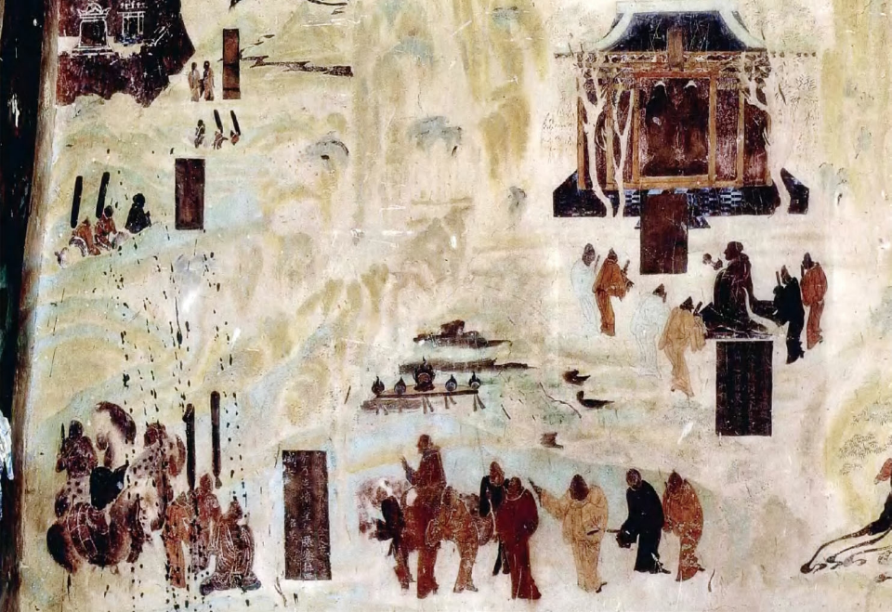
▲ Mogao Grottoes Cave 323 mural painting of the early Tang Dynasty, “Zhang Qian's Expedition to the Western Regions”. (Image source: Zhao Dongmei, Law and the Human Heart: The Interaction between Man and System in the Imperial Period, CITIC Publishing Group, 2021)
In the turbulent flood of the era, a brave man embarked on a journey of exploration into the unknown. Xuanzang, in the third year of Zhenguan (629 AD), set off from the prosperous Chang'an and marched to the distant Tianzhu. He traveled more than 50,000 miles, after 17 years of spring and fall. When he first arrived at the Nalanda Temple, he humbly learned from Master Jianxian, and then traveled to the four directions of the Dhammapada, exchanged views with the wise men and women from all over the world, and became famous in the five Dhammapada. In the first month of the nineteenth year of Zhenguan (A.D. 645), he returned to Chang'an with a full load of scriptures. In the following nineteen years, he devoted himself to the translation of scriptures, translating seventy-five sutras and treatises, amounting to more than 1,300 volumes, and founding the “Dharma Sect,” which has left a valuable intellectual legacy for future generations.
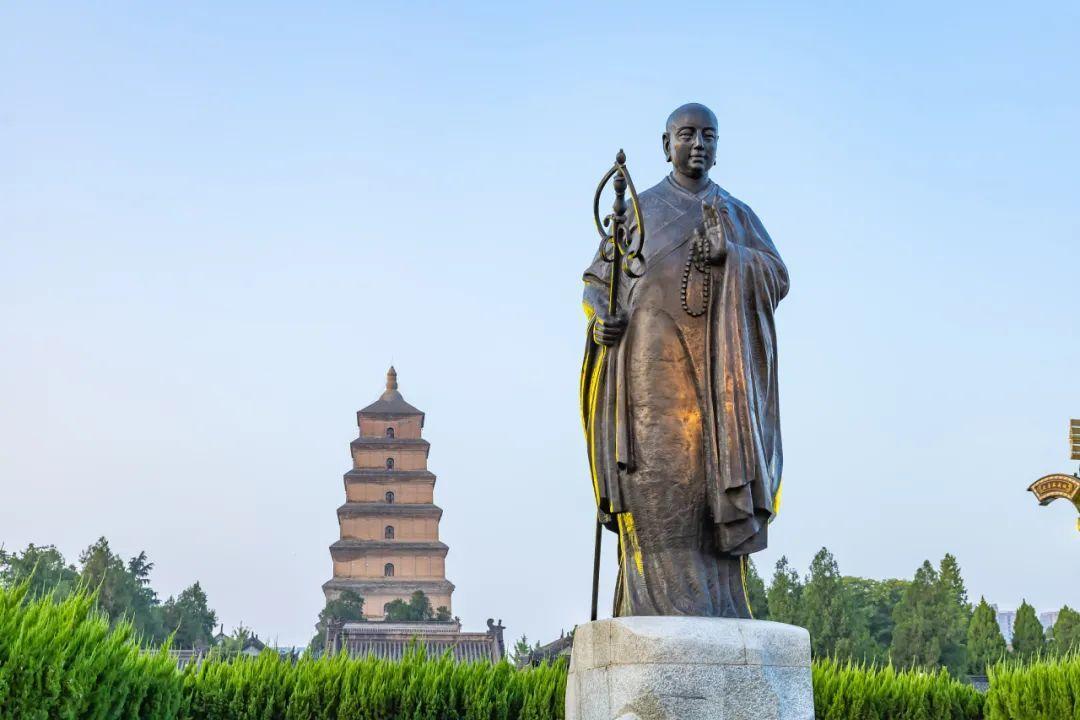
▲ The statue of Venerable Xuanzang in front of the Big Wild Goose Pagoda in Xi'an. (Image source: Visual China)
Particularly valuable is the legend of Xuanzang's journey west, by its oral, by the disciple of the pen record, cohesion into the heirloom work of the Great Tang Dynasty Western Regions. Great twelve volumes of the “Great Tang Western Regions” detailed account of Xuanzang westward journey to learn the scriptures of his personal experience. Records of the Western Regions of the Great Tang Dynasty” is rich in detail, from the size of the territory, the size of the capital city, to the geographical situation, the city of customs and defense, and then to the transportation roads, customs, and even products and climate, language and writing, culture and politics, as well as religious beliefs, showing the diversity of the Western Regions and the unique charm of the places.
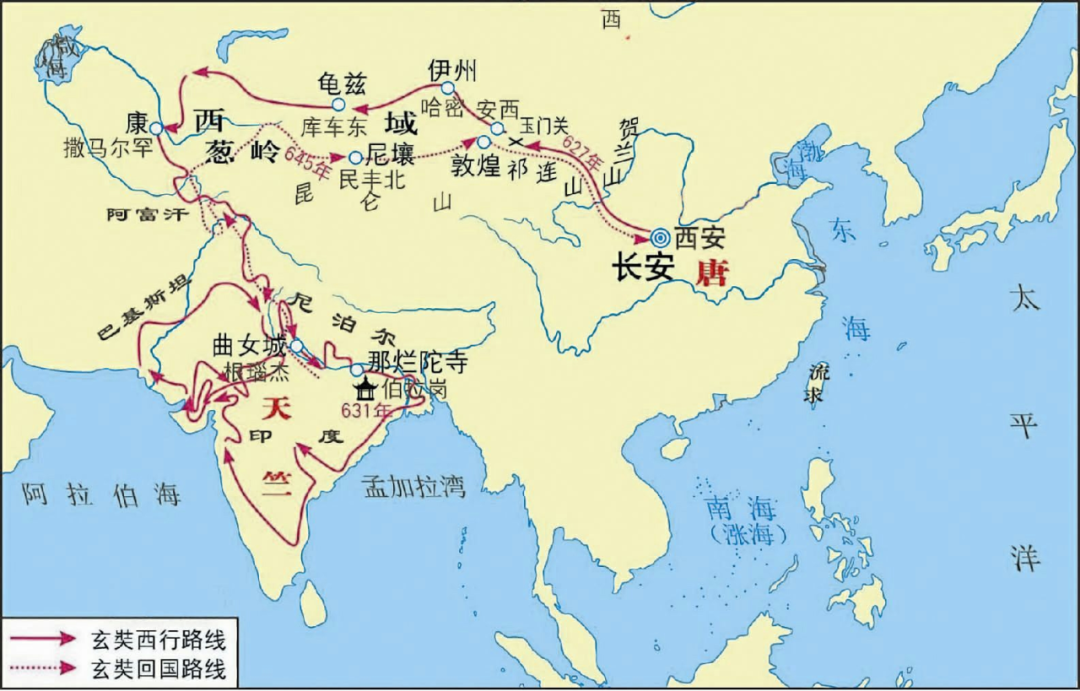
▲ Roadmap of Xuanzang's journey to the west and his return to China (Photo credit: Rong Xinjiang et al: Tang: The Golden Age of Chinese History, Life - Reading - Xinzhi Sanlian Bookstore, 2021)
Unique Style of
Xinjiang in the Records of the Western Regions of the Great Tang Dynasty
Traveling westward from the former city of Gaochang, the first thing mentioned in the Records of the Western Regions of the Great Tang is the country of Ajini, which means “country of dividing boundaries” and also means “flame” (in Sanskrit). Ajini” means ‘country of division’ and also means ‘flame’ (Sanskrit). Formerly known as Yanqi, it is now located in Yanqi Hui Autonomous County in the Xinjiang Uygur Autonomous Region. The poet Lu You's “Yanqi Xing” opens up a mysterious, serene and magnificent picture scroll of the Western Region for us.
After that, more than two hundred miles to the southwest, over the Kuruk Mountain, across the sparkling Peacock River and the Kizil River, in the plains westward trekking more than seven hundred miles, finally arrived in the legendary Quzhi country. The Quzhi State, formerly known as “Guzi”, is located in the city of Kuqa in the Aksu region of today's Xinjiang Uygur Autonomous Region. It was once the hometown of Hatamarash, a high-ranking monk of the Eastern Jin Dynasty and one of the four major translators of Chinese Buddhism, and Buddhism once flourished. It can be imagined that when Venerable Xuanzang stepped into this Buddhist holy land, his heart's excitement and admiration must have been unspeakable.
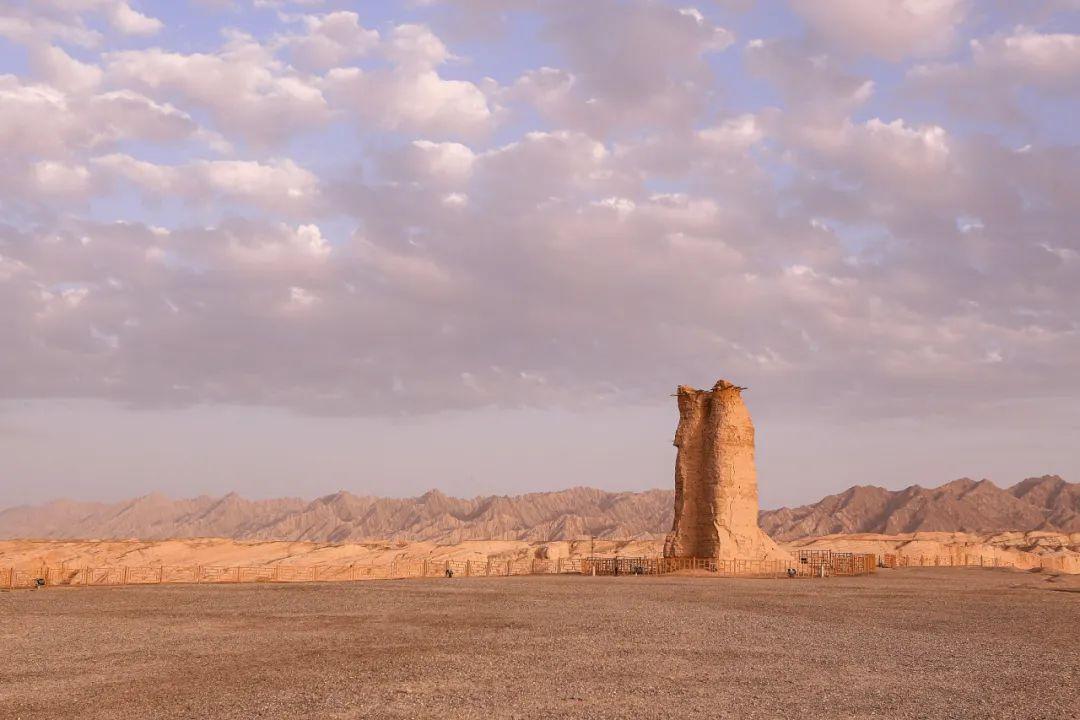
▲Kuche, Xinjiang: Kizil Gaha Beacon Flint. (Photo credit: Visual China)
Venerable Xuanzang stayed in Kucha for more than two months, during which he lectured for 60 days. The book records the legend of the Great Dragon Pond and the Golden Flower King, the legend of AXUALI II (Sanskrit “peculiar” meaning) Jalan de-powering, introduces the Zhaodong Li two Jalan, and depicts the solemn scene of the ceremony of listening to the law and performing the rituals of the country at that time.
Continue westward, Xuanzang after more than six hundred miles of trekking, walking through the rolling hills of the southern foothills of the Tianshan Mountains, through a small piece of desert desolate and vast, to reach the trekking Lujia country, which is known as the Han Dynasty “Gumo”, now belongs to the Xinjiang Uygur Autonomous Region, Aksu region.
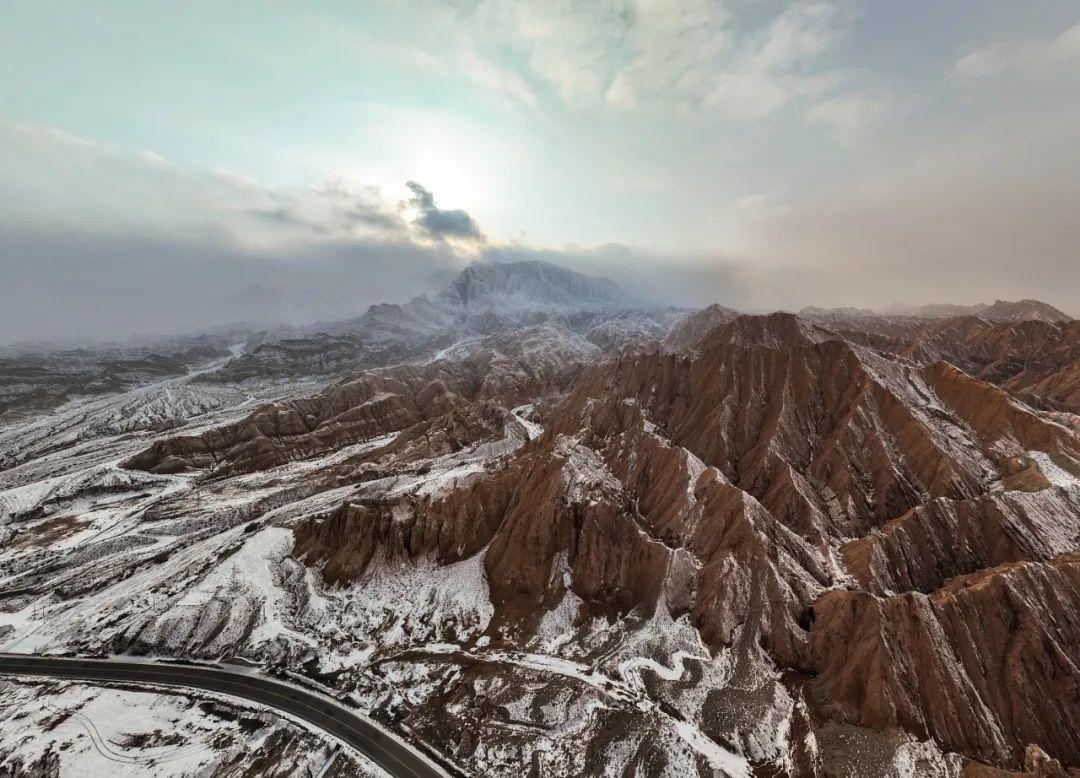
▲Aksu, Xinjiang: Dukou Highway in winter. (Photo credit: Visual China)
Crossing the Aksu River, they traveled more than 300 miles northwest, crossing the Great Moraine to reach the northern corner of the Onion Range (today's Pamir Plateau). There, Xuanzang and his entourage waded through the bone-chilling glacier, and then in the Ling Mountain (today's mountain Mussulman) experienced seven days of more than 400 miles of rugged mountainous trekking, to be able to get out of this treacherous place, but a team of “frozen to death of ten or three or four, more than the cattle and horses”. Ling Mountain, now the border between China and Kyrgyzstan, is still treacherous and difficult to cross.
Crossing the Ling Mountains, Xuanzang's westward route in Xinjiang came to an end, but for Xuanzang, it was only a small part of his long journey westward. He vowed to travel west to seek the law, in the “would rather die on the west, will not return to the east of life” under the auspices of the firm belief, resolutely embarked on the continuation of the westbound journey to seek the law.
After many difficulties and challenges, to complete his westward journey to seek the law, the 17th year of Zhenguan (643 A.D.), 14 years after leaving the Great Tang, Xuanzang formally returned to the East to return to the Great Tang.
Xuanzang returned to the east, walking the Wakhan Corridor this ancient road. Here connected to the Western region to Central Asia, South Asia countries of the road, the geographic location is very important. Xuanzang arrived in Xinjiang, the first stop is the Kingdom of Zuopan, the Han Dynasty called “Pu Li Guo”, is now the Tashkurgan Tajik Autonomous County. The king of the Kingdom of Tsirpanjung claimed to be the king of the Sultanate of Sultanate, which was translated by the Venerable Xuanzang as “Han Ritian Seed”. Xuanzang stayed in the stone city of Tasha County for 22 days, preaching for the people here. Next, through the Tasha ancient road to reach the Wu cripple country, located in the present-day Kashgar Shache County. The book records the legend of Lohan's divine transformation. The third stop was Kharsha Kingdom, which was called “Shule Kingdom” from Han to Tang, and now belongs to Kashgar area. The fourth stop is the country of Rakujuja, which was called “Frustrated Ditch” in ancient times and is now located in Yecheng County, Kashgar. Remote view of the southern cliffs, niches and caves like flags scattered among the rocks, legend has it that Lohan can travel far with the wind, had stayed here, Lohan, after the death of the people to build a tower to commemorate. Finally, the fifth stop on the Venerable Master's journey home was the country of Qusadana, formerly known as “Ü-Tep”, which is now the Hotan region.
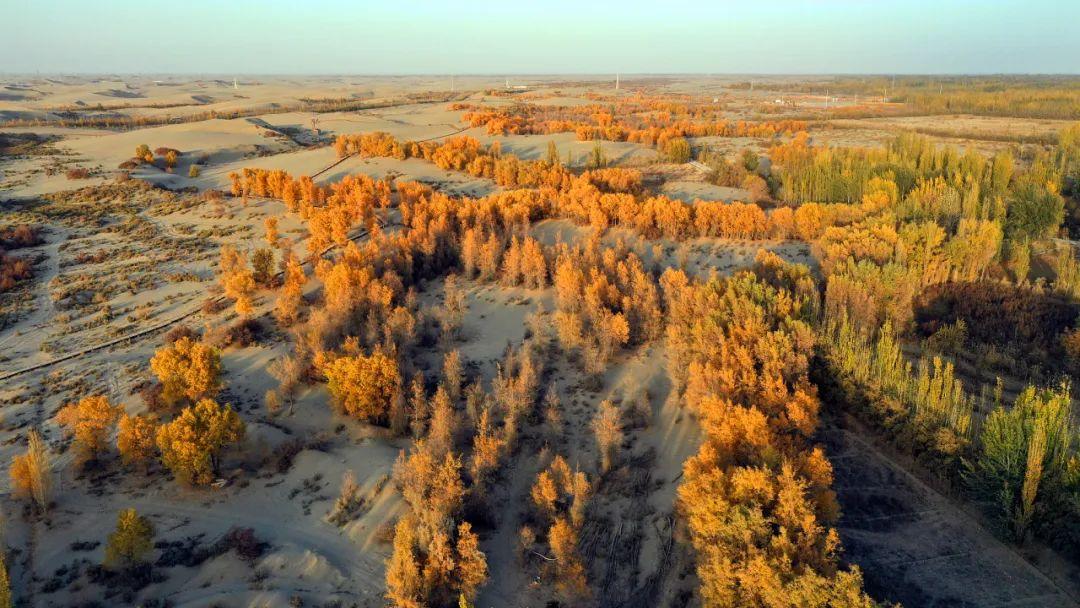
▲ A view of the desert poplar in the Hotan region of Xinjiang. (Photo credit: Visual China)
Unique Intersection of
The Records of the Western Regions of Datang and the Silk Road Civilization
Venerable Xuanzang waited for seven or eight months in Ütepe and returned to Chang'an after receiving an imperial decree from Emperor Taizong of the Tang Dynasty.
In ancient times, the Silk Road, an important trade route between China and the West, was like a bright ribbon of light, crossing the two avenues north and south of the Tarim Basin in southern Xinjiang, connecting the civilizations of the East and West.
Venerable Xuanzang returned to the east because of the heavy promise to keep his word and refused to go by sea and insisted on returning by land, and because of the vagaries of the world, the promise of the death of the person who had no choice but to turn to the western region of the South Road to the east, however, it is this clever arrangement of fate, so that the master of the Silk Road in the north and south of the road have left a valuable footprints and insights.
These records are like a bridge across time and space, not only linking up the glorious history of the oases around the Tarim Basin in Xinjiang's southern border, but also linking up the East and West in a close communication and integration, which has become a treasure of human civilization.
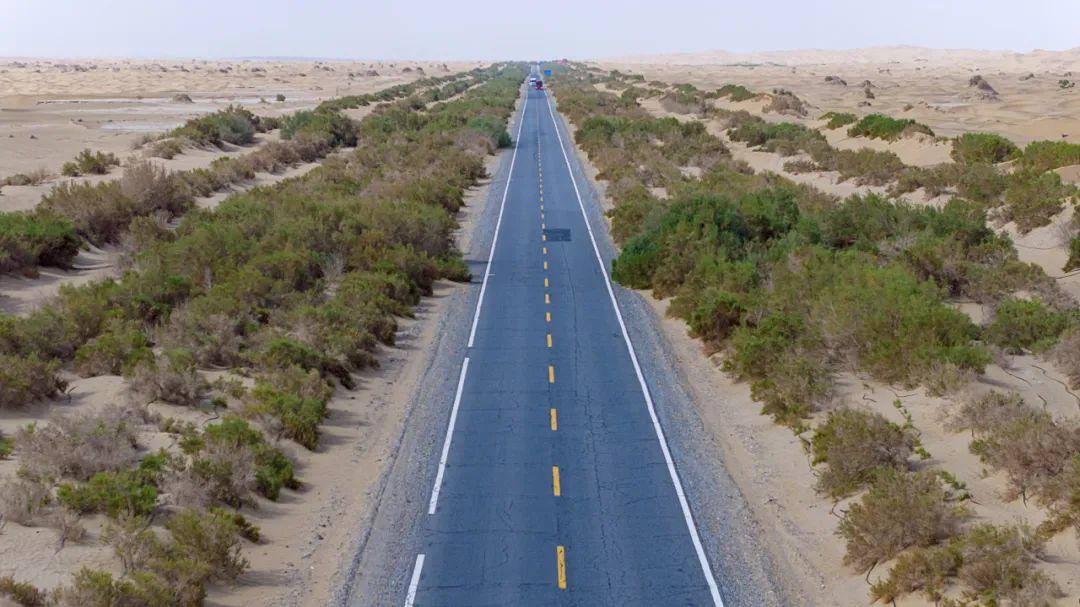
▲Taklimakan Desert Highway in Xinjiang. (Photo credit: Visual China)
Unique Encounters of the Tang Dynasty
Remnants of the Records of the Western Regions of the Great Tang Dynasty
In early August 1981, a precious remnant of the “Record of the Western Regions of the Great Tang Dynasty” was unearthed at the Thousand Buddha Cave in Tuyugou, Shanshan County, Turpan Region. According to scholars, it may be a gift from Xuanzang to Ju Zhizhan, the governor of Xi'an and the assassin of Xizhou, which was brought back from Chang'an by Koji Zhizhan at the beginning of the third year of the Yonghui reign (652 AD).
The Great Tang Western Regions Book was written in the 20th year of Zhenguan (646 AD), if this date is presumed to be correct, the writing should be the Great Tang Western Regions Book off the draft within five years after the earliest batch of writing under the auspices of Xuanzang completed the remnants of the leaf, is the most ancient book in existence, in the history of the books in the transmission of the great significance of the cultural relics and historical value is very high. Now hidden in the Turpan Regional Museum of the Tang Dynasty, “Datang Western Regions” scrolls, is a vivid witness with the unique encounter in Xinjiang. The unearthed artifacts, indicating that the “Great Tang Western Regions Records” in the Tang Dynasty has been spread to the Xinjiang region.
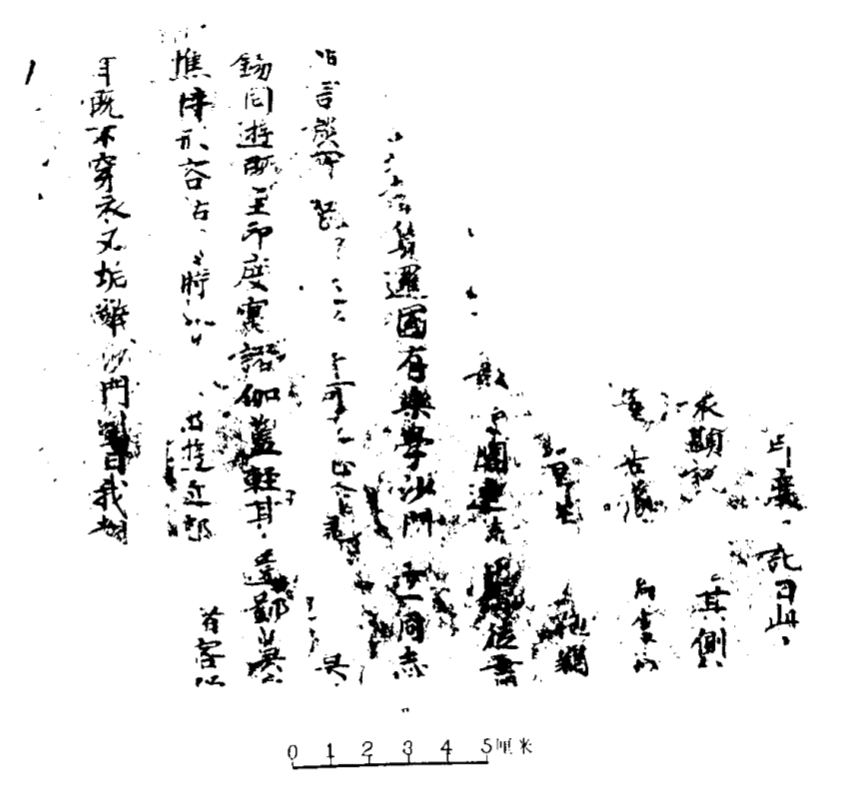
▲Remnants of the Tang-written version of the Records of the Western Regions of the Great Tang Dynasty. (Image source: Liu Hongliang: Newly Published Turpan Documents and Their Study, Urumqi: Xinjiang People's Publishing House, 1997)
The Unique Spiritual Power of Xuanzang
More than a thousand years ago, Venerable Xuanzang, in his quest for the true scriptures, went through great hardships, crossed the desert Gobi, crossed the snow-covered mountains and plateaus, and finally succeeded in arriving in India. His tenacity and perseverance have become a great story to be extolled by future generations.
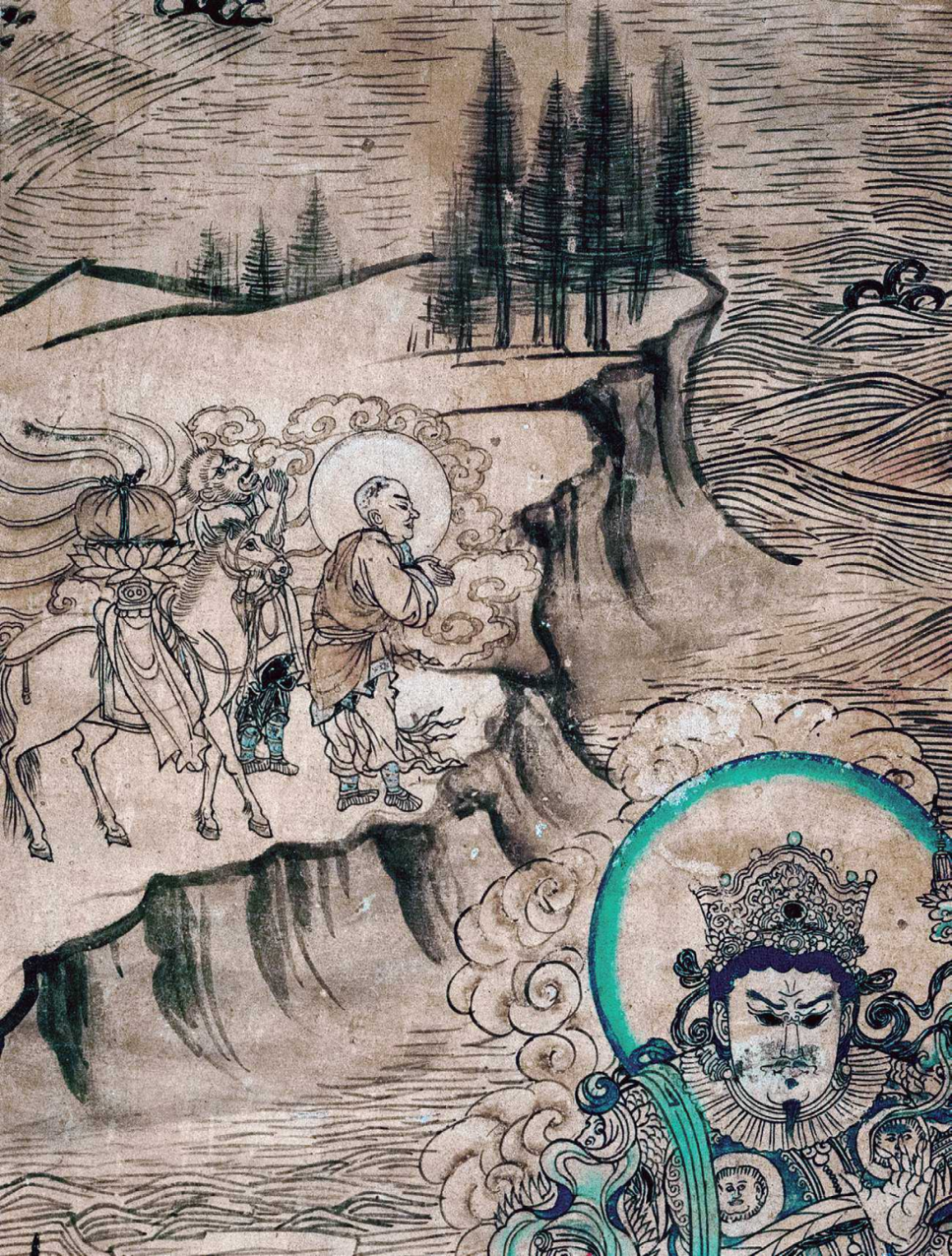
▲ Xuanzang fetching scriptures on the mural painting of Cave 3 of Yulin Cave, East Thousand Buddha Cave, Guazhou County, Jiuquan City, Gansu Province, mid to late Western Xia Dynasty. (Image source: Liu Gang and Li Dongjun, The Jiangshan of Culture 07: The Age of Pursuing the Republic of Thought, Beijing: CITIC Publishing Group, 2021)
It is worth mentioning that the two works, the Records of the Western Regions of the Great Tang Dynasty and the Biography of the Venerable Tripitaka of the Da Ci'en Temple made by his disciples after the death of Venerable Xuanzang, provided important materials and inspiration for the later literary work, the Journey to the West, which had a significant impact on Chinese literature.
Master Xuanzang traveled 10,000 miles to the west, returned with honors, a sensation, some magical legends also came into being, which is the source of the story of “Journey to the West”; the literary theme of the scriptures began in the Song Dynasty, the seventeenth section of the “Great Tang Sanzo scripture poems”; the end of the Yuan Dynasty and the beginning of the early Ming Dynasty, there is a fairly mature work of the “Journey to the West Miscellaneous Drama,” “Journey to the West Plain Words; the Ming Dynasty, the twentieth year of the Wanli period (1592), we are familiar with today's 100 times this book, ‘Journey to the West’! finally came out. And The Great Tang Journey to the West has not faded out of people's view with the passage of time, instead, it has always maintained a vigorous vitality in the process of evolution from historical record to literature to movie and television works, and has been closely connected with us in a unique way.
In short, The Record of the Western Regions of the Great Tang Dynasty in Xinjiang is an encounter that is both profound and unique. The importance of Xinjiang's geographic location as a transportation hub connecting East and West cannot be overstated. This unique historical-geographical and geopolitical context provided a deep ground for the Records of the Western Regions of the Great Tang Dynasty. For the Tang dynasty, the stability and development of Xinjiang was crucial, not only as an important node of the Silk Road, but also as a barrier for the security of the dynasty's borders. Therefore, understanding Xinjiang's history and geography, geopolitics, and religious beliefs is of great significance to the Tang dynasty in formulating correct border policies and maintaining national unity.
Historically, Xinjiang has been a region where diverse cultures and religions have coexisted. To this day, this history still has a profound impact on us, making us cherish today's peace and stability, and realize more deeply the importance of maintaining national unity and national unity. Not only that, Xinjiang, as depicted in the Records of the Western Regions of Datang, has opened a window for the world to understand China. Through this history, the world can better understand China's diverse cultures and deep historical heritage, thus enhancing mutual understanding and respect among different cultures.