

Liu Qingzhu: Archaeological Perceptions of the Silk Road
There used to be several “Silk Roads” leading from ancient China to various parts of the Asian and European continents, of which the “Desert Silk Road” was the most famous. These routes have long been submerged in the ground, underwater, and today's knowledge is based on archaeological discoveries of “points”, combined with documentary records, and then connected to form a “line”.
The Silk Road was mainly a means of spreading the spiritual and material civilization of ancient China, and the Western Regions were the most affected by it and were incorporated into China's territory. The trade activities of the Desert Silk Road could be said to be basically one-way, and the traders were mainly the Central Asian Sultans. Whether by land or by sea, the Silk Road flourished at a time when China was entering its heyday.
In 1877, the German geographer Richthofen's book China was published. In the book, he referred to the silk trade route connecting China with Hezhong (between the Amu Darya and Syr Darya rivers, also known as “Hezha”) and India between 114 B.C. and 127 A.D. as the “Seiden Stra Ssen”, which is translated as “Silk Road” in English. Translated into “Silk Road”, Chinese translation for “Silk Road”. This is the first time the name “Silk Road” appeared. 1910, the German scholar Albart Herrmann (A. Herrmann) in the book “Ancient Silk Road between China and Syria” made further elaboration, and the Silk Road was extended to Syria.
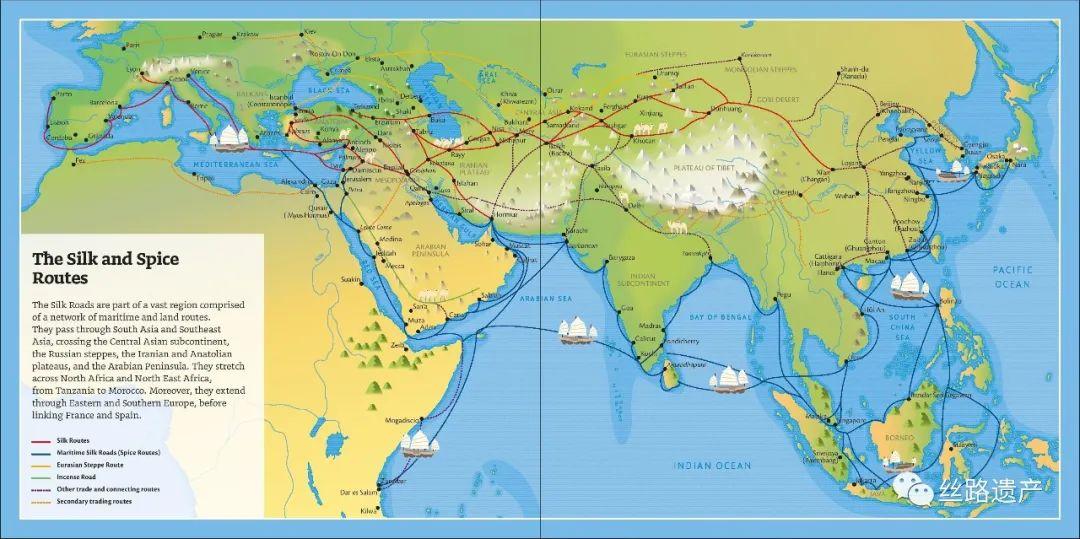
Nowadays, “Silk Road” has become a general term for the transportation routes between ancient China, Central Asia and West Asia, as well as through the Mediterranean Sea (including coastal land routes) connecting Europe and North Africa. Because China and Central Asia, West Asia and other places of this transportation route must pass through a section of desert land, so people also called it “desert Silk Road” (or “oasis Silk Road”). Relative to this name, and later academics have put forward the “Prairie Silk Road”, “Maritime Silk Road” and “Southwest Silk Road” and so on. So, these Silk Road in history have played what role, and how to be found?
I. The basic understanding of the Silk Road
Silk Road has more than one, the current academic community that there are mainly desert Silk Road, Prairie Silk Road, the Maritime Silk Road and the Southwest (or “Southern”) Silk Road. The emergence of a number of different Silk Road because of its spatial and temporal characteristics are not the same, the role of history is not the same. The Steppe Silk Road ran from the Daxingan Mountains in the east to Xinjiang in the west, and then westward to southern Siberia and northern Central Asia.
It began four or five thousand years ago, perhaps earlier. The road was formed as a result of the production and living activities of the nomadic people at that time. Early steppe Silk Road is actually a cultural exchange road, of course, this exchange is the nomadic livelihood activities of the “by-product”. After the Qin and Han Dynasties, the desert Silk Road was opened, the road became a “secondary road”, the role played by the former is not so great.
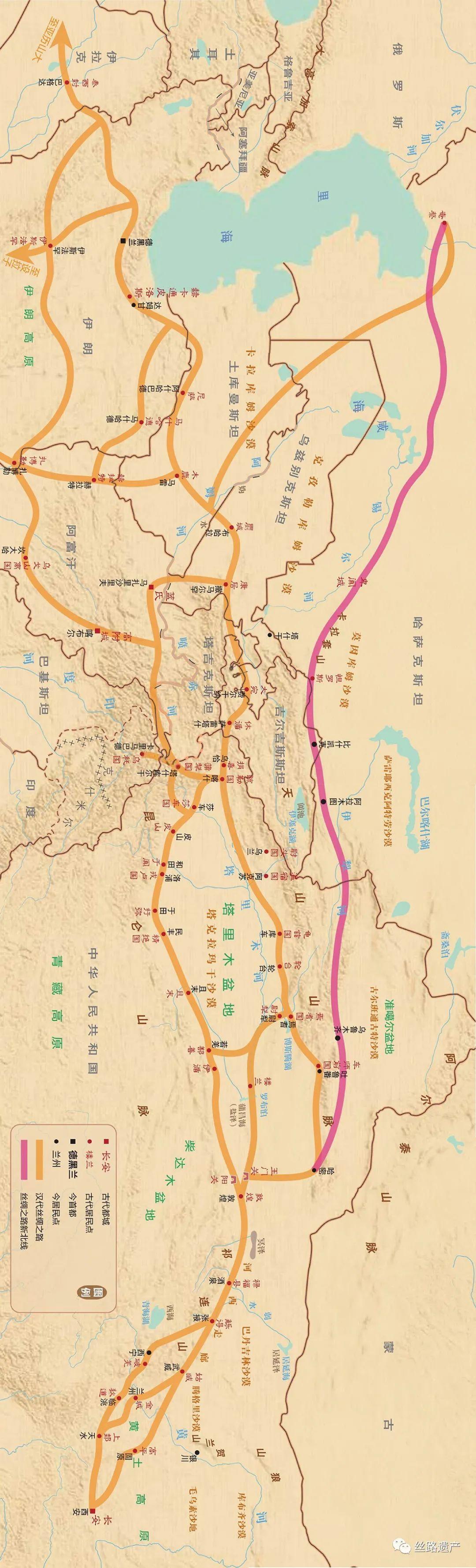
Nowadays, the Silk Road is generally referred to as the Desert Silk Road. The Desert Silk Road began with Zhang Qian's passage through the Western Regions, and generally speaking, this road started from Xi'an, Shaanxi Province, through Gansu and Xinjiang, and left the country through Central Asia and West Asia to Venice, Italy, in Southern Europe, with a straight-line distance of 7,000 kilometers from east to west and 4,000 kilometers within the territory of China.
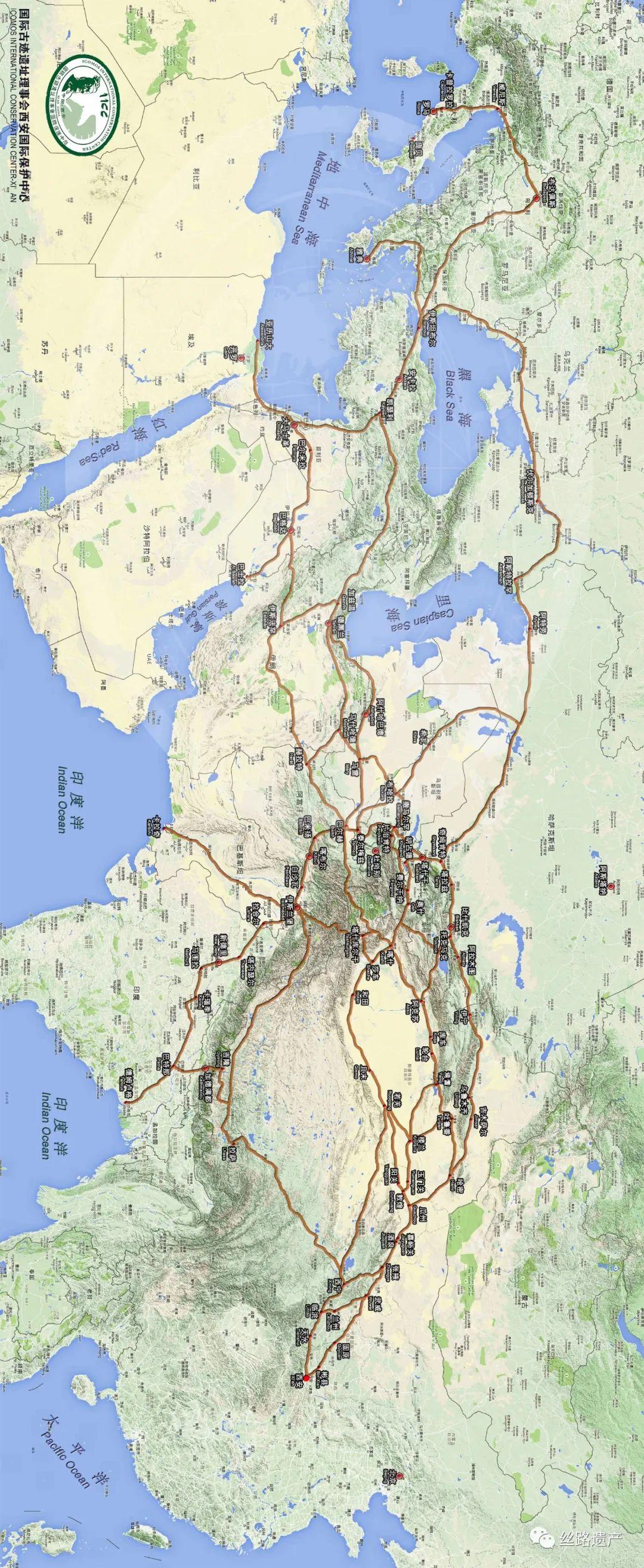
The Desert Silk Road was a “political road” and “diplomatic road” officially opened by the Western Han Dynasty. At that time, “cultural exchanges” and “trade activities” were its “by-products”. The purpose of Zhang Qian's mission to the Western Regions was to establish friendly relations with the 36 countries of the Western Regions (present-day Xinjiang) and the Central Asian countries, and the chieftains of the Western Regions were eager to get rid of the Xiongnu's domination and join the united national polity of the Han Dynasty.
Nowadays, there is a view that the Desert Silk Road was formed as a result of the silk trade, but both documentary records and archaeological discoveries prove that the Western Han Dynasty opened the Silk Road for purposes other than trade. At that time, it was Central Asian merchants who came to mainland China via this route to engage in trade, including the silk trade. So far, the camel figurines unearthed in China, the camel figurines are “hu man”, has not found a case of Han Chinese camel figurines, which suggests that the Silk Road merchants were “one-way”.
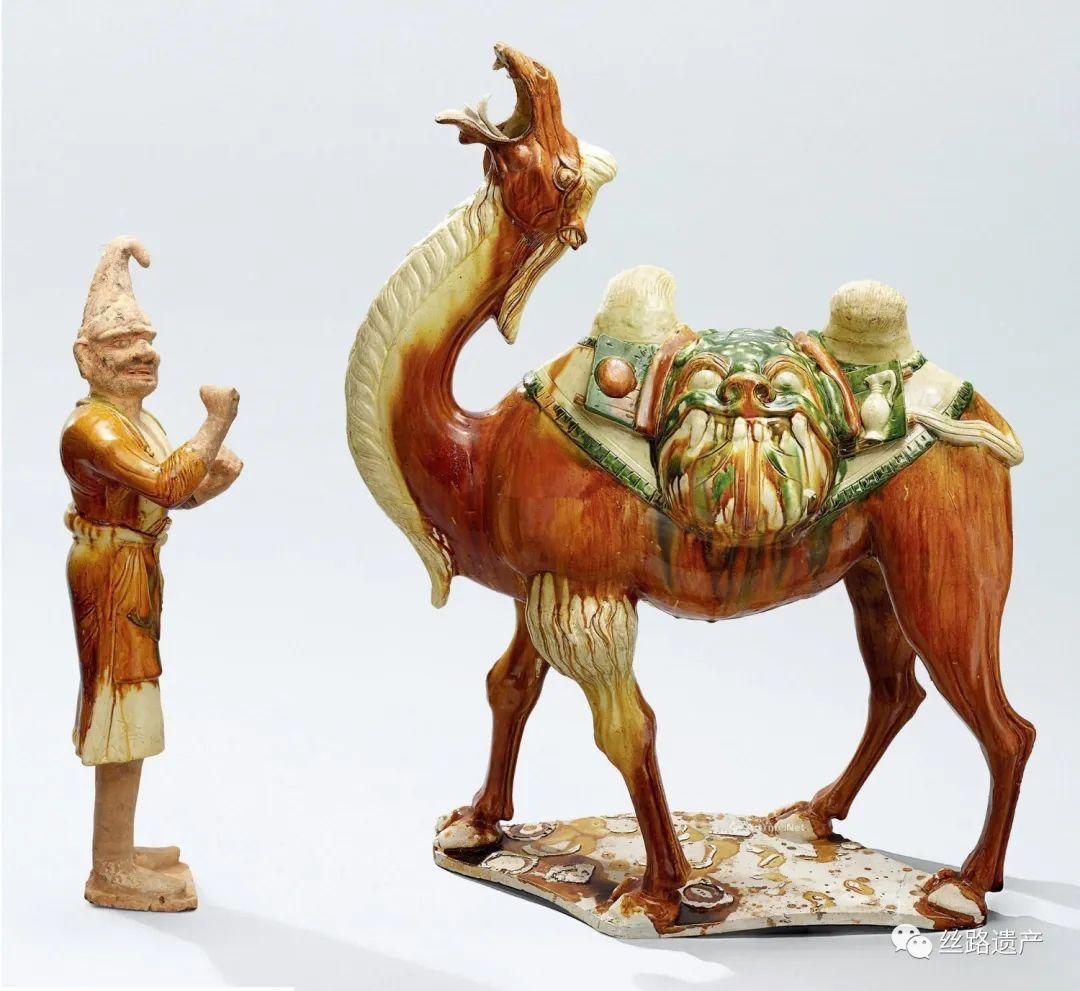
The Hu people who traded on the Silk Road were mainly the “Sut people”, and the figurines of Hu traders from the Tang Dynasty unearthed in Luoyang and the Sut burials found in Xi'an, Taiyuan, and Guyuan, Ningxia, have reproduced the characteristics of this merchant people. The Sutis were the most numerous Central Asian people to enter the Chinese Empire. The Southwest Silk Road was also known as the “Shu-Body Poison Road” or the “Southern Silk Road”.
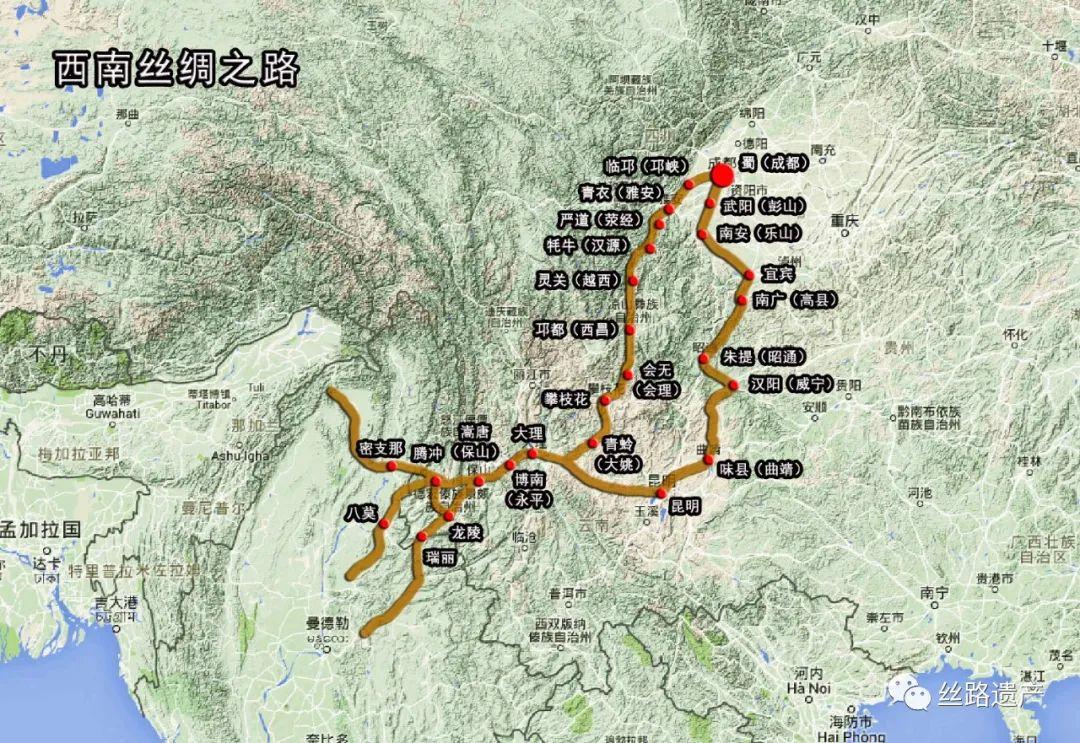
The Southwest Silk Road traveled from Chengdu in Sichuan Province and Dali in Yunnan Province in southwest China, through Baoshan, Tengchong and Yingjiang to Bhamo in Myanmar, from Bhamo to India, and from India to Central Asia and Europe. Some scholars suggest that the Southwest Silk Road can be divided into the East Road, the Middle Road and the West Road. The East Road is from Chengdu, northwest Guizhou, Guangxi, Guangdong to the South China Sea; the Middle Road is from Chengdu, Yunnan, Boutou Dao, Sang Dao to Vietnam; the West Road has the Body Poison Road and the Five Feet Road, both of which go through Yunnan, Myanmar to India.
Southwest Silk Road is a trade road, cultural exchanges are its “by-products”. Its trade activities were mainly among the people, even earlier than the Desert Silk Road. The Book of Han records that Zhang Qian, when he traveled to the Western Regions, saw in Afghanistan the “bamboo staff” and “Shu cloth” from Sichuan, China, these things are from Sichuan through Yunnan, Myanmar to India, and then northward to Afghanistan.
Some scholars in recent years, according to the samsung mound site in sichuan, jinsha site unearthed ivory and other relics may come from india, it is presumed that relative to the xia shang era in southwestern china and south asian subcontinent has been to and fro and exchanges, that is to say, southwestern silk road can be traced back to the xia shang era.
Due to the Southwest region of copper drums, some people also called the Southwest Silk Road “copper drum road”. After the Middle Ages, this road is also known as the “Tea Horse Road” because of the transportation of tea.
It is generally believed that the Maritime Silk Road began in the Han Dynasty. The Han Book - Geography, recorded that the South China Sea route as far as the east coast of southern India of the Donchipuram (Conjevanam). During the Han Dynasty, Panyu, Xuwen, Hepu, Jiaosu and other places in China were the early ports of the Maritime Silk Road, of which Panyu was particularly important. Later archaeological discoveries confirmed that the Maritime Silk Road from East Asia through South Asia to West Asia already existed during the Spring and Autumn and Warring States periods. The Maritime Silk Road was mainly a trade route, but also included individual government-led “tribute”, “diplomacy” and “cultural exchanges”.
This Silk Road is not mainly trafficking in silk, from the discovery of shipwrecks within the “goods” point of view, after the Middle Ages is mainly exported to China's ceramics. Pre-Qin to the Sui dynasty before, China is mostly with West Asia, Central Asia; the late Southern Dynasties and Persia to increase; Tang, Song and Yuan period of the Arab region for more.
China's Tang, Song, Yuan and Ming era of porcelain, in Southeast Asia, Central Asia, South Asia, West Asia, North Africa and other places have been found, which should be the year of the Maritime Silk Road trade activities of the remnants. At that time, ceramics is the protagonist of the Maritime Silk Road trade, so this road is also known as the “maritime ceramics road”.
Second, the Silk Road archaeological findings and research
Historical documents on the Silk Road is not a detailed description of the confirmation of the main basis for archaeological discoveries, combined with documentary records. Therefore, it can be said that people's knowledge of the Silk Road since modern times, from modern archaeology into China.
Silk Road is “a line”, this line is no longer visible, so how do we know that there was this line in ancient times? Line” is composed of millions of ‘points’, archaeology is through the discovery of a number of ‘points’ on the Silk Road, connecting the already submerged in the underground, underwater, ‘road’. “Road”.
1. Archaeological discovery and research of the Prairie Silk Road
In the prehistoric era of mankind, East Asia, the Mediterranean, Central and South America, the South Asian subcontinent and other places have formed a different “culture”. Archaeological discoveries over the past hundred years have shown that the above different “cultures” have developed East Asian civilization and Mediterranean civilization, Central and South American civilization, etc., and there have been certain cultural exchanges between them as early as in the ancient times. China's archaeological discoveries of prehistoric and pre-Qin era crops such as wheat, livestock such as cattle, sheep and horses (which were first successfully bred by ancient Indo-Europeans on the north coast of the Black Sea and the Caspian Sea), transportation such as horse-drawn carriages, metal smelting and casting, gold and glass (calcium-sodium glass), etc., may have been influenced by the Mediterranean civilization.
The ancient civilization of the Yellow River Valley, the central region of East Asia, had also spread westward in prehistoric times. In the second half of the fourth millennium B.C., Yangshao middle and late culture entered the Huangshuo area and the upper reaches of the Minjiang River; in the first half of the third millennium B.C., it was introduced to the upper reaches of the Yellow River, the northwestern region of Sichuan, and the western part of the Hexi Corridor; and at the end of the third millennium B.C., it moved westward to Hami, Xinjiang, where Mongoloid races from the east collided with the primitive Caucasian races that had traveled southward from the northern part of Xinjiang and became fused. The westward transmission of the past also included agriculture.
Ancient jade unearthed from late Neolithic sites in China, some of which have mineral compositions similar to that of Hetian jade, suggests that at least in the late Neolithic period, Ü-Tsang (present-day Hetian) may have had dealings with the Central Plains. In 1974, more than 500 jade artifacts were excavated and unearthed from the Yinxu Wuhao Tomb, a significant portion of which were identified as Hetian jade.
In other words, the Hetian jade material arrived in the East 3,000 years ago. The route it traveled over was from Hotan to Turpan, then northward through northern Xinjiang to what is now Gansu and Inner Mongolia, then southward to Ningxia, and then eastward through Shanxi and southern Hebei to Anyang, and then eastward to Shandong, which was the spreading route of Hotan jade 3,000 years ago.
At the same time, with the characteristics of the pre-Qin era of the mainland cultural relics, but also in the western region of the remains of repeated archaeological discoveries, such as the Bazarek cemetery unearthed Chinese lacquer ware debris, the Warring States period “four mountain pattern” copper mirror and so on. Archaeological data also shows that the ancient ancestors from Gansu into the eastern part of Xinjiang did not stop the footsteps of the west, they take the Hami Oasis as a base, along the Tianshan Mountains along the remaining north and south to continue westward, all the way north into the Barkun grasslands, Junggar Basin, the southern edge of the Urumqi; the other way west into the Tuk (Rupan) Shanshan (Shan) Torkesson (Kesun) Basin.
China's late Neolithic sites unearthed ancient jade, some jade mineral composition and Hotan jade similar, which indicates that at least in the late Neolithic period, Ü-Tepan (now Hotan) may be with the Central Plains transactions. In the pre-Qin era, there were many archaeological discoveries of jade artifacts made of Ü-Tsang jade on the mainland.
In 1974, more than 500 jade artifacts were excavated and unearthed from the Yinxu Wuhao Tomb, and a considerable portion of them were identified as Hetian jade. In other words, Hetian jade material arrived in the East 3,000 years ago. The route of its transmission was from Hotan to Turpan, then northward through northern Xinjiang to what is now Gansu and Inner Mongolia, then southward to Ningxia, then eastward through Shanxi and southern Hebei to Anyang, and then eastward to Shandong, which was the route of the spread of Hetian jade 3,000 years ago.
At the same time, with the characteristics of the pre-Qin era of the mainland cultural relics, but also in the western region of the remains of repeated archaeological discoveries, such as the Bazarek cemetery unearthed Chinese lacquer ware debris, the Warring States period “four mountain pattern” copper mirror and so on. Archaeological data also shows that from Gansu into the eastern part of Xinjiang's ancient ancestors did not stop the footsteps of the west, they take the Hami Oasis as a base, along the north and south of the Tianshan Mountains to continue westward, all the way north into the Barkun Grassland, the southern edge of the Junggar Basin, Urumqi; the other way west into the Tuk (Rupan) Shanshan (Shan) Torkesson (Kesun) Basin.
After the opening of the Desert Silk Road, the Steppe Silk Road took a back seat, but still plays a role in the Eurasian cultural exchanges. During the Wei, Jin and North-South Dynasties, the Xianbei people took Pingcheng (now Datong) as their capital and established the Northern Wei Dynasty, and excavated China's first national cave temple, the Yungang Grottoes, in Pingcheng. Later the Prairie Silk Road, has been to Shanxi, Inner Mongolia, Hebei, Beijing, Liaoning and other places, in recent years in the above areas of the aristocratic tombs have been found in a number of West Asia and Central Asia gold and silver, copper, glass, Persian Sassanid silver coins, Byzantine gold coins, Islamic glass and other cultural relics.
From the 4th to 11th centuries A.D., the Prairie Silk Road became an international transportation route in Northeast Asia, and played an extremely important role in the cultural exchanges between China, Korea and Japan and the West. The Prairie Silk Road developed eastward from China, entered the Korean Peninsula, and then reached Kyushu, Japan through the Tsushima Strait, and many of the Chinese cultural relics found in Japanese archaeology were disseminated through the Prairie Silk Road.
2. Archaeological discoveries and research on the Desert Silk Road
The Desert Silk Road was first and foremost a political and diplomatic road. In view of the friendly relations and active desire of the 36 countries in the Western Regions and the Western Han Dynasty, Emperor Wu of the Han Dynasty sent Zhang Qian on a mission to the Western Regions. The Han Dynasty successively set up four counties in Gansu Hexi Corridor, Jiuquan County, Wuwei County, Dunhuang County, Zhangye County, and then set up the Western Region Defense Office in the present-day Xinjiang region, ruling the city of Wubicheng (present-day Luntai East, Xinjiang) to engage in the cantonment of fields, so as to make the Western Region become a part of the Han Dynasty, and all the ethnic groups of the Western Regions become the members of the Chinese nation.
Through years of archaeological work in the Xinjiang region, found on the desert Silk Road of the Han and Tang dynasties, military and economic facilities of the remains, mainly as a social and political platform of the “city site”, military and economic functions of the dual-function of Tuentian, military and political functions of the beacon flints, pavilion barriers and so on. These are important physical carriers of the central government's exercise of national sovereignty in the Western Region, reflecting the “national dominant culture” of the Western Region at that time.
The “city site” is the political platform of the state. According to the literature, the ancient state “built cities to defend the king, and made silhouettes to guard the people”. The “city” in ancient Chinese history is a political platform, the capital city is the epitome of the state, and the imperial palace is the political center of the state. Different shapes of city sites are the reflection of different political systems. Take the Loulan area as an example, the early city of Loulan has two kinds of plan, one is round and the other is square.
In the Han Dynasty before the operation of the western region, the western region of the city layout is mainly affected by Central Asia, the city's plane for the round; Zhangqian through the western region, the Loulan city site changes, appeared in the mainland characteristics of the square city. Most of the relics unearthed in the square city are basically the same as those in the mainland, such as documents and official seals, which are the materialized carriers of the Han dynasty's national power in this region. The Han Dynasty city sites in the western region were the materialized carriers of the central government's management of the western region during the Han Dynasty, and a number of Han Dynasty city sites in the western region have been discovered by archaeology so far. Among them, Luntai and the southern edge of the Tarim Basin Lobu and Ruoqiang area of the Han Dynasty city site more, more important.
Luntai area in the southern foothills of the Tianshan Mountains, the most notable work is to find the early political center of the Western Han Dynasty in the Western Region - the Western Region Capital site, it is generally believed that today's Luntai County, Ce Daya Town of Ubayi City site that is the Western Han Dynasty, the Western Region Capital site. since the 1970s, archaeologists in the Luntai area also surveyed the Agrak Ancient City, Qui Yu Ke Xie Er ancient city (Ke Yu Ke Qin ancient city) Fortress ancient city, black too Qin ancient city, Zhaoguo Te Qin ancient city, Kak Bo Lek ancient city and other sites, some of which were found to have the Han Dynasty relics. However, it is not yet possible to determine the specific city site of the Han Dynasty Western Capitals site.
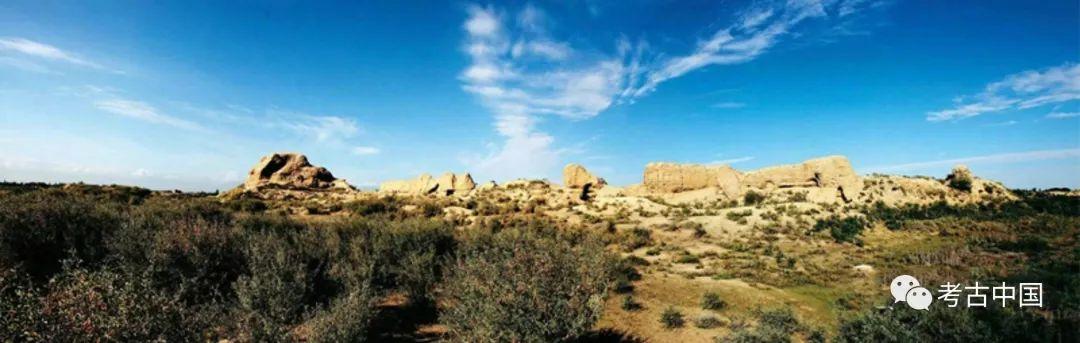
The Old City of Beiting
Lop Nur and Ruoqiang area is the most operated by the Han Dynasty in the western region, and the ancient states of Loulan and Shanshan in the Han Dynasty were all in this area. The main Han Dynasty city sites here are Bu Naoer Tuyin site, LE ancient city, LA ancient city, LK ancient city, LL ancient city, “and Er Kilduke ancient city” and so on. About these ancient city sites and historical documents documented the relationship between the Han Dynasty city sites, there is still controversy in the academic community.
Some scholars, according to the excavated Han Jian, the ancient Loulan Road Bu Naoer Tuyin site, may be the left part of the western capital of the left Qu waiting or after the Qu waiting for the seat; (13) LE ancient city is the capital of Loulan in the early period, and in the late period is the western region of the long history of the seat; Yuanfeng four years (77), the king of Loulan from the ancient city of LE to move to Ruoqiang County, near the basin of the Lyric Mud City, Chelshen, i.e., “and Er beguiduke ancient city”, as a historical documented Han Dynasty city sites. Ancient City”, as the capital of Shanshan State: LA Ancient City may be the site of the Western region's governor's office or ‘Loulan's Tun’; LK Ancient City may be the former site of the Western Han Yizhuan City, and LL Ancient City may be the site of the Western Han Yizhuan Lieutenancy.
Yanqi County, 12 kilometers southwest of the Bogdaqin ancient city, the plane is roughly rectangular, more than 3,000 meters in circumference, which is the Yanqi Basin's largest Han Dynasty city site. About this city site, the academic community has different views, there are Yanqi state capital city member of the drainage city, the capital of the state of Yuli, Yanqi town city, and so on a variety of sayings.
Northern Xinjiang region Qitai County Shichengzi has an ancient city site of the Eastern Han Dynasty, the city site has unearthed a large number of Han Dynasty cultural relics. It is possible that the site is the ancient city of Shule, which once had an official office of the Han Dynasty. The frontier was a place where nomads lived and an outpost and base for the central dynasties to fight for control of the grasslands. The stele found in Barkun from the second year of the Han Dynasty (137 AD), the stele of Pei Cen, the governor of Dunhuang, who defeated King Huyan of Xiongnu, and the stele of Ren Shang from the fifth year of the Han Dynasty (93 AD) reflect the history of the Han Dynasty, when the central government exercised state control over the area.
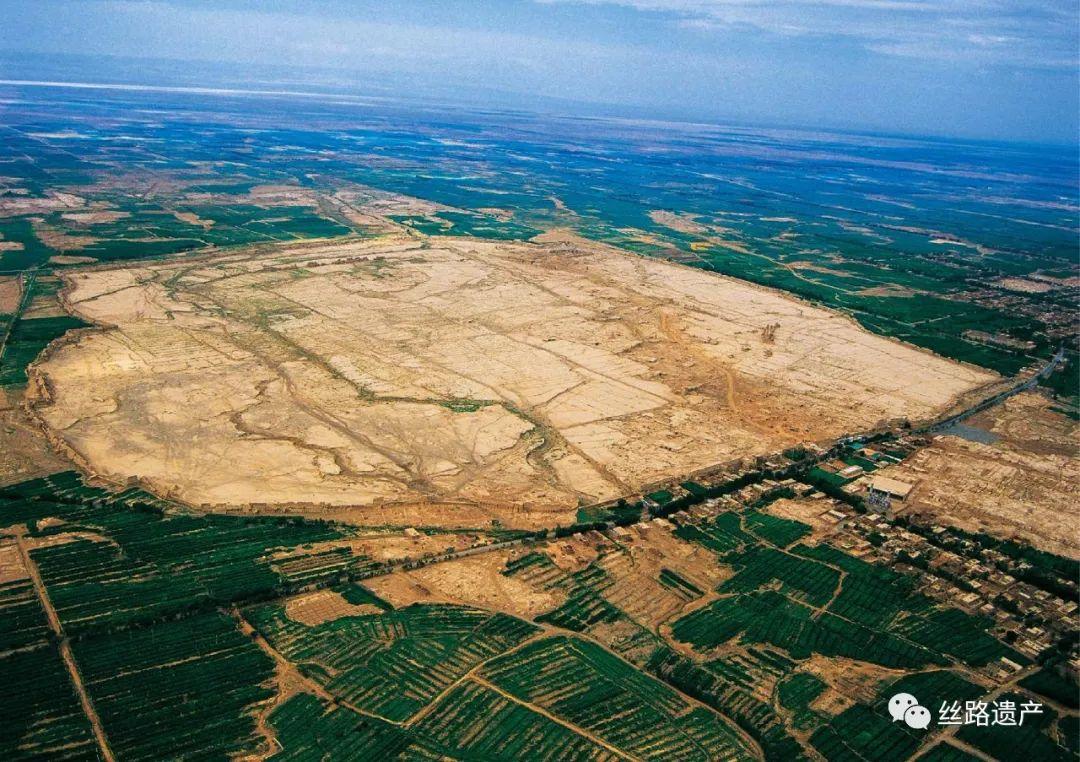
Gaochang Old City
The ancient city of Beiting in the Middle Ages, also known as Guobaozi Ancient City, is located in the north of Jimusar County, Changji Hui Autonomous Prefecture, Xinjiang. Ancient city scale is grand, slightly rectangular, divided into inner and outer two cities.
In the northwest corner of the city unearthed the Tang dynasty copper official seal “Pu class state seal”, and a high level of craftsmanship of copper lions, stone lions, grapes copper mirror tortoise, the Kaiyuan Tongbao, carved stone ball, downpipes and pottery and so on. From the Beiting Imperial City site shape and its excavated relics, the consistency with the mainland culture is obvious. The Beiting Imperial City site has been approved as a World Heritage Site (as part of the Silk Road World Heritage).
At present, archaeology has been found in the western region of the Tang Dynasty city site has a number of, such as Kuqa County, near the Tang Dynasty Anxi Dupu seat (also for the ancient Tortoise country of Iroilo city) - Pirang ancient city also known as Haradun; Gaochang old city, Han called Gaochang wall. Two Han, Wei and Jin dynasties, Wuji school lieutenant stationed here, and since then has been the former Liang Gaochang County, Koji's Gaochang Kingdom, the capital of the Tang Xi Zhou State and migratory migratory Gaochang Wangdu.
The whole city is divided into three parts: the outer city, the inner city and the palace city, the layout is slightly similar to the Tang Chang'an City. The Jiaoha and Gaochang Imperial Cities have also become World Heritage Sites (as part of the Silk Road World Heritage).
Tuantian was a form of national military management and production organization implemented by ancient Chinese dynasties in remote areas. Tuentian began in the western region during the Western Han Dynasty, and the troops who were in the western region during the Han Dynasty had a dual identity. In the Xinjiang region found in the Tuentian related relics, remains, such as: Minfeng County, Niya site found in the “Division Wo Fu seal”, indicating that the Eastern Han Dynasty in the Niya area Tuentian and has a specialized management of Tuentian affairs institutions. Lop Nur north bank of Tuyin site unearthed the content of the Chinese wooden briefs, most of them are related to Tuentian.
Lop Nur north of the northern bank of the peacock river, found the ancient dike with willow mulch built, should be water conservancy project. Archaeological discoveries in the eastern suburbs of the city of Loulan include the remains of ancient farmland reclamation. The remains of a large-scale irrigation system found in Milan should be the remains of the Han Dynasty. The Luntai garrison building near Laisu in the southwest of Luntai County is part of a Tang Dynasty cantonment site.
The qan'erjing preserved in eastern Xinjiang to this day is physical evidence of the simultaneous entry of mainland agriculture and agricultural technology into the eastern Xinjiang region. The qan'erjing is actually the “well canal” of the Weibei region of Shaanxi, as described in the Records of the Grand Historian (史记). The Records of the Grand Historian (史记-河渠书)recorded: “The bank was crumbling, and a well was drilled, which was more than forty feet deep. Often for the wells, wells pass water under each other. ...... wells and canals since the beginning of the birth of this.” The “well canal” arose in the Guanzhong region in the Western Han Dynasty and spread westward to Xinjiang.
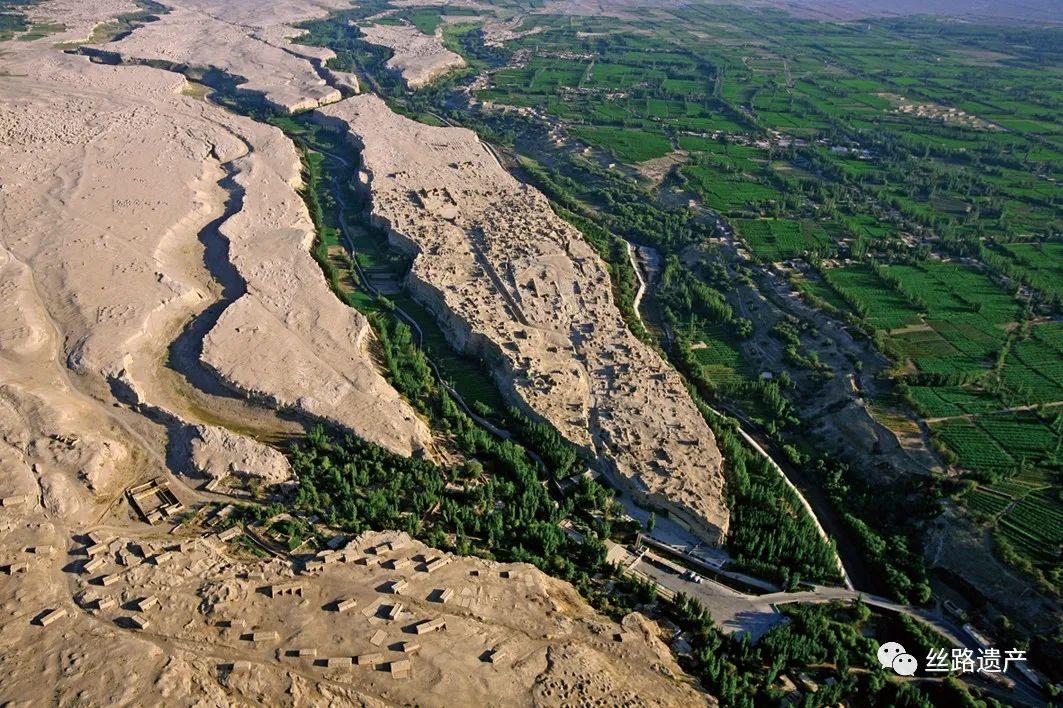
▲ Jiaoha Old City
Along the route from Dunhuang to Korla, there are Han Dynasty flints and beacons, which are national projects of the central government. These flints are an important cultural heritage of the Silk Road, a historical witness to the opening and protection of the Silk Road by the ancient Chinese dynasties, and a physical carrier for the military and administrative management of the western region by the Chinese central government. It can be illustrated that Xinjiang has been a part of China as early as two thousand years ago.
The historical significance of the Kizil Han Dynasty Beacon Flint Ruins in southern Xinjiang, which were listed as a UNESCO World Heritage Site in 2014 (as part of the Silk Road World Heritage Site), demonstrates the international community's recognition of China's multi-ethnic unity formed two years ago. The related “Yumen Pass Site” and “Hanging Springs” in the Han Dynasty and the “Luoyang City” in the Han and Tang Dynasties on the “Hexi Corridor” are also recognized as part of the World Heritage of the Silk Road. “The ruins of Yumen Pass and Hangquanzhi in the Han Dynasty, as well as the ruins of Luoyang City in the Han and Tang dynasties, have all become world cultural heritages as part of the Silk Road.
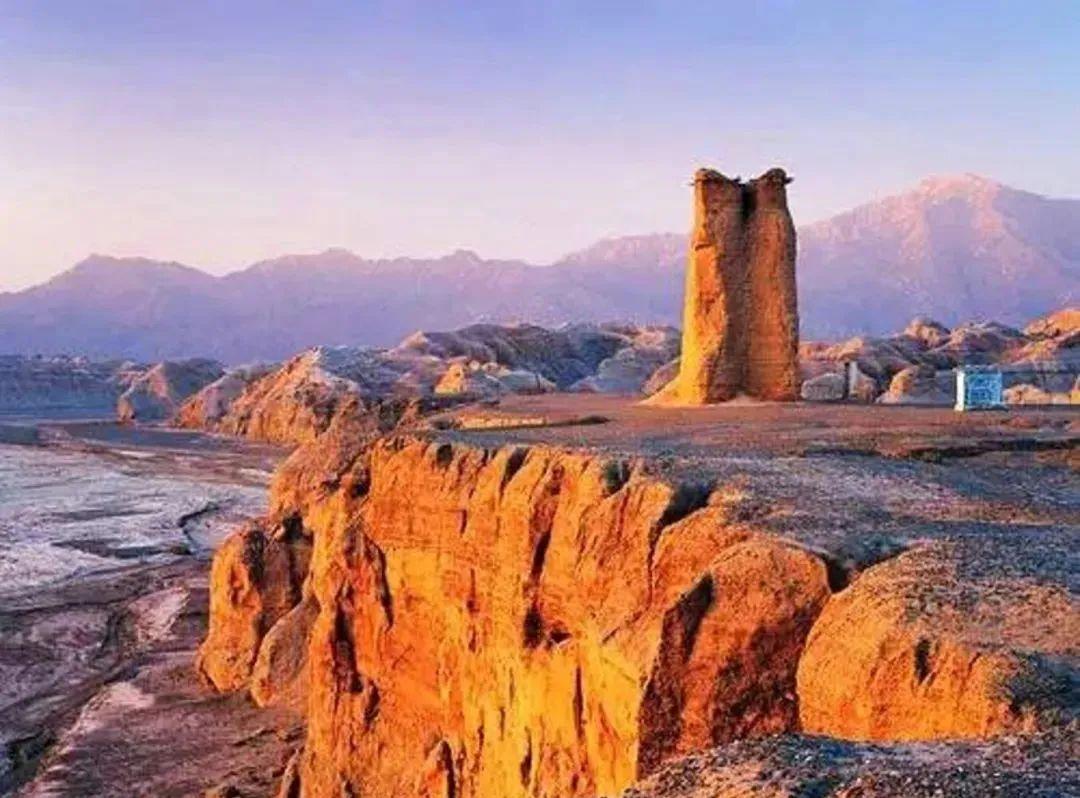
▲Kezir Gaha Peak Flints
There are many archaeological discoveries of “Han culture” in the western region. Writing is the “core cultural gene” of human culture. Archaeological discoveries show that Chinese characters were one of the earliest scripts used in the Western Regions during the Han Dynasty, and have been the official script used in the Western Regions for two thousand years.
At the end of the 1970s, 63 pieces of simple documents in Chinese were unearthed in the Lop Nor area; Chinese paper documents were unearthed in the tombs of the third phase of cultural remains (Han and Jin dynasties) in the Zaoluq cemetery in Jiamo County; and eight royal wooden journals were found at the Niya site, which were written in Chinese script. The archaeological discoveries of Chinese characters and their writing system in Xinjiang were deeply influenced by the Central Plains. The introduction of this system into the western region should be related to the garrisons guarding the frontier. The continuous discovery of the Kharosthi diatomic money is an important evidence of the use of Chinese writing in the western region.
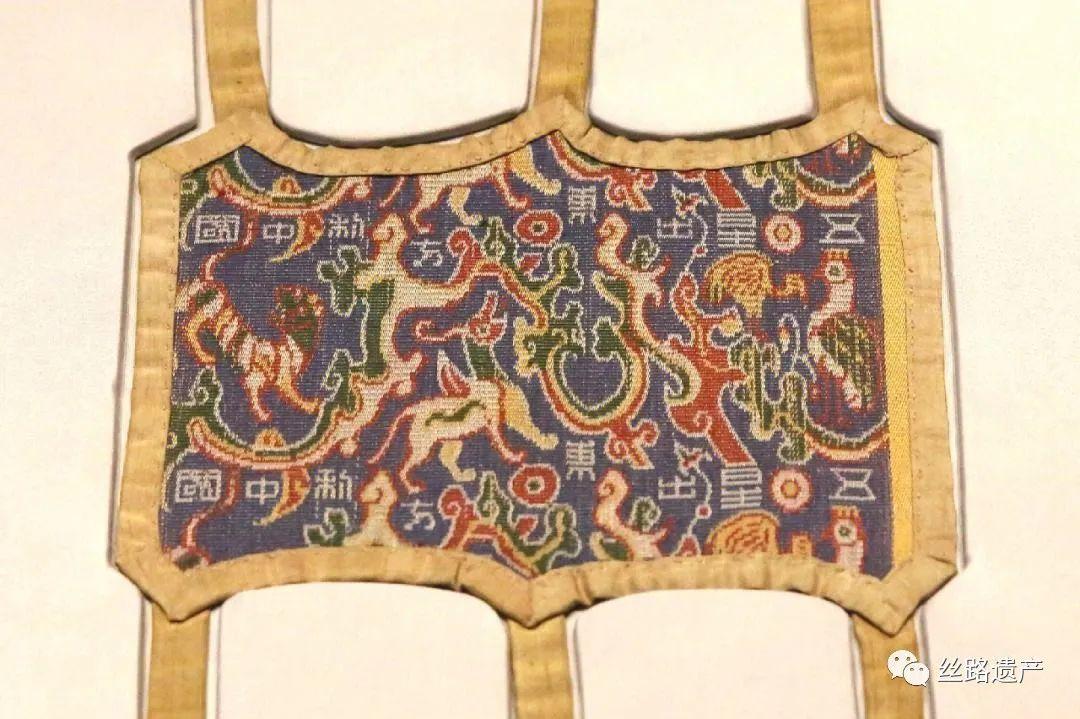
“Brocade of “Five Stars in the East and Favorable to China
Xinjiang region archaeology also found many examples of Chinese characters on brocade. For example, in 1995-1997, the Niya site cemetery found on the Han and Jin dynasties brocade, “prolonged life greatly suitable for children and grandchildren,” “long happiness, great bright light,” “grace under the age of the big who long to keep the two relatives of the children and grandchildren interest brother Maosheng longevity without limits “We'll live a long and happy life.” ‘We'll live a long and happy life.’ ‘We'll live a long and happy life.’ ‘We'll live a long and happy life.’ ‘We'll live a long and happy life.’ ‘We'll live a long life.’ ‘We'll live a long and happy life.’ ”We'll live a long and happy life. Children and grandchildren” ‘five-star out of the Oriental benefit China’ ‘Daming light by the right Chengfu’ and other texts.
Another example is the Lop Nor area in the late 1970s, found on the brocade fragments of the cemetery in the late 1970s, “prolonged life greatly suitable for children and grandchildren,” “Changle Mingguang,” “renewed world,” “Guangshan,” “the world” and “the world”. “Guangshan”, ‘high hopes’, ‘looking at the four seas of noble wealth and longevity for the National Day’ and so on. These written silk is the Han dynasty “official” culture in the western region of the reflection, they may be “tribute” history of the physical remains.
Western local chiefs of the Han Dynasty dress is very important and envy, silk is the Han Dynasty to give them an important “gift”. They live to enjoy, after death with the burial. These gifts of silk are generally from the local high-grade tombs.
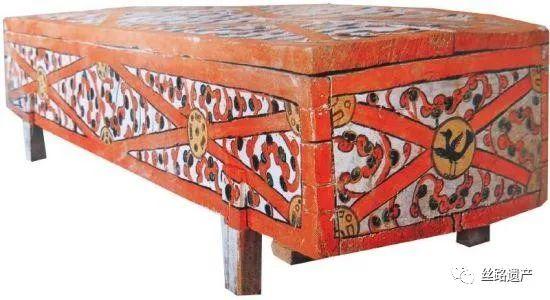
Wooden coffin of a nobleman's tomb unearthed north of the ancient city of Loulan in Ruoqiang County in 1998
The coffins and outer coffins of high-grade tombs found in Xinjiang also reflect the influence of traditional Chinese culture. the wooden coffin of a nobleman's tomb unearthed north of the Loulan Ancient City in Ruoqiang County in 1998 has a golden crow painted in the circle of the headboard, and a toad in the circle of the footboard, which represent the sun and the moon, respectively. With the golden crow and toad to symbolize the sun and moon celestial phenomena, is the tradition of Chinese culture.
Central Plains emperors and aristocrats have a lot of this content in the tomb, such as Puyang Xishuipo Neolithic tombs in the Dragon and Tiger Dipper and the Dragon, Tiger, Bird and Lin four elephant map, Hubei Suixian Zenghouyi Tomb lacquer box lid on the star map, the Qin Shihuang mausoleum dungeon, “the upper astronomical, geography,” Xi'an Jiaotong University of the Western Han Dynasty mural tomb celestial image, Luoyang, Western Han Dynasty, Bu Qianqiu Mural Tomb of Western Han Dynasty in Luoyang, Luoyang Asaijintou Western Han Dynasty Mural Tomb, Luoyang Western Han Dynasty Tomb in the astrological map, Luoyang Jinguyuan New Mang Dynasty Mural Tomb, Shandong Feicheng County, Xiaotang Hill stone carving of the sun, the moon, the astrological map, and so on.
Found in Xinjiang, the coffin more than two thousand years ago, the painted pattern is obviously transplanted from the Chinese culture.
Seal more Han “official culture” features. Unearthed in xinjiang “han qui yi qiang long” copper seal, seal square, lying goat knob, yin carved seal script “han qui yi qiang long”. The seal is an official seal issued by the central government of the Han Dynasty to the chief of the ancient Qiang people after they belonged to the Han Dynasty. The Qiang people of the Western Region were scattered in the oases of the Tarim Basin and the western valleys of the Pamir, mainly engaged in animal husbandry and hunting, but also in agriculture.
In the Xinjiang region of the Han and Tang Dynasty ruins and tombs, but also unearthed a number of Chinese text. For example, the “Analects of Confucius - Gongye Chang” was unearthed in the Luobu Western Han Dynasty Beacon Flint Site, the remnants of the “Strategies of the Warring States” and the arithmetic “Nine Nine Techniques” were found in the late Eastern Han Dynasty at the site of the Luobu Haitou, and the remnants of the “Cangjie Chapters” were found at the site of the Niya in 1993. In addition, there are also unearthed “Mao Poetry”, “Zheng Xuan Note Analects”, “pseudo-Kong Chuan Shangshu”, “Xiaojing”, “Rush on the Piece”, “Thousand Character Texts”, Xue Daoheng “canonical”, anonymous “Jin History”, “Tang Law Shuo Yi”, “Needle Scriptures” and “Buddhist scriptures” and other ancient books transcripts.
After the opening of the Silk Road, South Asian Buddhism was introduced to the mainland through Central Asia and the Western Regions, integrating traditional Chinese Han culture and becoming an important religion in the Han cultural circle. The Western Region was the first stop for the Sinicization of Buddhism, which then entered Gansu, Ningxia, and northern Jin, before reaching the interior. It was further integrated in the interior and finally spread to Korea, Japan, and northern Vietnam.
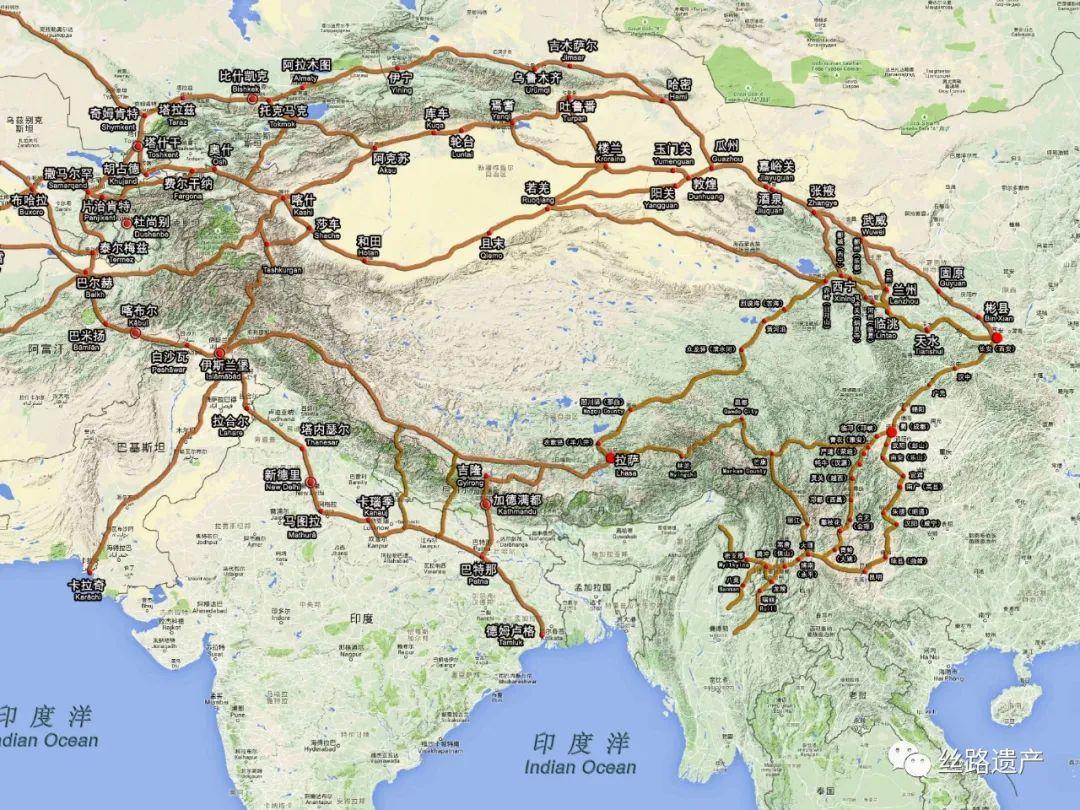
3. Archaeological Discovery and Confirmation of the Southwest Silk Road
The Southwest Silk Road is related to the introduction of Buddhism. Buddhism was basically introduced to China through two routes: one was through the Desert Silk Road from South Asia and Central Asia to East Asia; the other was through the Southwest Silk Road, which traveled from India through Burma into China's Yunnan and Sichuan, and then eastward along the Yangtze River Basin to the lower reaches of the Yangtze River Basin.
The rise of the Southwest Silk Road should be earlier than the Desert Silk Road, because Zhang Qian's mission to the Western Regions in today's Afghanistan to see the “Shu cloth” from India, that is, in Zhang Qian “chiseling” before the Southwest China and India have been trading, cultural exchanges. In other words, before Zhang Qian “chiseled the sky”, Southwest China already had trade and cultural exchanges with India.
In recent years, some scholars in Sichuan, Yunnan, according to archaeological discoveries, pointed out that the Southwest Silk Road may be as early as in the Xia and Shang Dynasties already existed, the evidence is Dali, Yunnan, Jinning, Qujing and Sichuan Samsangdui ruins and other places found in the tooth shells, Sichuan Samsangdui ruins and Chengdu Jinsha ruins found in the ivory, should be produced in India. If this view is valid, then the Southwest Silk Road to the Xia and Shang Dynasties.
4. Archaeological Discovery and Research on the Maritime Silk Road
The Maritime Silk Road is mainly explored through the archaeological discoveries of ancient piers and shipwrecks, as well as the archaeological discoveries of related places to explore the route of the Maritime Silk Road. For example, in Anyang Yinxu found three thousand years ago oracle bone inscriptions carved on the turtle plate, after verification, these turtle plate from Malaysia, “Asian continental turtle”.
As early as the Yin and Shang dynasties, rhinoceros image into the Chinese bronze art. Warring States, Qin and Han Dynasties popular copper rhinoceros, Hebei Pingshan Warring States Zhongshan King's Tomb unearthed misplaced gold and silver bronze one-horned rhinoceros, Emperor Wen's mother Empress Dowager Bo Nanling unearthed a real rhinoceros skeleton, Emperor Wu's Maoling Mausoleum unearthed misplaced gold and silver bronze rhinoceros, as well as the Han Dynasty King Jiangdu mausoleum of the copper rhinoceros unearthed in the Tang dynasty, Gaozu dedication mausoleum of the stone rhinoceros and other rhinoceros, which is most of the rhinoceros from the South Asia region. There are different varieties of rhinoceros in South Asia, the Indian rhinoceros individual is larger, while the Sumatran rhinoceros in Southeast Asia individual is smaller. The ancient Chinese rhinoceros and its use as a model rhinoceros may be related to the Maritime Silk Road.
Western glass beads unearthed in the Shandong Peninsula Warring States tomb, dating from the 6th to the 3rd century BC, belonging to the east coast of the Mediterranean products. Han and Tang dynasties through the Maritime Silk Road came to China's other extraterritorial relics, and Shandong Linzi Western Han Qi Wang tomb found in the column petal pattern silver beans; Shandong Qingzhou Xixincun found in the column petal pattern silver box; Guangzhou, South Vietnam King's Tomb and the South Vietnam site of the unearthed African ivory and ivory seal, ivory, West or Central Asia's silver box, gold flower bubble ornaments, South Asia's frankincense; Guangdong Han Tomb of the Roman glass, carnelian chrysoprase beads and multi-faceted gold beads, Persian silver coins and silverware, and so on. Jiangsu, Fujian and other ancient tombs were also unearthed multi-faceted gold beads, Roman glass, Persian peacock? {The ancient tombs in Jiangsu Province and Fujian Province have also unearthed multi-faceted gold beads, Roman glass, Persian peacock?
From this, we can recover an ancient maritime transportation route from the port of Alexandria, Egypt, through India and Southeast Asia to the Shandong Peninsula. As for the Han Dynasty and the period of the North and South Dynasties, northern China through the Maritime Silk Road and Northeast Asia's Korean Peninsula and the Japanese islands of more frequent exchanges, where the excavation of many Chinese cultural relics of the Han Dynasty and the period of the North and South Dynasties is the most potent historical testimony.
In the Middle Ages and beyond, with the decline of the Eurasian continental Silk Road, the Maritime Silk Road entered the most prosperous era. Tang, Song and Yuan Dynasties, especially the Song and Yuan Dynasties, China dominated the Maritime Silk Road and played an extremely important role, with Chinese fleets active in the Indian Ocean and sailing as far as the east coast of Africa. China's navigation and shipbuilding technology in the Song and Yuan dynasties ranked among the world's advanced level.
Third, the Silk Road and the “heyday” of China
The Silk Road is the most prosperous time, is also China's most prosperous time; that the Silk Road is the most prosperous, it means that the region of China is the most prosperous. For example, the Prairie Silk Road is the most prosperous time, is also the most prosperous time in northern China. Why? Because it is the main culture there. Han and Tang dynasties national political center, cultural center, economic center of the Yellow River Basin, the desert Silk Road flourished.
In the Tang and Song dynasties and later, Emperor Yang's Grand Canal excavation, the country's political center to the east, north, the capital from Chang'an, Luoyang, the two capitals of the region east to Kaifeng, after the Song Dynasty, north to Beijing, the center of economic gravity shifted to the eastern seaboard, the Silk Road also from the desert Silk Road to the main silk road, to the sea. Therefore, the Silk Road and the “Sheng Shi” connected. The Desert Silk Road began with Zhang Qian's mission to the Western Regions, and the Han and Tang dynasties were China's most prosperous periods. The two great dynasties, “the reign of Wen and Jing” and “the reign of Zheng Guan to Kai Yuan Sheng Shi”, are in the Han and Tang Silk Road period.
1. The Silk Road and the formation and development of the unified multi-ethnic state and the Chinese nation.
The Steppe Silk Road appeared in tandem with the earliest “China”; the Desert Silk Road was pioneered by the first united, multi-ethnic, centralized state, and accompanied the formation and early development of the Chinese nation.
China entered the imperial era in the Qin Dynasty, after the establishment of a unified, multi-ethnic centralized state by Qin Shi Huang, the Qin Empire was soon overthrown due to the Qin Shi Huang's hasty and tyrannical rule. The establishment of the Western Han Dynasty led to the further development of a unified, multi-ethnic centralized state, which included the opening of the Silk Road.
In order to open the Silk Road, the Western Han Dynasty first needed to eliminate the interference of the Xiongnu, to ensure that the transportation from Chang'an to the Western Regions and Central Asia, and for this reason, the Western Han Dynasty established the “Four Counties of the Hexi” in the Hexi Corridor, and set up the Western Regions Prefecture along the southern foothills of the Tianshan Mountains, so that the western boundary of the country was extended from the central part of Gansu (the western boundary of the country was in Lanzhou in the Qin Dynasty) to the Western Regions (Xinjiang). (In this social development, the Desert Silk Road played an important role. The annexation of the “Southern Xiongnu” in the north and the establishment of the “Four Counties of Lelang” in the northeast allowed the Han Dynasty to complete the construction of the state in the north and northeast.
In this historical process, the role of the Desert Silk Road and the Prairie Silk Road is obvious. During the Qin and Han Dynasties, the construction of the “Nine Counties of the South Sea” made South China and the Southeast Coast become the “backyard” of the Chinese nation and Ancient China, and became the national guarantee and support for the opening and development of the Maritime Silk Road.
The Southwest Silk Road promoted the development of “Southwest Barbarians” by the Western Han Dynasty. It is not difficult to see that the Prairie Silk Road, the Desert Silk Road, the Maritime Silk Road, the Southwest Silk Road and the Chinese nation, the formation of a unified multi-ethnic state has a very close relationship.
From the beginning of the Silk Road is a tribute culture, reflecting the ancient Chinese tradition of tolerance, harmony and supremacy, and neighbor as a friend, this culture has been continued to the ancient Chinese society in the late Zheng He went to the West.
2. The Silk Road and Ancient China's march to the world
All dynasties in Chinese history really started to go out of China from the Silk Road. In the past, it was just said that through the Silk Road, how foreign cultures, arts, religions, and natural products influenced and spread to China. But from the perspective of world history, what is more important is that China went global. Therefore, when the Silk Road was designated as a World Heritage Site, the emphasis was on “Chang'an, the starting point of the Silk Road”, which means that the Silk Road first moved from Chang'an, the political center of ancient China, to the world. --That is to say, the Silk Road firstly went from Chang'an, the political center of ancient China, to the world, and secondly, the world went to China.
Since the advent of modern archaeology, a large number of ancient Chinese cultural relics have been found in Central Asia, West Asia, South Asia, Northeast Asia, Southeast Asia, Africa and other places. For example, in Central and West Asia in present-day Afghanistan, Kazakhstan, Uzbekistan, found in the Han and Tang dynasties silk and Chinese cultural relics; South Asia, India and Pakistan, the east coast of Africa, Kenya and other places found in the Song and Yuan Dynasties Chinese porcelain, etc.; Northeast Asia and Southeast Asia in Korea, South Korea, Japan, Vietnam and other places have been unearthed in bronze, five baht coins, bronze mirrors, seals, wadang, silk, porcelain and other ancient Chinese cultural relics. These relics are the historical witnesses that Chinese people went out of the country and brought out, or foreigners came to China and brought back. This fully demonstrates that the Silk Road makes China to the world.
3. Silk Road and Ancient Eurasia Approaching China
The Silk Road brought the outside world closer to China. Grassland Silk Road to Northeast Asia, the Maritime Silk Road to Southeast Asia to establish a close relationship with the Han Dynasty and its subsequent dynasties, the formation of ancient China as the core of the “Han Cultural Circle” or called “Confucian Cultural Circle”. In the past, there was a kind of prejudice: the Silk Road was depicted as China's “Silk Road”, for example, the cultural heritage on the Silk Road was considered mainly Buddhist monasteries and grottoes, Zoroastrianism, Manichaeism, Nestorianism and other relics. From the perspective of world history, the world outside of China was “made” of the Silk Road.
The Han and Tang dynasties were the pioneers of the Silk Road, first of all, the western region “was” the Silk Road influence: the ancient agricultural economy of the Tien Shan corridor and the late prehistoric era inland agriculture in the east is closely related to; the western region of the ancient city sites in the square city site, cantonment of the ruins and the remains of the remains of the Han and Tang Dynasty, many Han and Tang Dynasty Beacon Flint sites and the existing Kanye wells, and so on, are the Silk Road influence on the western region. Silk Road influenced the Western Region.
After the opening of the Silk Road, Chinese characters became the official script in the Western Regions, and the discovery of Chinese character-based literature, Chinese character seals, Chinese characters on high-class clothing, Chinese characters on stone monuments, and Chinese characters on currencies illustrates the westward spread of Chinese culture. Although Buddhism was introduced to China through the Silk Road, the Buddhism that was introduced to China was Sinicized, and the Buddhism that was integrated into Confucian culture, together with Taoism and Confucianism, developed into the traditional Chinese religious culture of the three religions, which shifted the center of Buddhism from South Asia to East Asia and China.
In addition, with the further development of the Desert Silk Road and the Maritime Silk Road after the Han-Tang and the Middle Ages, a large number of foreign cultures from the east, west, south, and north of China were imported into the vastness of China, which has the genes of “harmony culture”. For example, the Tang envoys from Northeast Asia, the Jewish merchants in Kaifeng in the Northern Song Dynasty, the Islamic merchants in Quanzhou in the Song and Yuan dynasties, the heads of state and emissaries of Southeast Asian countries on the Beijing-Hangzhou Grand Canal, the ancient Nestorian monasteries in Beijing, and Marco Polo, the Italian traveler who came to China during the Yuan Dynasty, etc., all of them came to China, got to know and understand China, and facilitated the exchange of cultures and economies between China and abroad, and also enlightened Chinese people's interest in learning about the world.
In short, the four ancient Silk Road, the Desert Silk Road is the most important, because this Silk Road is related to China's Han and Tang dynasties in the heydays of national security and development, the relationship between the Han and Tang dynasties, the implementation of the “harmony diplomacy”, the relationship between the ancient world of the East and the West cultural exchanges.